
Do You Need a Fitness Tracker Subscription? What the Monthly Fees Really Buy

- ✓Every guide starts as a full comparison video — we compare the gadgets side by side before we write a word.
- ✓Every pick is checked against the manufacturer’s own listings — specs come from the maker, not from another roundup.
- ✓Clear winners for every budget — the pick is the pick, whether it costs the least or the most.
- ✓No paid placements — a brand cannot pay to be picked.
This article contains Amazon affiliate links. As an Amazon Associate we earn from qualifying purchases — it never changes our picks. #ad
Do You Need a Fitness Tracker Subscription? What the Monthly Fees Really Buy

Open any fitness tracker app today and you will meet a paywall. Sleep scores, recovery advice, detailed trends and coaching — the features that make a tracker useful — are increasingly sold as a monthly membership, on top of hardware you already bought. The question is not whether the fees exist, but whether they buy anything you actually need.
Start with what you already get for free. Every tracker in this guide records heart rate, steps, sleep and basic activity without a subscription. What the membership usually adds is interpretation: a readiness score that tells you whether to train hard today, a sleep coach that explains why you woke up tired, long-term trends, and personalised workout plans. Some makers lock almost everything behind the fee; others include the essentials and charge only for extras.
Nothing here is presented as lab testing by us. Subscription terms, trial lengths and what is included at each tier are taken from the makers’ own pages and shop listings, and they change — check the listing and the maker’s site on the day you buy. The five trackers below are chosen because they show the full range of the subscription question, from a membership that is the whole product to a tracker that needs no fee at all.
Top 3
- WHOOP 4.0 — the subscription IS the product The band is nearly useless without the membership — and the membership’s coaching is the best in this guide.
- Oura Ring 4 — the subscription unlocks the ring The hardware is excellent, but full sleep and readiness insights need the membership after the first month.
- Fitbit Charge 6 — the subscription is optional but tempting Six months of Premium are included, then the fee buys deeper insights, workouts and wellness reports.
How the Five Trackers and Their Subscription Deals Compare
| Tracker | Best For | Subscription | What the fee buys | Free tier |
|---|---|---|---|---|
| WHOOP 4.0 | Training coaching | Membership required | Recovery, strain, sleep coaching | Almost nothing without it |
| Oura Ring 4 | Sleep insights | Membership for full features | Readiness, sleep scores, AI advisor | Basic data only |
| Fitbit Charge 6 | Optional Premium | Premium optional | Deeper insights, workouts, reports | Core tracking free |
| Apple Watch Ultra 2 | Apple Fitness+ | Fitness+ optional | Guided workouts, Apple Fitness+ | Core health free |
| Garmin Forerunner 965 | No subscription needed | None required | Nothing — all features included | Everything included |
The Best The Subscription Is the Product — WHOOP 4.0
WHOOP 4.0 — The Subscription Is the Product
WHOOP is the purest example of the subscription model: the band itself is a sensor, and the membership is what turns its data into something useful. The 12-month bundle includes the hardware, a band and a battery pack, and the app gives a daily recovery score, a strain target, a sleep coach and long-term trends. Without the membership, the band records almost nothing you can use.
That makes the maths simple. If you train seriously, want to be told when to push and when to rest, and will actually read the coaching each morning, the membership pays for itself in guidance. If you just want step counts and a heart-rate graph, do not buy a WHOOP — a tracker with a free tier will do the same job for less.
Our Call
If you want coaching, the fee is the product and it is worth it. If you do not want coaching, do not buy the band.
Pros
- Best recovery and strain coaching in this guide
- Membership includes the hardware in the bundle
- Daily scores based on your own data
- Charges on the wrist, no downtime
Cons
- Membership is required — no useful free tier
- Monthly cost adds up significantly over years
- No screen for time or notifications
- Battery lasts 4–5 days per charge
The Best The Subscription Unlocks the Ring — Oura Ring 4
Oura Ring 4 — The Subscription Unlocks the Ring

The Oura Ring 4 is a superb piece of hardware — a slim titanium ring with up to 8 days of battery, measuring sleep, heart rate, variability and temperature — but its best insights sit behind a membership. After the first month, full access to readiness scores, sleep scores, long-term trends and the AI advisor needs a monthly or yearly membership.
That creates a two-part cost: the ring, then the fee, every month, for as long as you want the insights. For a buyer focused on sleep, the membership’s sleep coaching and trends are genuinely useful. For a buyer who just wants to know how long they slept, the free tier is thin. Size first with Oura’s sizing kit, and add the yearly membership to the ring’s cost before you decide.
Our Call
Buy the ring if you will pay for the membership — the hardware without it is half a product. If you refuse the fee, buy a ring that includes its features.
Pros
- Best-in-class sleep analysis
- Up to 8 days of battery
- Slim, comfortable titanium ring
- Readiness and sleep scores are genuinely useful
Cons
- Membership needed for full insights
- Free tier is limited
- No screen and limited workout tracking
- Sizing kit is an extra step
The Best The Subscription Is Optional — Fitbit Charge 6
Fitbit Charge 6 — The Subscription Is Optional

The Fitbit Charge 6 is the middle ground in this guide. The tracker itself records heart rate, GPS, sleep, stress and activity with no fee, and it includes six months of Fitbit Premium in the box. After the trial, Premium adds deeper insights, a daily readiness score, guided workouts, mindfulness content and detailed wellness reports.
That trial is the honest way to decide. Use the six months, see whether you open the Premium features or ignore them, and then decide. Many owners find the free tier is enough; others, especially those who follow guided workouts, keep paying. Either way, the tracker keeps working if you cancel — which is more than can be said for WHOOP or Oura.
Our Call
For most people, this is the sensible subscription deal: try Premium free for six months, then pay only if you actually use it.
Pros
- Core tracking works with no fee
- Six months of Premium included
- GPS, heart rate and sleep tracking built in
- Cancelling Premium does not brick the tracker
Cons
- Best insights sit behind Premium after the trial
- Readiness score needs the paid tier
- Battery lasts about 7 days
- Google account and app required
The Best Apple Fitness+ — Apple Watch Ultra 2
Apple Watch Ultra 2 — The Subscription Is Apple Fitness+

The Apple Watch Ultra 2 needs no subscription for its core health features: heart rate, ECG, blood oxygen, sleep, activity and GPS all work out of the box, with up to 36 hours of battery, or 72 hours in Low Power Mode. What Apple sells separately is Apple Fitness+, a guided-workout service with video workouts, meditations and training plans that play on the watch and on your other Apple devices.
Fitness+ is a good service, but it is optional in a way WHOOP’s membership is not. The watch is a complete health tracker without it, and the subscription only adds guided workouts. If you already pay for Fitness+, the Ultra 2 is its best screen; if you do not, the watch loses nothing. That distinction — optional versus required — is the one to check on every tracker you consider.
Our Call
For Apple owners, this is the least pressured subscription in the guide: the watch works fully without it, and Fitness+ is a genuine extra, not a ransom.
Pros
- Core health features need no subscription
- Fitness+ adds guided workouts if you want them
- Best-in-class apps and iPhone integration
- Titanium case, dual-frequency GPS
Cons
- Fitness+ is an extra monthly cost
- Battery lasts up to 36 hours, short next to rivals
- Needs an iPhone
- Large 49 mm case
The Best No Subscription Needed — Garmin Forerunner 965
Garmin Forerunner 965 — No Subscription Needed
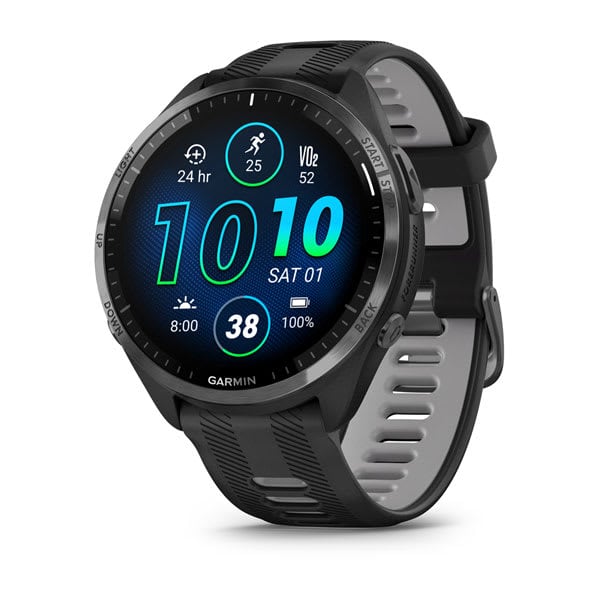
The Garmin Forerunner 965 is the proof that a tracker does not need a subscription at all. It includes training load, recovery advice, race predictions, maps, multi-band GPS and a full set of health metrics in the hardware cost, with up to 23 days of battery in smartwatch mode and a colourful 1.4-inch AMOLED display. There is no monthly fee, no paywalled readiness score, and no trial that expires.
That makes its total cost honest: what you pay on day one is what you pay, ever. For a runner who wants deep training data without a monthly bill, it is the strongest argument in this guide against the subscription model. Its trade-off is that it is a running watch first — its smart features are solid but not as polished as Apple’s — and it is a bigger commitment up front than a cheap band with a fee.
Our Call
For anyone who refuses a monthly fee on principle, this is the pick. It proves the subscription is a business choice, not a technical necessity.
Pros
- No subscription — all features included
- Up to 23 days of battery
- Deep running, recovery and training metrics
- Colour AMOLED display with multi-band GPS
Cons
- Higher up-front cost than a basic band
- Smart features trail Apple
- Learning curve for the training metrics
- No flashlight or dive rating
A note on trials and renewals. Most tracker subscriptions renew automatically, and the trial that felt generous on day one can become a charge you forgot about on day ninety. When you start a trial, set a reminder for two days before it ends, and check whether you opened the paid features in the last fortnight. If you did not, cancel and see whether you miss them — you can always resubscribe. And check whether the subscription is monthly or yearly: yearly is cheaper per month, but it locks you in, so start monthly until you know the service earns its keep.
Buying Guide
Separate the hardware from the interpretation. Recording heart rate and sleep is cheap; interpreting them into a readiness score is what makers charge for. Ask which of the two you need. If you just want the numbers, a free tier is enough. If you want to be told what to do with them, you are buying coaching, and you should judge it as coaching.
Add up 24 months before you buy. A tracker with a monthly fee can cost more over two years than a dearer tracker with no fee. Multiply the monthly figure by 24, add the hardware, and compare that total. The cheapest tracker in the shop is often the dearest one to own.
Use the trial, then decide with data. Fitbit includes six months of Premium, Oura includes a first month, and most services offer a trial. Set a reminder for the day the trial ends, and check whether you actually opened the paid features in the last month. If you did not, cancel.
Check what stops working if you cancel. This is the question makers least like to answer. With Garmin, nothing stops. With Fitbit, the core tracker keeps working. With WHOOP and Oura, the product becomes sharply less useful. That difference is worth more than any single feature.
Watch for the fee that is not called a fee. Some trackers need a cellular plan, some need a cloud plan for video history, and some charge for advanced features under another name. The monthly cost is not always labelled a subscription — add up every recurring charge, whatever it is called.
Do I need a subscription for a fitness tracker?
Not always. Garmin includes all its training features with no fee, and Fitbit’s core tracking works without Premium. WHOOP and Oura lock their best insights behind a membership, so for those two the fee is effectively required.
What does a fitness tracker subscription actually buy?
Usually interpretation, not data: readiness and sleep scores, coaching, long-term trends, guided workouts and detailed reports. The raw heart-rate and sleep data is normally free.
Is WHOOP worth the monthly fee?
If you train seriously and will read the recovery and strain coaching every day, yes — the coaching is the product. If you just want step counts and sleep hours, no — a tracker with a free tier will do.
Can I cancel a tracker subscription and keep using it?
It depends on the maker. Garmin and Fitbit keep working if you cancel. WHOOP and Oura become sharply less useful without their memberships, so check before you buy.
Which fitness tracker has no subscription at all?
The Garmin Forerunner 965 in this guide includes all its features with no fee. The Ultrahuman Ring AIR and the Samsung Galaxy Ring also include their standard features with no app subscription.
Conclusion
Start by asking whether you want coaching or just numbers. If you want coaching, WHOOP’s membership is the best in this guide; if you want numbers without a fee, the Garmin Forerunner 965 proves you can have them. Whatever you choose, add 24 months of fees to the hardware cost first — that total is the real cost, and it changes the ranking more than any single feature.


