
Best Robot Vacuum 2026? $200 Shark vs $500 Dreame vs $1,600 Roborock
In a shark vs dreame vs roborock comparison, the Dreame L40 Ultra Gen 2 is the sweet spot for most homes, with flagship-style positioning and a mop-care dock at about a third of the Saros 20 price class. Choose the Shark Matrix Plus if budget comes first, and the Roborock Saros 20 only if you want the flagship. Read this as a guide to the best robot vacuum for your floors and your budget, not a ranking by one headline number.
Three robot vacuums, three very different price tiers, and one fair question: what do you actually get as you move up the range, and where does it stop being worth it? We put a roughly $200 Shark, a roughly $500 Dreame, and a roughly $1,600 Roborock next to each other on our channel to answer exactly that. No invented scores, no fake dust tests; just published manufacturer specifications, dock design, and the practical jobs each tier is built to do. Here is the honest breakdown of the Shark Matrix Plus UR2650WS, the Dreame L40 Ultra Gen 2, and the Roborock Saros 20. If you arrived here after reading best vacuum cleaner reviews that rank by suction alone, use this comparison differently — read it by tier, because the tier decides how much daily work the dock takes off your hands.
Key Takeaways
- Sweet spot for most homes: the Dreame L40 Ultra Gen 2 — flagship-style positioning at about a third of the Saros 20’s price class, with an all-in-one dock that washes and dries the mops.
- Budget tier: the Shark Matrix Plus UR2650WS — a 2-in-1 vacuum and sonic mop with a bagless self-empty base, sealed HEPA filtration, and a self-cleaning brushroll.
- Flagship tier: the Roborock Saros 20 — manufacturer-rated 36,000Pa suction, dual spinning mops, a slim low-profile body, AdaptiLift chassis, and RockDock with high-temperature mop washing.
- The first step up buys dock automation and reach; the second step up buys flagship engineering for difficult homes — the middle tier is where the value curve peaks for a typical family home.
- Do not confuse models: the standard Saros 20 uses dual spinning mops, while the Saros 20 Sonic is a separate model with a vibrating mopping system.
Note: The video above uses AI-generated visualizations based on manufacturer listings — it is not hands-on test footage.
At a Glance
| Product | Best for | Key spec(s) | Link |
|---|---|---|---|
| Shark Matrix Plus UR2650WS | Budget tier | 2-in-1 vacuum and sonic mop, bagless self-empty base, sealed HEPA filtration, self-cleaning brushroll | View on Amazon |
| Dreame L40 Ultra Gen 2 | Mid-range sweet spot | Advertised 25,000Pa suction, extendable side brush and mop for edges, obstacle avoidance, all-in-one dock that washes and dries the mops | View on Amazon |
| Roborock Saros 20 | Flagship tier | Manufacturer-rated 36,000Pa suction, dual spinning mops, slim low-profile body, AdaptiLift chassis, RockDock with high-temperature mop washing | View on Amazon |
When we lined these three up for our Smart Tech & Gadget Finds video, the pattern was clear: the first step up buys dock automation and reach, and the second step up buys flagship engineering for difficult homes. In our comparison, the middle tier was where the value curve peaked for a typical family home.
Top 3 Picks
Dreame L40 Ultra Gen 2 — Best for Most Homes. The sweet spot: advertised 25,000Pa suction, an extendable side brush and mop for edges, obstacle avoidance, and an all-in-one dock that washes and dries the mops. As a best robot vacuum and mop combination, the Dreame is where this comparison peaks for most homes — vacuuming and mop care handled by one dock, at the middle tier.
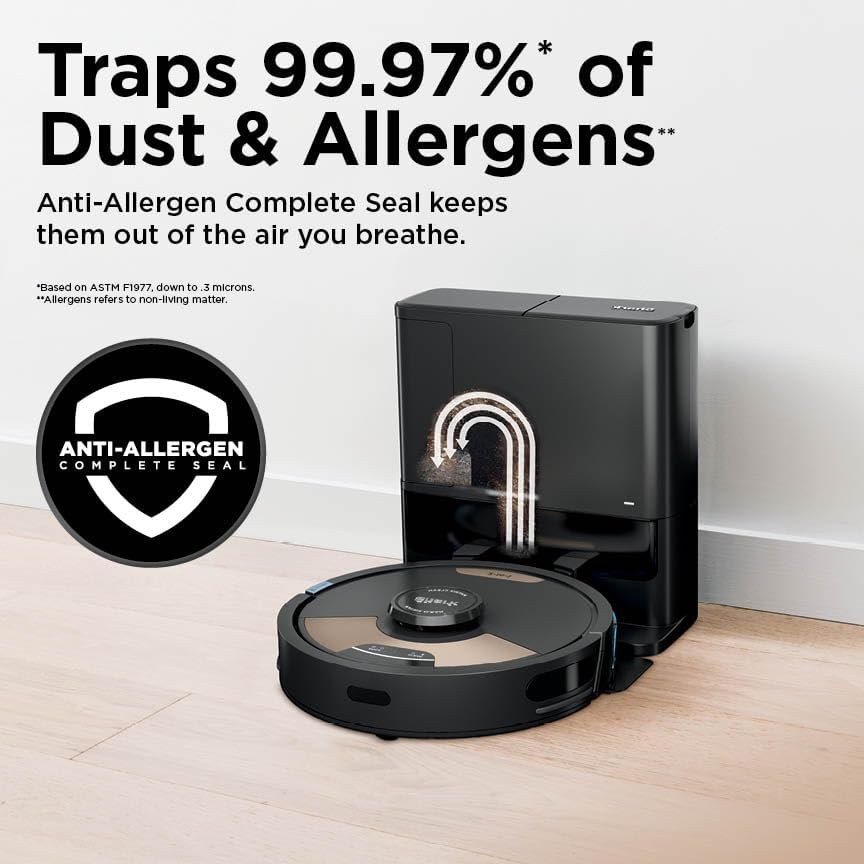
Shark Matrix Plus UR2650WS — Best Budget. The budget tier: a 2-in-1 vacuum and sonic mop with a bagless self-empty base, sealed HEPA filtration, and a self-cleaning brushroll.
Roborock Saros 20 — Best Flagship. The flagship tier: manufacturer-rated 36,000Pa suction, dual spinning mops, a slim low-profile body, AdaptiLift chassis, and RockDock with high-temperature mop washing.
The $200 Tier: Shark Matrix Plus UR2650WS
The Shark Matrix Plus UR2650WS represents the budget tier. It is positioned as a 2-in-1 vacuum and mop with a self-empty base — a combination that would have been hard to find at this price not long ago. For smaller homes, apartments, or a first robot vacuum, the Shark covers the core job: scheduled vacuuming, basic mopping, and a base that means you are not emptying a dustbin after every run. For anyone searching for a shark vacuum at the lowest entry price, this tier is the honest starting point — automated emptying and basic mopping, without paying for dock features a small home may never use.
The detail behind that positioning: Shark pairs the vacuum with sonic mopping for light scrubbing on hard floors, Matrix Clean navigation that makes multiple passes over problem areas, and a self-cleaning brushroll designed to manage hair. CleanEdge technology helps move dirt away from walls and corners. The bagless base, which Shark positions at up to 30 days between emptying with sealed HEPA filtration, is what makes the tier work day to day. You are not emptying a small dustbin after every run, which is the point at which many cheap robots get abandoned in a corner.
Pros
- Self-empty base at the lowest entry price in this head-to-head.
- Bagless base, so no ongoing dust-bag purchases.
- Sonic mopping and CleanEdge add light hard-floor scrubbing and edge help.
- A sensible first robot for apartments and smaller homes.
Cons
- Mopping is light-duty; it maintains hard floors rather than deep-cleaning them.
- Dock automation stops at emptying: no mop washing or drying station.
- Navigation and feature positioning are a tier below the other two by design.
The $500 Tier: Dreame L40 Ultra Gen 2
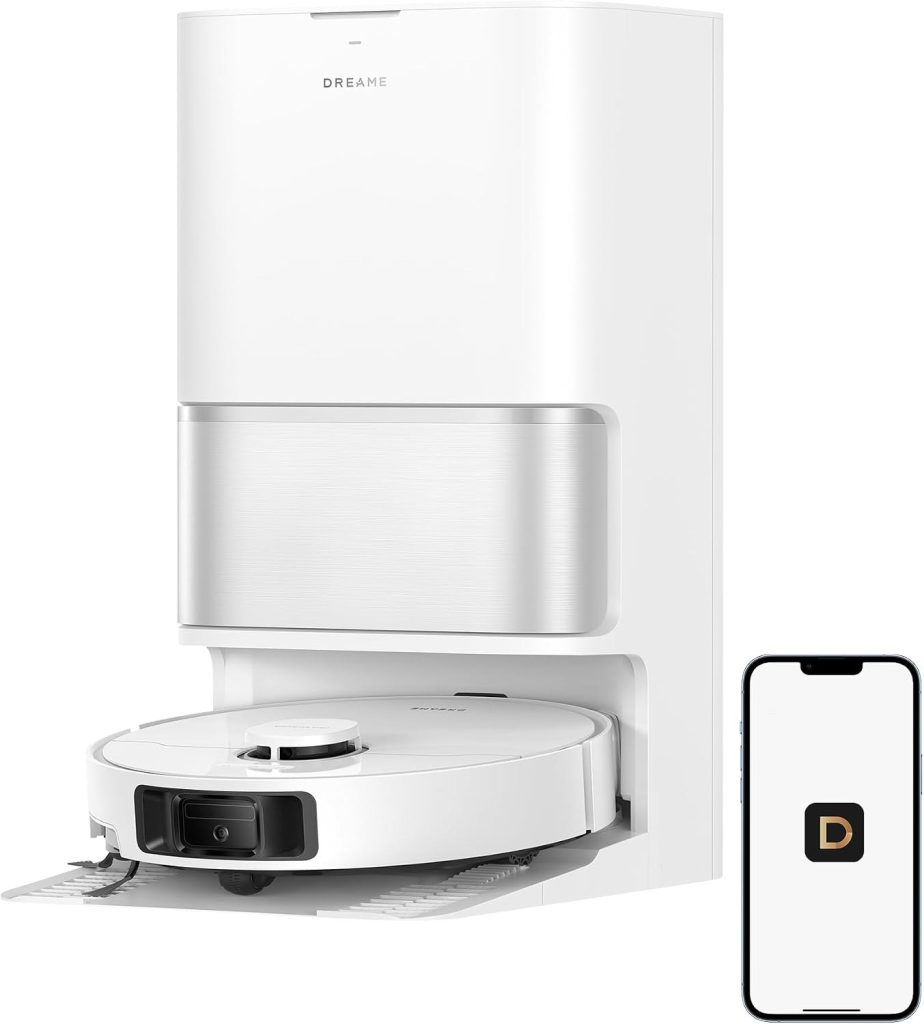
The Dreame L40 Ultra Gen 2 occupies the middle tier, and “Ultra” is the key word in its positioning: Dreame markets this line with flagship-style features at a mid-range price. In practical buying terms, this is the tier where dock-based convenience and more advanced navigation positioning become standard, without the four-figure commitment. For a typical family home, this is where the value curve peaks in this comparison.
What that tier buys, concretely: an advertised 25,000Pa suction claim for dust and pet hair, an extendable side brush and extendable mop that reach toward corners and baseboards, and Smart Pathfinder obstacle avoidance that routes around chair legs, shoes, and other everyday objects. The all-in-one dock washes and dries the mops, so the machine comes back ready instead of sitting with damp pads. In our comparison, this was the tier where the daily routine changed the most: set a schedule, empty or refill the dock occasionally, and let it run.
Pros
- Advertised 25,000Pa suction, a flagship-style claim at a mid-range tier.
- Extendable side brush and mop cover edges fixed brushes struggle with.
- Obstacle avoidance plans around everyday clutter.
- Dock washes and dries the mops between runs.
Cons
- The dock needs a permanent spot with room for the robot to dock and for water access.
- Suction remains an advertised maximum, not a measured result.
- Homes that rarely mop pay for dock features they will not use.
The $1,600 Tier: Roborock Saros 20
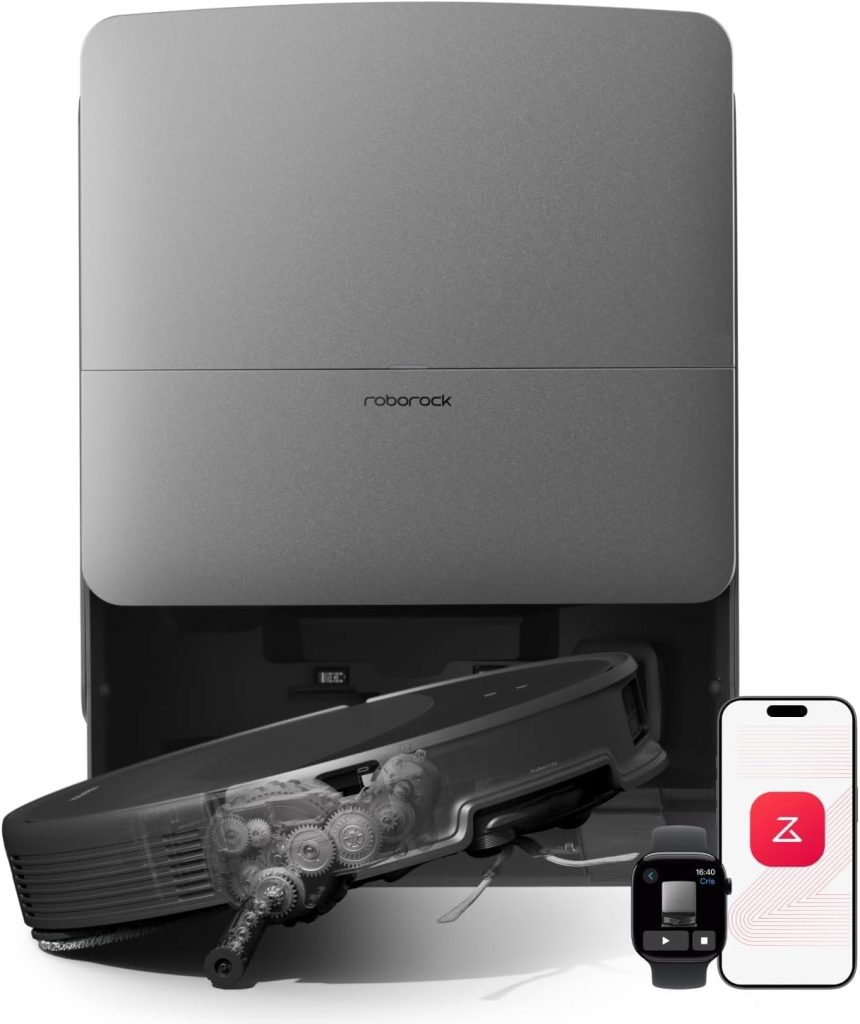
The Roborock Saros 20 is the flagship tier. The standard Saros 20 uses dual spinning mops, and it carries Roborock’s top-of-the-range positioning across the board. One important caution: the Saros 20 Sonic is a separate model that uses a vibrating mopping system instead — the names are similar, but they are not the same machine. Buyers at this tier are paying for the flagship experience and the most advanced positioning in the lineup.
The flagship case rests on specifics, not just a bigger number. Roborock rates the Saros 20 at 36,000Pa, builds it just over three inches tall so it can reach under furniture taller robots miss, and fits an AdaptiLift chassis rated for challenging thresholds, including double-layer obstacles up to 3.46 inches in specified conditions. The RockDock washes the dual spinning mops with high-temperature water (advertised at 212°F), dries them, and handles dust collection for up to 65 days as a manufacturer figure. If your home has low sofas, awkward thresholds, and mixed floors, those are real problems this tier is engineered around. If it does not, they are features you paid for and never use.
Pros
- Manufacturer-rated 36,000Pa suction, the top claim in this comparison.
- Slim body reaches under low furniture.
- AdaptiLift chassis targets thresholds that stop simpler robots.
- RockDock automates mop washing, drying, and dust collection.
Cons
- It costs several times the mid-range tier for abilities many homes never need.
- Clearance and threshold ratings are conditional; measure your furniture and doorways first.
- Largest dock footprint and the highest ongoing consumable commitment of the three.
What to Know Before You Buy
- The jump from $200 to $500 buys you dock-based convenience and more advanced feature positioning; the jump to $1,600 buys flagship positioning on top of that.
- All three tiers can include self-emptying, so decide based on your home size and flooring mix rather than a single feature.
- Do not confuse the Saros 20 (dual spinning mops) with the Saros 20 Sonic (vibrating mopping) — check the exact model name on the listing.
- Amazon prices move often; the tiers above reflect the classes from our video comparison, so confirm the current price on the listing.
- Every vacuum cleaner in this comparison is a robot first and a mop second — judge it on how often it will actually run in your home, not on how many features the dock lists.
- Many buyers start by comparing everything to a Roomba, since it is the brand most people know first — this comparison instead lines up Shark, Dreame, and Roborock on the same three questions: dock work, reach, and what each tier actually adds.
Suction Power (Pa): What the Number Does and Does Not Tell You
Suction is quoted in pascals (Pa), and this comparison quotes advertised figures — the Dreame at 25,000Pa and the Saros 20 at 36,000Pa, both as manufacturer-advertised claims, not measured results. A higher number does not always mean visibly cleaner floors, because pickup also depends on the brushroll, airflow, how the robot moves, and whether it makes repeated passes. Brands do not measure under one shared standard, so treat Pa as rough positioning between tiers, not a cleaning score. The step from the Shark to the Dreame is better judged on dock work and reach than on any single suction figure.
Mopping Technology: Pads, Spinning Mops, and Dock Care
Robot mops fall into a few broad kinds: fixed pads that drag across the floor, spinning mops that scrub as they turn, and sonic or vibrating pads that scrub with rapid movement. The Shark in this comparison uses sonic mopping for light hard-floor scrubbing, while the Saros 20 uses dual spinning mops. The bigger daily difference is dock care: a dock that washes and dries the mops, as the Dreame and Saros 20 docks do, sends the robot out with clean pads instead of damp ones. A dock that only empties dust, as the Shark’s does, leaves mop washing to you. If you mop often, weigh the dock’s mop care at least as heavily as the mop type itself.
Navigation: LiDAR, Cameras, and Obstacle Avoidance
Mapping robots learn your floor plan and clean in orderly lines instead of bumping around by chance. LiDAR-based mapping builds the map with a spinning laser, while camera-based systems see the room and can recognise objects in their path. Obstacle avoidance is the second layer: it helps the robot steer around cables, shoes, and pet messes rather than pushing through them. The Dreame’s Smart Pathfinder avoidance and the Saros 20’s flagship positioning sit at the stronger end of this, while the Shark’s navigation is positioned a tier below by design. No system is perfect in a cluttered room, so a quick tidy before a run still helps any robot.
Battery Runtime and Coverage: What Matters in a Larger Home
Runtime matters most in larger homes, where a small battery can leave rooms unfinished. Recharge-and-resume fixes much of that: the robot returns to charge partway through, then picks up where it left off instead of starting over. Runtime also shifts with suction mode and floor type, so a headline runtime figure is best read as a rough guide rather than a promise. For a big floor plan, recharge-and-resume and a dock the robot finds reliably matter more than a few extra minutes on paper. No runtime figures are quoted here, since brands measure them differently.
Noise Levels: What to Expect
Robot vacuums are not silent, and suction mode changes how loud a run feels. Higher suction settings are louder, while quiet or eco modes trade some pickup for a calmer run. Many owners schedule cleaning while they are out, which makes noise a non-issue, but if you work from home or have light sleepers, check whether the model you are considering offers a quiet mode for daytime runs. No decibel figure is quoted here, since brands measure noise differently and room acoustics change how loud a robot sounds in practice.
Robot Height and Under-Furniture Fit
A robot can only clean where it fits. Measure the clearance under your sofas, beds, and low cabinets before you buy, and compare it with the robot’s height — a slim body reaches dust under furniture that stops a taller machine. The Saros 20 is built just over three inches tall for exactly this reason, which is a real advantage in homes with low furniture. Watch out for low-hanging table skirts and recliner mechanisms too, since a robot that squeezes under a sofa can still get stuck on what hangs below it. Height is a small spec that decides a large share of real-world coverage.
App and Smart Features: Maps, Zones, and Voice Control
The app is where a robot vacuum becomes a household tool rather than a novelty. Saved maps let you clean one room at a time, no-go zones keep the robot out of pet bowls and play areas, and multi-floor maps help in homes with more than one level. Voice control through Alexa or Google Assistant, spot cleaning for a spill, zone cleaning for a hallway, and scheduling for daily runs all come from the same place. Check which of these your tier actually includes before you buy — app depth is one of the quiet differences between a budget robot and a mid-range one, and it affects daily use more than most spec lines.
Self-Emptying: Bagged, Bagless, and Compacting Docks
Self-emptying docks come in three broad kinds, and the difference is running cost and dust handling. Bagged docks seal dirt into a bag you throw away, which suits allergy homes but adds replacement bags to the budget. Bagless docks skip the bags — the Shark’s base in this comparison is bagless, so there are no dust bags to buy — but emptying the bin yourself means more contact with dust. Compacting docks press dirt down so the dock holds more between empties. Whichever kind you pick, check what it costs to keep running, not just what the robot costs to buy.
Pet Hair: Anti-Tangle Brushrolls and What Still Needs You
Pet hair tests three things: pickup, wrapping, and avoidance. A brushroll built to resist tangles saves you the job of cutting hair off the roller by hand — the Shark’s self-cleaning brushroll is pitched at exactly this problem, and the existing pet-hair FAQ in this guide covers what the budget tier can and cannot do. Long hair and heavy shedding still call for regular brush checks on any model, and hair volume is where a self-empty base earns its keep, since it stops the small dustbin filling mid-run. If your pet has accidents indoors, camera-based obstacle avoidance is worth weighing, since it can help the robot steer around messes instead of spreading them.
Floors: Hardwood Scratch Risk and Carpet Deep-Cleaning
Hard floors reward care: a robot dragging grit under a pad can mark a soft finish over time, so keep pads clean and test a new robot on a low-power pass in an out-of-the-way corner before letting it run the whole floor. Carpet asks the opposite question — whether the brushroll digs into pile and whether the robot lifts its mop or avoids carpet when mopping, so it does not drag a wet pad across a rug. Mixed-floor homes should put mop lift and carpet detection near the top of the list, because that is what keeps one machine useful across both surfaces. The tier jump matters here too: the mid-range and flagship tiers position their edge tools and carpet handling as the step up from the budget tier.
HEPA and Allergen Filtration
Sealed HEPA filtration, which the Shark’s base in this comparison carries, traps fine dust inside the machine instead of blowing it back into the room when the dock empties. That matters most in allergy homes and in homes with pets, where the dustbin holds dander as well as dirt. Check two things beyond the HEPA label: whether the whole air path is sealed, and how often the filter itself needs replacing, since a HEPA filter that is never changed stops doing its job. Bagged docks add a second seal at emptying time, which is why allergy buyers often prefer them despite the bag cost.
Thresholds, Rugs, and Multi-Level Homes
Raised thresholds between rooms, thick rug edges, and tassels are where robots get stuck. A robot that climbs thresholds well moves freely between rooms instead of cleaning one room and calling it done — the Saros 20’s AdaptiLift chassis is aimed at exactly this, with a manufacturer rating for challenging thresholds in specified conditions. For multi-level homes, check whether the app saves a map per floor, since carrying the robot upstairs without a saved map means it relearns the floor each time. Cliff sensors handle stairs, but they cannot help a robot that cannot climb the lip into the next room. Measure your own thresholds before paying for a flagship climbing rating you may never need.
Running Costs and Warranty: Read Both Before You Buy
The robot’s price is only the first cost. Over its life you will replace mop pads, filters, and brushes, and bagged docks add replacement bags — the flagship tier in this comparison also carries the highest ongoing consumable commitment of the three, as its own cons list says. No prices for consumables are quoted here, since they change; check the listing for what each tier’s upkeep actually costs per year. On warranty, read the terms before you order, not after something breaks: check how long coverage lasts, whether the dock is covered on the same terms as the robot, and what counts as a consumable that is never covered. No brand’s warranty length is promised here — terms change, and the listing at purchase time is the one that counts.
Sale Timing and Regional Availability
Robot vacuums appear in most major sale events through the year, and waiting for one can be worth it if you are not in a hurry — but no discount is promised here, since sale prices vary by model and by event, and a “deal” on a tier you do not need is still money spent. Compare the exact model name at sale time, since similar names can hide different mopping systems, as the Saros 20 and Saros 20 Sonic already show in this guide. Availability and support can also vary by region: 2026 US coverage discussed possible restrictions on some foreign-made models, so confirm the exact model is sold and supported in your region before ordering, and check that warranty and parts apply where you live.
Who It’s For
Choose the Shark if you want automated cleaning at the lowest entry price. Choose the Dreame if you want the balanced, flagship-style package for a typical home. Choose the Saros 20 if budget is secondary and you want the flagship of the range.
FAQ
Is the Saros 20 worth several times the Dreame’s price?
Only if your home uses what it adds: low-clearance access under furniture, an AdaptiLift chassis for difficult thresholds, and the most automated dock here. For a flat, open-plan home, the Dreame covers the same daily job for far less.
What does the step from the Shark to the Dreame actually buy?
Dock-based mop washing and drying, an extendable side brush and mop for edges, obstacle avoidance, and a higher advertised suction claim. It is a routine upgrade as much as a cleaning one.
Is the Saros 20 the same as the Saros 20 Sonic?
No. The standard Saros 20 uses dual spinning mops. The Saros 20 Sonic is a separate model with a vibrating mopping system. Check the exact name on the listing.
Can the budget Shark handle pet hair?
It is positioned for it: a self-cleaning brushroll designed to manage hair, plus a self-empty base so hair volume does not mean daily bin emptying. Heavy-shedding homes that run the robot daily will still need regular brush and filter care.
Are robot vacuums worth it?
For maintenance cleaning, yes. A robot run daily keeps dust and pet hair from building up, which is the job most homes actually need. It is not a full replacement for a deep clean — stairs, upholstery, and heavy ground-in dirt still need a regular vacuum — but as a daily cleaner that runs while you do something else, it earns its place in most homes.
How long do robot vacuums last?
With regular maintenance, many owners get several years of use out of a robot vacuum. Batteries and brushes are wear parts and will need replacing over time, and how long a machine lasts depends on how often it runs and how well it is looked after. Keeping the brushroll clear, the sensors clean, and the filters fresh is what stretches a robot’s life.
How These Picks Were Chosen
These picks come from our own Smart Tech & Gadget Finds video comparison of the three models above, weighed against published manufacturer specifications. No lab test scores, test hours, or units-tested figures are claimed here, because none were run for this guide. Suction figures and dock claims quoted in the reviews are manufacturer-advertised numbers, and the guide says so wherever they appear.
Final Verdict
Buy the tier that matches your floors, not your ambitions. The Shark is the right answer for budget buyers, apartments, and first robots. The Dreame L40 Ultra Gen 2 is our pick for most homes because it brings flagship-style positioning and a proper mop-care dock to the middle of the range. The Saros 20 earns its price only in homes with low furniture, raised thresholds, and mixed flooring that will use its engineering daily. When we lined the three up, the most expensive robot was not the best buy for most people, and that is the honest headline. The best vacuum cleaner here is not the most expensive one — it is the tier whose dock work, reach, and upkeep match the home it will clean every day.
Affiliate Disclosure: This article contains Amazon affiliate links. As an Amazon Associate, Smart Tech & Gadget Finds earns from qualifying purchases at no extra cost to you. #ad

