
Shark Matrix Plus UR2650WS Review: The Budget Pick
This shark matrix plus ur2650ws review covers the budget anchor of our five-model comparison: a 2-in-1 vacuum and sonic mop with a bagless self-empty base. Its mopping is light maintenance scrubbing, not deep cleaning, and the dock does not wash mop pads — rinsing them is still your job. Read this shark matrix plus review as a budget-tier verdict: what the dock saves you, and where the budget shows.
Most budget robot vacuums ask you to empty a small dustbin constantly. The Shark Matrix Plus UR2650WS takes a different approach: it is positioned as a 2-in-1 vacuum and mop with a self-empty base, at roughly the $200 class — the budget anchor of our channel’s five-model robot vacuum comparison. This review covers what that positioning means in practice, and who should (and should not) buy it. This shark matrix robot vacuum sits at the budget end of our comparison, and this review judges it on that basis — what the lowest price class gets you, not what a flagship would.
Key Takeaways
- The budget anchor of our five-model comparison: a 2-in-1 vacuum and sonic mop with a self-empty base.
- Bagless self-empty base, positioned at up to 30 days between emptying (manufacturer claim), so there are no replacement dust bags to buy.
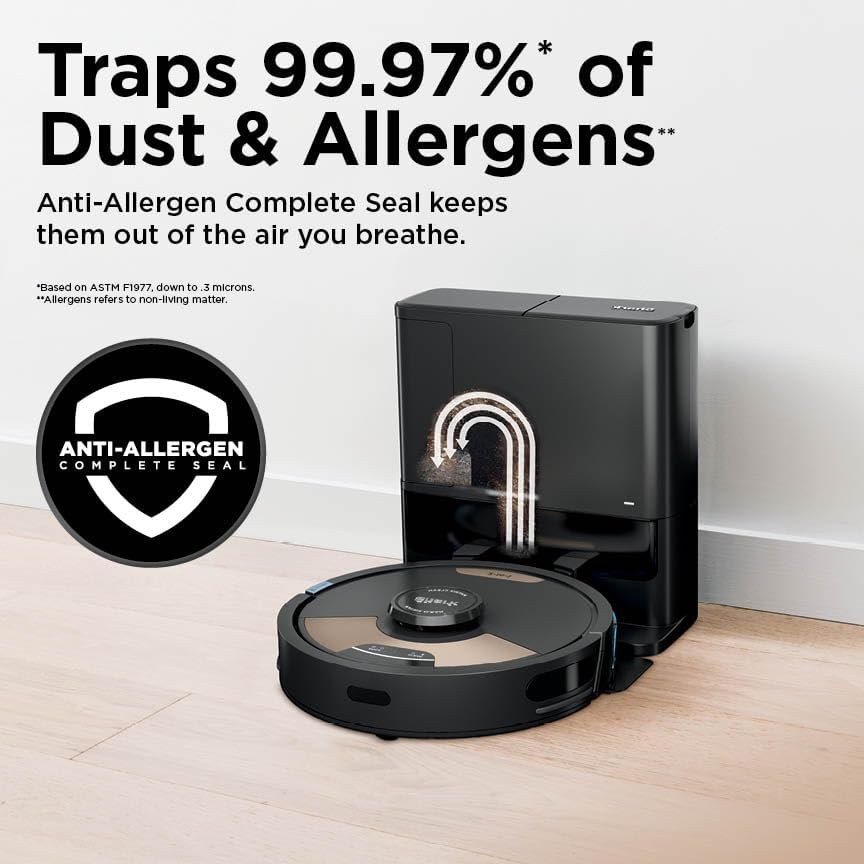
- Self-cleaning brushroll designed to manage hair, and sealed HEPA filtration, per the manufacturer listing.
- Matrix Clean navigation: multiple passes over problem areas, per Shark; sonic mopping with CleanEdge for light scrubbing on hard floors.
- Dock automation is simpler than the mop-washing stations in the mid-range tier — the pads are still your job to rinse.
Note: The video above uses AI-generated visualizations based on manufacturer listings — it is not hands-on test footage.
Key Specs at a Glance
When we lined these five robots up for our Smart Tech & Gadget Finds comparison, the Shark was the one that changed the budget conversation: it brought a self-empty base down to the lowest price class in the group. The figures below are the manufacturer’s positioning for this model, as listed — suction and dock claims in this category are brand claims, not a shared cleaning score. That positioning is what makes this shark matrix plus 2 in 1 notable at its price class: a self-empty base paired with mopping in one machine.
| Spec | Detail |
|---|---|
| Price class | Around the $200 class — the budget anchor of our five-model comparison |
| Type | 2-in-1 vacuum and sonic mop |
| Self-empty base | Bagless self-empty base, positioned at up to 30 days between emptying (manufacturer claim) |
| Filtration | Sealed HEPA filtration, per the manufacturer listing |
| Brushroll | Self-cleaning brushroll, designed to manage hair |
| Navigation | Matrix Clean navigation — multiple passes over problem areas, per Shark |
| Mopping | Sonic mopping with CleanEdge technology, for light scrubbing on hard floors and help along walls |
| Brand | Shark, an established floor-care brand with a wide retail presence |
Key Features
- 2-in-1 positioning: vacuuming and mopping in one machine
- Self-empty base, so the robot empties itself after runs instead of needing daily bin emptying
- Budget tier of our five-model comparison (~$200 class), well below the mid-range and flagship models
- From Shark, an established floor-care brand with a wide retail presence
- Matrix Clean navigation: Shark positions it as making multiple passes over problem areas rather than a single sweep
- Sonic mopping with CleanEdge: light scrubbing on hard floors, with help along walls and edges
- Sealed HEPA filtration: the bagless base uses sealed HEPA filtration, per the manufacturer listing
- A shark robot vacuum and mop combination at this price is about maintenance cleaning: vacuuming plus light sonic mopping from one machine, not a deep-clean mop station.
- As a shark matrix plus vacuum, its core job is still daily vacuuming — the mop is the bonus, not the headline.
In our comparison, the detail that kept mattering for this model was not a headline number — it was the combination. A self-cleaning brushroll designed to manage hair, a bagless base that holds debris for up to 30 days on the manufacturer’s positioning, and sonic mopping for paw prints and kitchen splashes add up to a robot a first-time buyer can actually live with day to day. None of that needs flagship money, and that is the whole point of this tier. If you have read other shark matrix plus robot vacuum reviews, use this one differently — read it by tier, because the budget tier decides what the dock does and does not do for you.
Pros and Cons
In our comparison, the Shark’s strengths were all about removing daily friction at a budget price, and its limits were all about depth — of mopping, and of dock automation — rather than about the basics it promises.
Pros
- Self-empty base at the budget end of our lineup, so daily runs do not mean daily bin emptying
- Bagless base, so there are no replacement dust bags to buy on top of the purchase price
- Self-cleaning brushroll designed to manage hair, which suits pet homes and long-hair households
- Matrix Clean navigation makes multiple passes over problem areas, and sonic mopping helps with light marks on hard floors
Cons
- Mopping is light maintenance scrubbing, not a replacement for occasional deep cleaning
- Dock automation is simpler than the mop-washing stations in the mid-range tier — the pads are still your job to rinse
- The base and brushroll still need occasional checks, even with the self-cleaning design
What to Know Before You Buy
Set expectations by tier. The UR2650WS is the budget model in a comparison that tops out around $1,600, and its positioning reflects that: you are getting the core automated-cleaning experience — scheduled vacuuming, light mopping, and self-emptying — rather than the advanced dock features and flagship positioning of the premium models. For many homes, that core experience is genuinely enough.
The self-empty base is the headline here. It changes the ownership pattern from “empty the bin after every run” to periodic base maintenance, which is the main quality-of-life difference between basic robots and dock-based ones. You will still need floor space for the base, and you should check the listing for how the base handles debris (bagged or bagless designs carry different ongoing costs). That ownership pattern is why shark matrix self-emptying robot vacuum reviews keep coming back to the base: it is the part that changes daily life with the robot, more than any single cleaning feature.
Also keep in mind that 2-in-1 mopping at this tier is best thought of as maintenance mopping for hard floors, not a replacement for occasional deep cleaning. Finally, prices in this class move around a lot with promotions — check the current listing price before deciding. For a budget model, the gap between its launch price and its typical sale price can be significant.
Noise: What to Expect
Robot vacuums are not silent, and suction mode changes how loud a run feels. Higher suction settings are louder, while quiet or eco modes trade some pickup for a calmer run. Many owners schedule cleaning while they are out, which makes noise a non-issue, but if you work from home or have light sleepers, check whether the model you are considering offers a quiet mode for daytime runs. No decibel figure is quoted here, since brands measure noise differently and room acoustics change how loud a robot sounds in practice.
Runtime and Charging: What Matters in a Larger Home
Runtime matters most in larger homes, where a small battery can leave rooms unfinished. Recharge-and-resume fixes much of that: the robot returns to charge partway through, then picks up where it left off instead of starting over. Runtime also shifts with suction mode and floor type, so a headline runtime figure is best read as a rough guide rather than a promise. For a big floor plan, recharge-and-resume and a dock the robot finds reliably matter more than a few extra minutes on paper. No runtime figures are quoted here, since brands measure them differently.
Suction: What the Number Does and Does Not Tell You
Suction is usually quoted in pascals (Pa), and this review deliberately treats it the way the specs section does: suction and dock claims in this category are brand claims, not a shared cleaning score. A higher number does not always mean visibly cleaner floors, because pickup also depends on the brushroll, airflow, how the robot moves, and whether it makes repeated passes. Brands do not measure under one shared standard, so treat any suction figure as rough positioning between tiers, not a cleaning score. At the budget tier, dock work and run frequency matter at least as much as any single suction figure.
Cleaning by Floor Type: Hard Floors vs Carpet
Hard floors and carpet ask different questions of the same robot. On hard floors, the test is whether it picks up surface dust and debris in one pass and whether the mop helps with light marks. On carpet, the test is whether the brushroll digs into pile and whether the robot makes repeated passes where dirt sits low. Mixed-floor homes should put carpet detection and mop behaviour near the top of the list, because that is what keeps one machine useful across both surfaces. No pickup percentages or test scores are quoted here — floor performance varies with pile depth, debris type, and how often the robot runs.
Mopping Stains and Pad Care
Light maintenance mopping handles everyday marks: paw prints, kitchen splashes, and dust film on hard floors. Heavier stains — dried coffee, red wine, mud, or food spills — are a different job, and a budget sonic mop should be judged on whether it lightens them over repeated passes, not on whether it erases them in one go. Pad care is part of the result: a dirty pad spreads dirt instead of removing it, so rinse the pads after mopping runs and let them dry before the next one. If your home has frequent heavy stains, that rinse routine is the real cost of budget mopping, and it is worth weighing before you buy.
Mopping Limits Worth Checking Before You Buy
Before you buy, check three dock questions in the listing: whether the base empties while the mop module is fitted, whether it refills water on its own, and whether the pads lift on carpet. Budget docks often do none of the three — and this review’s own FAQ is clear on the Shark’s position: its base handles self-emptying, while rinsing the pads stays on your list. Carpet detection that backs the robot off rugs, rather than lifting a pad, is the usual budget answer, and it works well enough for homes where rugs are few and hard floors dominate. If your home is mostly carpet with a mop-washing wish list, that is the point at which the mid-range tier earns its premium.
Obstacle Avoidance: Clutter, Cables, and Tight Spaces
Obstacle avoidance is the second layer on top of mapping: it helps the robot steer around shoes, cables, and pet messes instead of pushing through them. No system is perfect in a cluttered room, and a taller body can struggle in tight spaces or push light furniture as it turns. A quick tidy before a run still helps any robot, and pet owners should weigh avoidance as carefully as suction when they compare models. No test scores are quoted here, and no avoidance result is claimed for this model — check how it behaves around your own clutter during the return window instead.
Setup and What’s in the Box
Setup is mostly mapping work: the robot learns your floor plan on its first runs, and the app then lets you use that map instead of running the whole home every time. Give the first mapping run a clear floor — cables, shoes, and loose rugs slow it down and teach it the wrong layout. Check what comes in the box at purchase time, since box contents can vary by retailer and region. No dimensions, weights, or bin and tank capacities are quoted here, since those vary by listing; the listing and the manual for your exact model are the documents that count.
App and Voice Control: What to Check
The app is where a robot vacuum becomes a household tool rather than a novelty. Saved maps let you clean one room at a time, no-go zones keep the robot out of pet bowls and play areas, and scheduling keeps daily runs automatic. At the budget tier, check which of these your model actually includes before you buy — scheduling and zone-cleaning limits, and occasional connectivity quirks, are the usual budget trade-offs, and they affect daily use more than most spec lines. Voice control through Alexa or Google Assistant is also worth checking in the listing, since support varies by model and region; do not assume it from the brand name alone.
Which Shark Matrix Is Which
The Shark Matrix name covers several different machines, and the model code is what tells them apart — check the exact code on the listing before you order. The UR2650WS, reviewed here, is the 2-in-1 vacuum and sonic mop with a bagless self-empty base and sealed HEPA filtration, per the manufacturer listing. The UR2360S is a Costco vacuum-only version: no mopping, and no HEPA filter. The RV2310AE is another vacuum-only Matrix version, and the RV2620WAUK is the UK 2-in-1 version. Same family name, different machines — a review of one code does not automatically describe another, especially on mopping and filtration.
Maintenance: Filters, Brushroll, and Base
The robot’s price is only the first cost of ownership. Over its life you will clean the brushroll, rinse the mop pads, wipe out the base, and look after the filters — the washable filters in a bagless base still need regular cleaning to keep airflow up, even though there are no bags to buy. The article already flags occasional brushroll and base checks, and that is the part most buyers overlook: a brushroll that is never checked wraps hair over time, whatever the self-cleaning design claims. In shedding homes, run frequency is the real maintenance answer — a robot that runs daily keeps hair from building up in the brushroll and the base, and keeps the base-emptying routine short. No prices or service intervals are quoted here, since those change; the manual for your exact model is the document that counts.
Alternatives Worth Comparing Before You Commit
Two alternatives are worth a look before you commit: the Roomba i3+ EVO, often held up as the value self-empty alternative, and the Roborock Qrevo S, often suggested for mixed flooring. Neither is reviewed here, and neither changes the case for the Shark itself — they are simply the two comparisons worth making before you pay, one on self-empty value and one on mixed-floor ability. If low entry price with self-emptying is the whole brief, the Shark’s case in this review is the one to weigh; if mixed flooring is the daily reality, compare the second name carefully.
Who It’s For
The Shark Matrix Plus UR2650WS suits first-time robot vacuum buyers, apartments and smaller homes, and anyone whose top priority is a low entry price with self-emptying included. If you have a large home, heavy mopping needs, or you want flagship-tier dock features, step up to the mid-range models in our comparison instead. See the Shark Matrix Plus UR2650WS listing for full manufacturer details. If you arrived here after reading shark robot vacuum cleaner reviews that rank by suction alone, weigh this one by tier instead — the budget tier’s dock and upkeep matter more day to day than a headline number.
FAQ
How long can the self-empty base go between emptying?
Shark positions the bagless base at up to 30 days between emptying. Treat that as a manufacturer claim: a home with heavy shedding or lots of tracked-in dirt will fill it sooner, and a small apartment with hard floors may get closer to it. Either way, the routine shifts from emptying after every run to checking the base now and then.
Is the base bagged or bagless?
Bagless, per the manufacturer listing, with sealed HEPA filtration. That matters for running costs: there are no replacement dust bags to keep buying, though you will still empty and wipe out the base itself as part of periodic maintenance.
Is the Shark Matrix Plus good for pet hair?
It is positioned for it at this tier. The self-cleaning brushroll is designed to manage hair rather than wrap it, and the self-empty base handles the volume that hair creates. In our comparison, frequency was the real pet-hair answer — a robot in this class that runs daily keeps up far better than a stronger one that runs weekly.
Does the dock wash the mop pads?
No. The Shark’s base handles self-emptying, not mop washing. Automatic mop washing, drying and refilling belong to the mid-range dock stations in our comparison, such as the ECOVACS OMNI and Roborock Qrevo docks. On the Shark, rinsing the pads stays on your list.
Who should step up from the Shark to a mid-range model?
Buyers with large homes, heavy mopping needs, or a specific wish for a mop-washing dock. If your floors are mostly carpet, or your home is an apartment or smaller house, the Shark’s core routine — scheduled vacuuming, light mopping and self-emptying — covers the job at the lowest price class in our lineup.
Is the Shark Matrix Plus good for large homes?
For apartments and smaller homes, yes — that is the use this review positions it for. In a large home, the questions change: coverage per run, recharge-and-resume behaviour, and whether one map covers all your rooms. No runtime figures are quoted here, since brands measure them differently. If your home is large, or heavily carpeted with a mop-washing wish list, the step-up guidance in the previous answer is the one to follow.
How often should I clean the brushroll and filters?
As part of a regular routine, not on a fixed calendar. Check the brushroll after heavy shedding periods and whenever you notice hair wrapping, rinse the mop pads after mopping runs, and clean the washable filters whenever airflow seems reduced or dust builds up visibly. No service interval is stated as a fact here — the manual for your exact model gives the schedule, and homes with pets or heavy dirt will need checks more often than quiet apartments.
How These Picks Were Chosen
These picks come from our own Smart Tech & Gadget Finds video comparison of the five models in this series, weighed against published manufacturer specifications. No lab test scores, test hours, or units-tested figures are claimed here, because none were run for this guide. Suction figures and dock claims quoted in the review are manufacturer-advertised numbers, and the review says so wherever they appear.
Final Verdict
For a first robot vacuum, or a smaller home that wants hands-off cleaning without flagship money, the Shark Matrix Plus UR2650WS is the honest starting point in our comparison. It pairs 2-in-1 vacuuming and sonic mopping with a bagless self-empty base at around the $200 class, and that base is what changes daily life with it. Step up to the mid-range if you want a dock that washes mops or you have a large, hard-floor-heavy home. Otherwise, this is the budget pick we would shortlist first — run it often, keep the brushroll checks in your routine, and it earns its place. For readers comparing shark matrix plus reviews, the question to carry into each one is the same: does the budget tier’s dock and upkeep fit your home?
Affiliate Disclosure: This article contains Amazon affiliate links. As an Amazon Associate, Smart Tech & Gadget Finds earns from qualifying purchases at no extra cost to you. #ad
