Best Robot Vacuum for Pet Hair 2026
Best Robot Vacuum for Pet Hair 2026
The best robot vacuum for pet hair pairs a tangle-resistant brush with a self-emptying dock, because pet hair is a volume problem. The Dreame L40 Ultra Gen 2 is the balanced pick for most pet homes, the Shark Matrix Plus covers the budget tier, and the Roborock Saros 20 suits larger homes that run a robot constantly.
Pet hair is a volume problem. It accumulates daily, fills small dustbins fast, and turns robot vacuum maintenance into a chore of its own. The practical answer is not just pickup; it is pickup plus self-emptying, so the bin is not waiting for you every evening. Below, we take the five models from our channel’s robot vacuum comparison and look at each through a pet owner’s lens: what to look for, which tier fits which home, and what each model is actually positioned to do with hair, litter dust, and muddy paw prints. That volume problem is the whole reason a pet hair robot vacuum search should start with the dock and the brush together, not with either one alone.
Note: The video above uses AI-generated visualizations based on manufacturer listings — it is not hands-on test footage.
Key Takeaways
- Pet hair is a volume problem: the practical answer is pickup plus self-emptying, so the bin is not waiting for you every evening.
- The brush decides how much work you do by hand. Rubber, anti-tangle, and self-cleaning brush designs shed hair into the bin; traditional bristle brushes wrap it and need cutting free.
- The dock decides whether the robot keeps up: every model here self-empties in some form, so the choice comes down to brush design, mop care, and budget tier.
- Balanced pick for most pet homes: the Dreame L40 Ultra Gen 2, with an extendable side brush and mop and an all-in-one dock that washes and dries the mops.
- Budget tier: the Shark Matrix Plus UR2650WS, with a self-empty base and a self-cleaning brushroll designed to manage hair.
- Flagship: the Roborock Saros 20 (standard model, dual spinning mops — the Saros 20 Sonic is a different, vibrating-mop model).
Top 3 Picks
- Shark Matrix Plus UR2650WS — The Budget Entry. A 2-in-1 vacuum and mop with a self-empty base, for a pet apartment or a first robot.
- Dreame L40 Ultra Gen 2 — The Sweet Spot. The balanced choice for most pet households, with an extendable side brush and mop and a dock that washes and dries the mops.
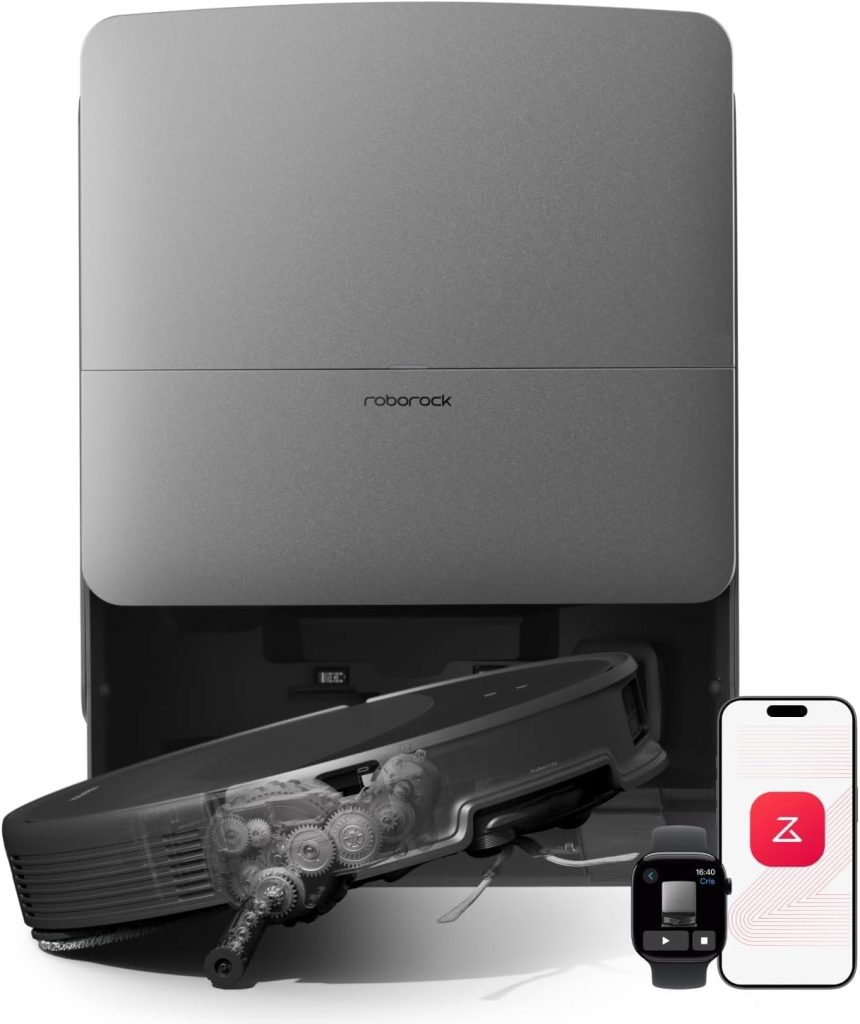
- Roborock Saros 20 — The Flagship. The top tier for larger pet homes that run the robot constantly, with dual spinning mops and a slim body for hair under low furniture.
The ECOVACS DEEBOT T50 MAX PRO OMNI and roborock Qrevo S Pro (mid-range docks) remain in the full comparison below.
At a Glance
| Product | Best for | Brush design | Dock | Key spec(s) | Link |
|---|---|---|---|---|---|
| Shark Matrix Plus UR2650WS | Budget pet homes and apartments | Self-cleaning brushroll | Bagless self-empty base | 2-in-1 vacuum and sonic mop | View on Amazon |
| ECOVACS DEEBOT T50 MAX PRO OMNI | Pet hair plus automated mop care | ZeroTangle brush | OMNI station: empties, washes, dries, refills | Advertised 18,500 Pa suction, BLAST airflow positioned for pet hair | View on Amazon |
| roborock Qrevo S Pro | Hard floors with paw prints | Anti-tangle positioning | Hot-water mop washing, warm-air drying | Advertised 18,500 Pa suction, dual spinning mops, mop lift 10 mm | View on Amazon |
| Dreame L40 Ultra Gen 2 | Balanced pick for most pet homes | Anti-tangle positioning | All-in-one dock that washes and dries the mops | Advertised 25,000 Pa suction, extendable side brush and mop | View on Amazon |
| Roborock Saros 20 | Flagship for larger pet homes | Anti-tangle brush design | RockDock: mop washing, drying, dust collection | Manufacturer-rated 36,000 Pa suction, dual spinning mops, slim body | View on Amazon |
| Image | Product | Features | Price |
|---|---|---|---|
 | Check Price | ||
| Check Price | ||
| Check Price | ||
| Check Price |
What to Look For in a Pet-Hair Robot Vacuum
Brush design first: rubber, anti-tangle, and self-cleaning beat bristles
Hair is what breaks the ownership experience. A traditional bristle brush wraps long pet hair around itself within a few runs, and the hair has to be cut off by hand. Rubber, anti-tangle, and self-cleaning brush designs are built to shed hair into the suction path instead, so the brush stays usable between cleans. In our comparison, this is the first thing to check on any model: a strong suction figure means little if the brush is wrapped solid. Every model in this lineup is positioned with a tangle-resistant brush design rather than a plain bristle brush, which is why they made the shortlist. That check is the practical starting point for any best robot vacuum for long pet hair search — a brush that sheds long hair into the bin instead of wrapping it around itself.
Self-emptying: the dock decides whether the robot keeps up
Pet hair fills bins quickly; a dock that empties the robot for you is the single biggest convenience upgrade for pet homes. Without a dock, a shedding home can fill an onboard bin in a single run, and the robot stops being automatic. With one, daily runs become realistic because the bin is no longer waiting for you every evening. Every model here self-empties in some form — the Shark’s base is bagless, so there are no dust bags to buy, while the larger docks use bags and need ongoing bag costs factored in.
Suction: how much do you actually need?
Suction figures are manufacturer claims, not pickup scores, and they matter less than brush design. As a general guide, hard floors are forgiving: hair sits on the surface and even modest suction collects it, while edges and corners matter more. Carpet is where suction earns its keep, because hair embeds in pile and needs both a tangle-resistant brush and stronger airflow to lift out. Heavy shedders on carpet should weight suction more heavily; a single light-shedding pet on hard floors should not. In this lineup the advertised figures run from 18,500 Pa on the mid-range pair up to a manufacturer-rated 36,000 Pa on the Saros 20 — treat those as positioning, not as a ranking of real-world pickup.
Carpet or hard floor? The answer changes the pick
On carpet, brush design and suction matter most, because hair embeds and wraps. On hard floors, hair blows into corners and along baseboards, so edge cleaning, extendable side brushes, and navigation matter more than raw power. Homes with both should look for a model that handles the transition: carpet detection that lifts mops off rugs, and an extendable side brush or mop that reaches the wall edges where hair gathers. The Dreame’s extendable side brush and mop and the Qrevo S Pro’s mop lift are built for exactly this mixed-floor problem.
Filters and dander: the allergy question
Fur is visible; dander is not, and it is dander that drives most pet allergies. A robot helps with dander only when the filter and the bin seal well: a full or leaky bin recirculates fine particles back into the room instead of trapping them. If anyone in the home has pet allergies, treat filtration and bin sealing as a buying factor alongside brush design, and keep the filter on a short cleaning cycle in a shedding home. We make no specific filtration rating claim for these five models — check the listing for the filter specification of the model you are considering.
Obstacle avoidance: accident insurance, not a luxury
One accident on the floor can ruin a robot’s day — and yours. If a pet is not fully reliable indoors, obstacle avoidance stops being a premium feature and becomes insurance: a robot that routes around bowls, toys, and chair legs is far less likely to push a mess across the room. No model in this lineup carries a verified pet-waste-avoidance guarantee, so treat avoidance as risk reduction, not a promise: set no-go zones around feeding areas and beds, and supervise the first few runs until you trust the routing.
Match the robot to your shedder
Light shedding — one short-haired pet, mostly hard floors — is the easiest case: any tangle-resistant model run daily will keep up, and the budget tier is enough. Heavy shedding — long-haired breeds, or several pets — is a volume problem that demands a self-emptying dock and a brush you rarely have to cut hair from; a small onboard bin will not survive a heavy-shedding home. Multi-pet homes should also weight dock capacity and mop washing, because muddy paws and tracked-in dirt scale with the number of animals. The “Who It’s For” section below maps each tier to a shedding profile. That heavy-shedding end of the scale is where a best robot vacuum for long hair search should start — with the brush design and the dock first, and the headline suction figure last.
Scheduled daily runs beat a flagship run weekly
Hair control is about frequency. A robot that runs every day keeps up; one that runs weekly falls behind, whatever its suction claim. Daily passes stop hair from settling into carpet fibers, where it becomes far harder to lift. Room targeting helps here: mapping lets you send extra passes to the spots pets actually live in — sofas, rugs, and feeding areas — instead of cleaning the whole home at the same intensity.
Running costs: what you pay after you buy
The purchase is only part of the story. Across this category, the ongoing costs are filters, brushes, mop pads, and — for bagged docks — replacement dust bags. Bagless bases, like the Shark’s, avoid bag costs entirely. Mop-washing docks add water care and pad replacement to the routine. None of these costs is large on its own, but in a heavy-shedding home the replacement cycle shortens, so check consumable availability for your model before committing.
The weekly routine that keeps any of these working
No dock removes maintenance entirely. A realistic routine for a pet home is: check the brushroll weekly for wrapped hair, clean or replace the filter on a short cycle during heavy shedding seasons, and keep a spare filter on hand. Docks with mop washing still need their water tanks and pads looked after. The models that survive pet homes long-term are the ones whose upkeep routine the owner will actually stick to — if cleaning the brush is awkward, it will not get done.
Will it scare your pets?
Most dogs and cats investigate the robot at first, which can slow early cleans as the robot routes around them, and most acclimate within about a week. Run the robot while you are home for the first few sessions, keep no-go zones around food bowls and beds until everyone is comfortable, and schedule runs for times when pets are in another room if the first week is rocky. Dog owners running a robot vacuum for dog hair search should plan those first home sessions the same way — a nervous dog can slow early cleans as much as any routing limit, so the first week is part of the buying test.
Honest limits: when a robot is not enough
Be realistic about what these machines do. Mopping handles paw prints and light messes on hard floors; it does not replace deep cleaning after a real mess. No robot replaces a full-size vacuum on deep-pile or shag carpet, and stairs and tight edges still need doing by hand. A robot’s job is to keep the floor acceptable between proper cleans — and run daily, it does that job well.
Shark Matrix Plus UR2650WS — The Budget Entry
The Shark Matrix Plus UR2650WS is the entry point — a 2-in-1 vacuum and mop with a self-empty base. For a pet apartment or a first robot, it covers the essential formula: frequent runs plus a base that handles the hair volume.
For pet owners, the relevant details are the self-cleaning brushroll, which Shark designs to manage hair rather than wrap it, and the bagless base positioned at up to 30 days between emptying. Sonic mopping gives light help with paw prints on hard floors. It will not match the mop-washing docks below, but for a one-pet apartment it covers the essential formula at the lowest tier here.
Pros
- Self-empty base at the budget tier, so hair volume does not mean daily bin emptying.
- Self-cleaning brushroll designed to manage hair.
- Bagless base avoids ongoing dust-bag costs.
- Sonic mopping helps with light paw prints on hard floors.
Cons
- No mop-washing dock; pads are your job to rinse.
- Light mopping only, so muddy paw prints may need a second pass or a manual mop.
- Brush and filter care is still regular work in a shedding home.
ECOVACS DEEBOT T50 MAX PRO OMNI and roborock Qrevo S Pro — The Mid-Range Docks
Mid-range docks: the ECOVACS DEEBOT T50 MAX PRO OMNI centers on its OMNI dock station, and the roborock Qrevo S Pro adds dock-based mop washing positioning — handy when pets track in dirt on hard floors.
The ECOVACS is the pet-hair specialist of the pair on paper: an advertised 18,500 Pa, a BLAST airflow system, and a ZeroTangle brush designed for pet hair with less time spent cutting tangles. Its OMNI station automates emptying, mop washing, drying, and refilling. The Qrevo S Pro matches the suction figure and answers with dual spinning mops, carpet detection that lifts the mops by 10 millimetres, and a hot-water mop-washing dock. For homes where the dog uses a garden door all day, that mop care is the point.
Pros
- ECOVACS: ZeroTangle brush and airflow system positioned specifically for pet hair.
- ECOVACS: OMNI dock automates emptying, mop washing, drying, and refilling.
- Qrevo: dual spinning mops plus a hot-water mop-washing dock for tracked-in dirt.
- Both: self-emptying docks sized for daily pet-hair volume.
Cons
- Both docks need floor space, water care, and consumables.
- Suction figures are manufacturer claims, not pickup scores.
- Neither dock removes brush and filter maintenance in a heavy-shedding home.
Dreame L40 Ultra Gen 2 — The Sweet Spot
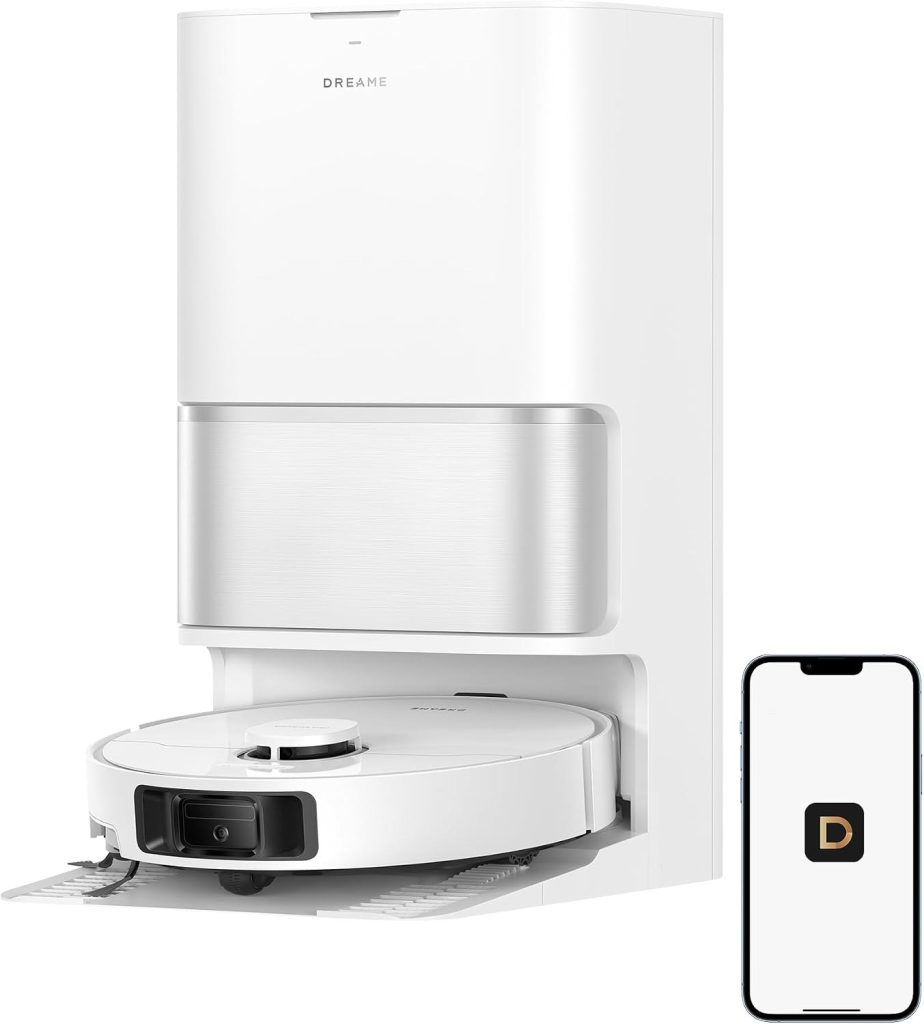
The Dreame L40 Ultra Gen 2 brings flagship-style positioning at a mid-range tier — the balanced choice for most pet households.
Dreame’s advertised 25,000 Pa claim is aimed at dust and pet hair, and its extendable side brush and mop reach the baseboards and corners where hair collects against walls. Obstacle avoidance helps it route around bowls, toys, and chair legs instead of pushing them around the room. The all-in-one dock washes and dries the mops, which keeps the daily-run routine realistic for busy pet homes.
Pros
- Advertised 25,000 Pa suction positioned for dust and pet hair.
- Extendable side brush and mop reach hair that gathers along baseboards.
- Obstacle avoidance routes around pet bowls, toys, and furniture.
- Dock washes and dries the mops, keeping daily runs low-effort.
Cons
- A full-size dock to house, plus ongoing consumables.
- Edge tools help, but corners behind heavy furniture still collect hair.
- Regular brush and filter care remains part of pet ownership.
Roborock Saros 20 — The Flagship
The Roborock Saros 20 tops the range, with dual spinning mops on the standard model (the Saros 20 Sonic is a different, vibrating-mop model — check the name). It suits larger pet homes that want the top tier and run the robot constantly.
Roborock rates the Saros 20 at 36,000 Pa with an anti-tangle brush design, and its slim body reaches the hair that collects under sofas and beds where pets actually sleep. The RockDock washes the dual spinning mops with high-temperature water (advertised at 212°F), dries them, and handles dust collection for up to 65 days as a manufacturer figure.
Pros
- Manufacturer-rated 36,000 Pa suction, the top claim in this lineup.
- Slim body reaches pet hair under low furniture.
- RockDock automates mop washing, drying, and dust collection.
- Anti-tangle brush positioning suits long pet hair.
Cons
- Flagship tier, well above the budget pick.
- Dust-storage and temperature figures are manufacturer claims that vary by home.
- Overkill for a small, single-pet apartment.
What to Know Before You Buy
No dock removes maintenance entirely: pet homes should expect regular brush and filter care, and bagged docks mean ongoing bag costs. Also be realistic about mopping — it handles paw prints and light messes on hard floors, not deep cleaning. Finally, check current prices on the listings, since this category is heavily promoted and prices shift often.
Pet Odor Control: What Anti-Odor Technology Actually Means
This article covers dander and filtration, but pet odor is a separate question, and competitor guides treat it that way. Odor comes from hair, dander, and damp debris sitting in a bin or bag, and makers answer it with sealed bins, sealed bags, and deodorizing features in the dock or bin. Those are listing claims, not results measured in this article, and they vary by model. If odor is a real problem in your home, check the listing for your exact model for sealed-bin or anti-odor wording, and remember that a sealed bag you change on time does more for odor than any single feature name. No odor result is claimed here for any model in this lineup.
Onboard Cameras: Pet Monitoring, Video Calls, and Two-Way Talk
Some robot vacuums carry an onboard camera that doubles as a pet monitor, and competitor guides list video calls and two-way talk to pets as the use case: check on the dog from work, speak to the cat, see whether the pet is settled. That is a feature to check on the listing for your exact model, not a claim about any model in this lineup — camera features, and whether they need a subscription or an app account, vary widely. If a camera matters to you, also check how the maker handles camera privacy and whether the camera can be switched off, since a camera in the home is a privacy decision as well as a convenience. No camera feature is claimed here for any model in this lineup.
App Smart Features: Mapping, Target Rooms, and Everyday No-Go Zones
This article mentions no-go zones for pet accidents and room targeting for extra passes where pets live. Competitor guides widen that into a general app buying factor: how easy the app is to set up, how reliable the Wi-Fi connection is, whether mapping lets you send the robot to target rooms, and whether you can draw no-go zones for everyday reasons — food bowls, water bowls, pet beds, play areas — not just for accidents. App ease of use matters because a robot you cannot schedule easily is a robot that will not run daily. Check the app experience for your exact model before you buy, including whether core scheduling works if the Wi-Fi drops. No app feature is claimed here for any model in this lineup.
Battery Life and Runtime as a Choice Factor
Runtime rarely decides a pet-hair purchase on its own, but it decides whether one run finishes the home. A larger home, or a home where the robot runs daily passes in pet rooms, needs either a run long enough to cover the floor plan or a robot that recharges and resumes where it stopped. Competitor guides treat runtime and recharge-and-resume as a pair: the first tells you how far one charge goes, the second tells you whether a short charge ends the clean or just pauses it. Check the listing for your exact model for both behaviours rather than assuming either, and judge them against the size of your home and how many rooms the pets actually use. No runtime or battery figure is claimed here for any model in this lineup.
Onboard Dustbin Capacity: The Number Behind the Dock
This article covers self-emptying docks in depth, but the onboard bin itself deserves its own check, because the dock only helps after the robot returns to it. In a multi-pet home, a small onboard bin can fill before a cycle completes, which means the robot heads back early or stops with rooms uncleaned. Competitor guides flag onboard bin capacity as a separate buying factor for exactly that reason: dock capacity stretches the time between your own emptying jobs, while onboard capacity decides whether a single run finishes. Check the listing for your exact model for its onboard bin size, and weigh it against how many pets you have and how often the robot runs. No bin capacity figure is claimed here for any model in this lineup.
Adjustable Auto-Empty Frequency and Shedding-Season Settings
Not every dock empties on the same schedule, and competitor guides note that some docks let you adjust how often the robot empties — more often during shedding season, less often in quiet months. That setting matters in a pet home because shedding is seasonal: the same house that coasts in winter can fill a bin daily in spring. If your pets shed heavily at certain times of year, check the listing and manual for your exact model for whether emptying frequency can be adjusted, or whether the dock empties on a fixed routine. No emptying-frequency claim is made here for any model in this lineup.
When Heavy Shedders Fill the Bin Mid-Cycle
The multi-pet FAQ in this article says one robot can keep up with multiple heavy shedders if it runs daily with a self-emptying dock and a tangle-resistant brush. Competitor guides add the failure case behind that answer: in a heavy-shedding home, the onboard bin can fill before the cycle completes, so the robot returns to the dock early or pauses with rooms still to clean. That is not a defect — it is the volume problem this article describes, meeting a bin that is too small for one pass. If you have several heavy shedders, check the listing for your exact model for onboard bin size and mid-cycle emptying behaviour, and plan on the robot needing dock trips during long runs. No bin-fill claim is made here for any model in this lineup.
Vacuum-Mop Combo Versus Vacuum-Only: Which Pet Home Needs Which
Every model in this lineup vacuums and mops in some form, but competitor guides still frame vacuum-only versus vacuum-mop combo as a real buying choice, and it is worth hearing before you pay for mop automation you may not use. A vacuum-only robot suits a carpet-heavy pet home, where hair in pile is the whole job and mop pads would sit unused. A vacuum-mop combo suits a hard-floor pet home, where paw prints and tracked-in dirt arrive with the hair and the mop earns its keep daily. Mixed-floor homes should weigh which floor the pets actually live on, and whether mop washing, drying, and pad care are routines you will keep up. No mopping performance claim is made here for any model in this lineup.
Threshold Crossing and Reaching Under Low Furniture
Two physical checks that competitor guides raise and this article does not cover as buying factors are threshold crossing and clearance under low furniture. Thresholds between rooms, rug edges, and raised door strips can stop a robot that otherwise cleans well, leaving whole rooms uncleaned — and hair collects exactly where pets sleep, under sofas and beds, where a tall body cannot reach. Check the listing for your exact model for threshold-climbing ability and body height, and measure your own thresholds and furniture clearance before you order. No threshold or clearance figure is claimed here for any model in this lineup.
Smart Home and Voice Compatibility: A Listing Check, Not an Assumption
Competitor guides list smart home and voice compatibility — Alexa, Siri, Google Home, Matter — as a buying factor for pet homes, because scheduled runs and room targeting are easier to use when they sit inside the voice and smart home setup you already have. This is a listing check only: compatibility varies by exact model and by region, and no compatibility claim is made here for any model in this lineup. Before you buy, check the listing for your exact model for the voice assistants and smart home standards it supports, and confirm whether voice control covers full scheduling or just starting and stopping a run.
Stain Detection and Dedicated Spot Cleaning
Competitor guides describe stain detection and dedicated spot cleaning as a newer pet-home feature: the robot notices a dirty patch — a water-bowl splash zone, a muddy entryway track — and gives it an extra pass or a targeted clean instead of treating the whole floor the same way. That is a feature to check on the listing for your exact model, not a claim about any model in this lineup, and it does not change this article’s honest limit that mopping handles light messes, not deep cleaning after a real mess. If spot cleaning matters to you, check whether it works automatically or needs you to mark the spot in the app. No stain-detection claim is made here for any model in this lineup.
Low-Profile and Retractable LiDAR Turrets
Height under furniture comes up again in competitor guides in a specific form: low-profile designs and retractable LiDAR turrets that lower to clear low sofas and beds. A standard turret adds height exactly where pets sleep and hair gathers, so a design that retracts or sits lower can reach rooms and spaces a taller robot cannot. Check the listing for your exact model for its body height and whether any turret retracts, and measure the clearance under your own low furniture before you order. No height or clearance figure is claimed here for any model in this lineup.
Dog Hair and Breed-Specific Shedding: Double Coats and Shedding Season
Dog hair is not one problem. Competitor guides single out double-coated breeds — Husky, German Shepherd, Collie are the names that come up most — because a double coat sheds in seasonal blows that can overwhelm a routine built for a short-haired dog. Shedding season is the stress test: daily runs, a tangle-resistant brush, and a self-emptying dock stop being nice-to-haves and become the whole system, and a home that coasts in winter may need extra passes and more frequent brush and filter care in spring. If your dog is a heavy seasonal shedder, judge any model on its brush and dock routine during that season, not on a quiet-week test. No shedding-volume or performance claim is made here for any breed or any model in this lineup.
Bristle Versus Rubber: A Buyer Check, Not a Contradiction
This article’s brush guidance stands: bristle brushes wrap long hair within a few runs, so a rubber, anti-tangle, or self-cleaning brush is the safest choice for pet hair. Competitor guides add one nuance worth hearing as a buyer check only: bristle brushes can give more carpet agitation, which some carpet-heavy buyers value, while tangling more and needing more hand cleaning. That nuance does not overturn the article’s guidance — for pet hair, the brush you rarely have to cut hair from is still the safer choice — but it explains why bristle designs still appear on carpet-focused models. If your home is mostly carpet, weigh agitation against the hand-cleaning cost honestly, and check the brush design on the listing for your exact model. No brush-performance claim is made here for any model in this lineup.
Variant Check: Dreame L40 Ultra Gen 2 Versus the Base L40 Ultra
A buyer check, not a correction: our article’s advertised suction figure for the Dreame L40 Ultra Gen 2 is left exactly as written, and nothing here changes it. The check is for shoppers comparing listings, because a competitor guide (TechRadar) publishes a suction figure for the base Dreame L40 Ultra that is far lower than our article’s Gen 2 figure — and the two figures describe different variants. The Gen 2 and the base L40 Ultra are not the same robot, so a figure published for one must never be read as applying to the other. Before you buy, confirm the exact variant name on the listing — Gen 2 or base — and compare figures only within the same variant. No suction figure is asserted here for either variant beyond identifying that the two published figures belong to different models.
Who It’s For
One pet in an apartment: the Shark, run daily. Light shedder on hard floors: the Shark or the Qrevo S Pro, depending on how much mop care matters. Multi-pet homes with hard floors: the ECOVACS for its pet-hair brush positioning, or the Qrevo S Pro if tracked-in dirt makes mop washing the priority. Most pet households: the Dreame, the balanced pick. Large homes with pets sleeping under low furniture and a flagship tier in mind: the Saros 20. Whichever tier you choose, the winning habit is the same: schedule it daily and keep up the small brush and filter jobs.
FAQ
What matters most in a robot vacuum for pet hair?
Self-emptying and brush design, in that order. Hair fills bins fast, so a dock that empties the robot keeps daily runs realistic. An anti-tangle or self-cleaning brushroll then reduces the maintenance you do by hand.
Why does brush type matter more than suction?
Because a wrapped brush stops cleaning no matter how strong the motor is. Bristle brushes wrap long hair within a few runs and need cutting free; rubber, anti-tangle, and self-cleaning designs shed hair into the bin instead. Suction matters second — mostly on carpet, where hair embeds — and filter quality matters third.
How often should a robot vacuum run in a pet home?
Daily is the working answer from this comparison. Hair control is about frequency: a robot that runs every day keeps up, while one that runs weekly falls behind, whatever its suction claim.
Can these robots mop up after pets?
They maintain hard floors: paw prints, water-bowl splashes, and light tracked-in dirt. The mop-washing docks (ECOVACS, Qrevo, Dreame, Saros 20) keep pads cleaner between runs. None of them replaces deep cleaning after a real mess.
Can robot vacuums handle pet hair on carpet?
Yes, with the right brush design — anti-tangle or self-cleaning brushrolls handle embedded hair far better than bristle brushes, and daily scheduling matters more than raw suction. Deep-pile or shag carpet is the exception: no robot replaces a full-size vacuum there.
Do robot vacuums help with dander and allergies?
They reduce dander when the filter and bin seal well and you empty and clean them often. A full bin recirculates dander, so the filter routine matters as much as the filter itself. Allergy households should check the filter specification on the listing and keep the cleaning cycle short during shedding season.
Are self-emptying bases worth it for pet owners?
Almost always. Without one, most pet owners empty the onboard bin every one or two runs in a shedding home. The dock stretches that to weeks; replacement bags are the only ongoing cost on bagged models, while bagless bases avoid that cost entirely.
Will a robot vacuum scare my dog or cat?
Most pets acclimate within about a week. Run it while you are home the first few times, and use no-go zones around food bowls and beds until everyone is comfortable.
Can one robot keep up with multiple heavy shedders?
Yes, if it runs daily and has a self-emptying dock with a tangle-resistant brush — the dock and brush matter more than the suction figure here. On deep or shaggy carpet, even good robots struggle, and a traditional vacuum still has a role.
Is it safe to run around pets that have accidents indoors?
Only models with genuine obstacle avoidance reduce this risk, and no model in this lineup carries a verified pet-waste-avoidance guarantee. Set no-go zones, supervise early runs, and run the robot while you are home until you trust its routing.
Is the Saros 20 Sonic the same robot as the Saros 20?
No. The standard Saros 20 uses dual spinning mops; the Saros 20 Sonic is a different model with a vibrating mopping system. Check the exact name on the listing.
Do robot vacuums help with pet odor?
They help when the bin and bag seal well and you change bags and clean bins on time, because odor comes from hair and damp debris sitting in a full bin. Sealed bins, sealed bags, and anti-odor features in the dock or bin are listing claims that vary by model — check the listing for your exact model for sealed-bin or anti-odor wording. No odor result is claimed here for any model in this lineup, and a robot is not a substitute for washing pet bedding and cleaning the bin itself.
Can a robot vacuum camera let me check on my pets?
On models that carry an onboard camera, yes — competitor guides describe checking on pets from work, video calls, and two-way talk as the use case. Whether a given model has a camera, and whether camera features need a subscription or an app account, varies by model, so check the listing for your exact model. No camera feature is claimed here for any model in this lineup, and a camera in the home is also a privacy decision — check whether it can be switched off.
Do I need Wi-Fi and an app to run a robot vacuum for pet hair?
Basic cleaning usually works without them, but the pet-hair routines in this article — daily scheduling, room targeting, and no-go zones — depend on mapping and app control. App ease of use, Wi-Fi reliability, and whether core scheduling works if the Wi-Fi drops are therefore buying factors, not afterthoughts. Check the app experience for your exact model before you buy. No app feature is claimed here for any model in this lineup.
Can a robot vacuum cross thresholds between rooms?
It depends on the model and on your thresholds. Raised door strips, rug edges, and room transitions can stop a robot that otherwise cleans well, leaving whole rooms uncleaned. Check the listing for your exact model for threshold-climbing ability, and measure your own thresholds before you order. No threshold figure is claimed here for any model in this lineup.
Do these robots work with Alexa, Google Home, or Matter?
Compatibility varies by exact model and by region, so this is a listing check, not an assumption. Check the listing for your exact model for the voice assistants and smart home standards it supports, and confirm whether voice control covers full scheduling or just starting and stopping a run. No compatibility claim is made here for any model in this lineup.
Can a robot vacuum spot-clean a stain or a muddy patch?
Some models offer stain detection or dedicated spot cleaning, giving a dirty patch an extra pass instead of treating the whole floor the same way — check the listing for your exact model for whether that feature exists and whether it works automatically or needs you to mark the spot in the app. It does not change this article’s honest limit: mopping handles light messes on hard floors, not deep cleaning after a real mess. No stain-detection claim is made here for any model in this lineup.
How These Picks Were Chosen
These picks come from our own Smart Tech & Gadget Finds video comparison of the models in this series, weighed against published manufacturer specifications. No lab test scores, test hours, or units-tested figures are claimed here, because none were run for this guide. Suction and capacity claims quoted in the guide are manufacturer-advertised descriptions, and the guide says so wherever they appear, so check the current listing for the model you want.
Final Verdict
For pet hair, buy the dock and the brush, not the headline. The Shark brings self-emptying to the budget tier, the ECOVACS and Qrevo S Pro add genuine mop automation for hard-floor pet homes, the Dreame L40 Ultra Gen 2 is the balanced pick we would shortlist first, and the Saros 20 is the flagship for larger homes that run a robot constantly. In our comparison, the best pet-hair robot was simply the one its owner could run every single day without thinking about the bin.
Affiliate Disclosure: This article contains Amazon affiliate links. As an Amazon Associate, Smart Tech & Gadget Finds earns from qualifying purchases at no extra cost to you. #ad
