
Roborock Saros 20 Review: The Flagship With Dual Spinning Mops
This roborock saros 20 review covers the flagship of Roborock’s range: dual spinning mops, a low-profile body for low furniture, an AdaptiLift chassis for raised thresholds, and a RockDock that washes, dries, and refills. Order the standard Saros 20 by exact name — the Sonic is a different model.
The Roborock Saros 20 sits at the very top of Roborock’s robot vacuum range, in the roughly $1,600 class as featured in our channel’s comparisons. It is the flagship option: the model you look at when you want the most advanced positioning in the lineup and price is not the deciding factor. This review covers what defines the Saros 20, the technology Roborock builds around it, one important naming trap to avoid, and who it actually makes sense for. A note on method first: our channel’s Saros 20 video is a manufacturer-specification breakdown using AI visualizations, not hands-on test footage, and this review follows the same rule. Every performance figure below is a Roborock claim, presented as such.
Key Takeaways
- The flagship option at the very top of Roborock’s robot vacuum range, and the premium anchor of our channel’s comparisons.
- Standard model, dual spinning mops at 200 RPM with adaptive pressure advertised from 8N up to 13N on tougher stains — the Sonic uses a vibrating mopping system instead and is a different model.
- 36,000Pa HyperForce suction, a manufacturer-rated maximum, not a standalone cleaning score.
- Low-profile body, listed height around 3.14 inches, with AdaptiLift Chassis 3.0 rated for certain double-layer thresholds totaling up to 3.46 inches under specified conditions.
- RockDock: mop washing with water heated up to 212°F per Roborock, re-washing, warm-air drying, automatic refilling, and dust storage advertised at up to 65 days.
Note: The video above uses AI-generated visualizations based on manufacturer listings — it is not hands-on test footage.
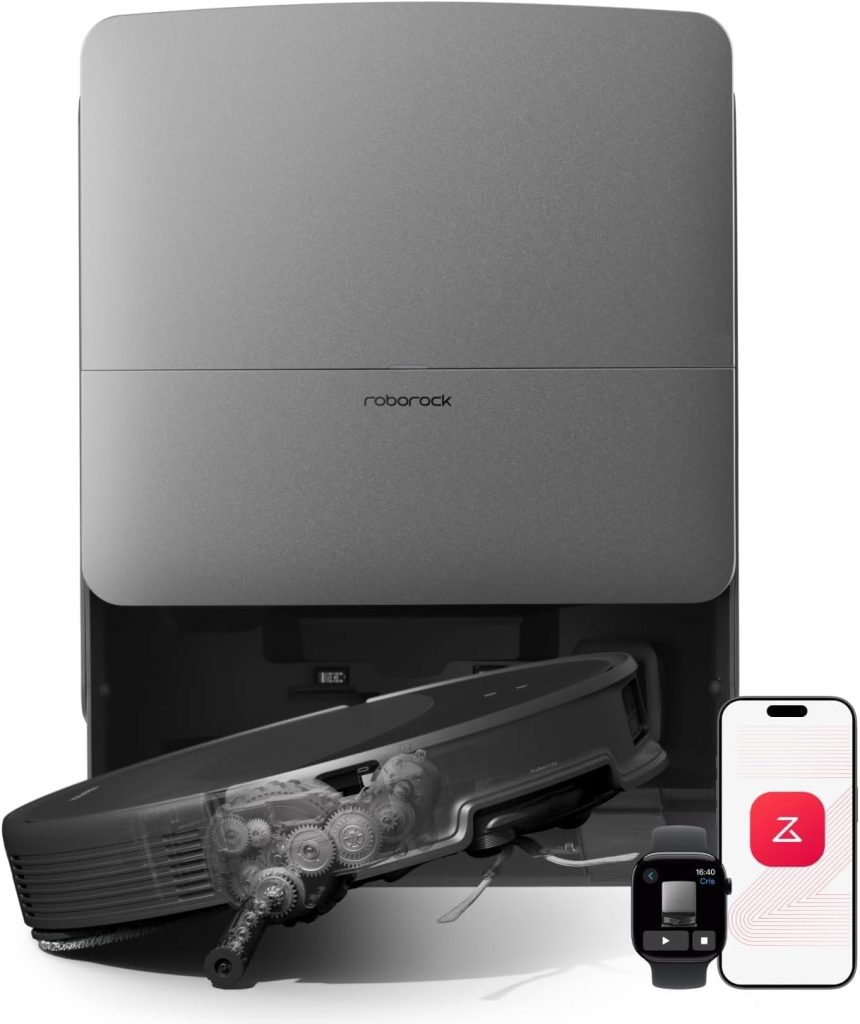
Key Specs at a Glance
| Item | Detail |
|---|---|
| Model | Roborock Saros 20 (standard model, dual spinning mops) |
| Suction | 36,000Pa HyperForce, manufacturer-rated maximum |
| Mopping | Dual spinning mops at 200 RPM, adaptive pressure advertised from 8N up to 13N on tougher stains, adjustable water flow |
| Brush system | DuoDivide main brush and FlexiArm Arc side brush, designed to reduce hair tangles |
| Navigation | StarSight Autonomous System 2.0 obstacle recognition, pet-aware navigation options |
| Profile | Low-profile body, listed height around 3.14 inches, with low-clearance access around 3.13 inches described as conditional |
| Thresholds | AdaptiLift Chassis 3.0, rated for certain double-layer thresholds totaling up to 3.46 inches under specified conditions |
| Dock | RockDock: mop washing with water heated up to 212°F per Roborock, re-washing, warm-air drying, automatic refilling, dust storage advertised at up to 65 days |
| Smart features | SmartPlan 3.0 app routines, automatic mop detachment for carpet-focused cleaning, optional DirTect stain recognition (app-enabled) |
In our comparison work for the Smart Tech & Gadget Finds channel, the Saros 20 kept separating itself on access rather than raw claims: the low body and the AdaptiLift chassis solve layout problems (low sofas, raised thresholds) that a cheaper robot simply routes around or gets stuck on. When we lined it up against mid-range dock models, that access, plus the RockDock’s automation, was the honest flagship case.
Key Features
- Flagship positioning at the top of Roborock’s robot vacuum range
- Dual spinning mops on the standard Saros 20
- Dock-based system positioning, in line with Roborock’s premium tier
- Featured as the premium anchor (~$1,600 class) in our channel’s five-model and three-way comparisons
Beyond those headline points, the Saros 20 research pack behind our standalone video fills in the system around the robot. Suction is a manufacturer-rated 36,000Pa HyperForce claim, and Roborock is clear in its own materials that a suction figure is an advertised maximum, not a standalone cleaning score. The dual spinning mops run at 200 RPM with adjustable water flow, and mop pressure is advertised to rise from 8N to 13N when the system detects tougher stains. FlexiArm extends the side brush toward corners and wall edges, with a matching extendable side mop for hard-floor edges and toe-kick areas under certain kitchen cabinets. As a roborock saros 20 robot vacuum and mop combination, it is built to handle both jobs from one dock, with the mop pads detaching automatically for carpet-focused cleaning.
Navigation is StarSight Autonomous System 2.0, which combines sensing and visual recognition to steer around everyday obstacles such as shoes and cables, with pet-aware navigation described by Roborock as well. For carpets, the dock can automatically detach the mop pads for carpet-focused cleaning, and deep-carpet strategies can adjust chassis height within the manufacturer’s stated limits, though some settings require manual activation in the app. SmartPlan 3.0 adapts cleaning plans from room layouts and preferences.
Pros and Cons
Pros
- Manufacturer-rated 36,000Pa suction, the highest claim in our robot vacuum comparisons.
- Dual spinning mops at 200 RPM with adaptive pressure and adjustable water flow.
- Slim body reaches under low furniture, and AdaptiLift 3.0 targets double-layer thresholds.
- RockDock automates hot-water mop washing, drying, refilling, and dust collection.
- Anti-tangle brush system and pet-aware navigation suit pet homes.
Cons
- Flagship price class: several times the cost of capable mid-range dock models.
- Key figures (suction, thresholds, clearance, dust storage) are conditional manufacturer ratings, not guarantees.
- Some features, including DirTect stain recognition and deep-carpet modes, need app enabling or manual settings.
- The RockDock needs a permanent, sizeable spot in the home.
What to Know Before You Buy
The single most important thing to know about the Saros 20 is the name. The standard Saros 20 uses dual spinning mops. The Saros 20 Sonic is a different model that uses a vibrating mopping system instead. Listings, reviews, and roundups sometimes blur the two, so check the exact model name on the product page before ordering — if mopping style matters to you, it matters here.
The second thing to know is the tier. At roughly the $1,600 class, the Saros 20 costs several times more than capable mid-range models like the Dreame L40 Ultra Gen 2. That premium buys flagship positioning, but it is worth being honest with yourself about whether your home needs the top of the range or whether a mid-tier dock model would cover the same floors for far less. The roborock saros 20 release date was March 2026, so this is a current-generation flagship rather than a carry-over model from an earlier range.
As with any dock-based robot, plan for the dock’s footprint in your home and the ongoing cost of consumables over time. And because Amazon pricing fluctuates, confirm the current price on the listing rather than relying on the class quoted in our video. If you are tracking the roborock saros 20 price, check the listing itself for the current figure rather than relying on the class quoted in our video.
Setup and App: Mapping, SmartPlan, and Everyday Controls
Setup is mostly mapping work: the robot learns your floor plan, and the app then lets you use that map instead of running the whole home every time. SmartPlan 3.0, already listed in the specs above, adapts cleaning plans from room layouts and preferences, so rooms can be cleaned on different routines rather than one fixed pass. A 3D house map view helps you check what the robot has learned, and voice alerts can tell you when a run finishes or the robot needs help. Child and pet locks in the app stop accidental starts and setting changes, which matters in homes where small hands or paws reach the buttons. Spend the setup time on the map and the routines — that is what turns a flagship robot from a novelty into a daily tool.
Obstacle Avoidance: Cameras, Light, and Pet Waste
Obstacle avoidance is the second layer on top of mapping: it helps the robot steer around shoes, cables, and pet messes instead of pushing through them. The Saros 20 uses a camera-and-light system for this, with pet-aware navigation options described by Roborock. Honest context helps here: independent lab reviews were mixed on obstacle avoidance for this model, with some tests finding it above average and others finding it inconsistent, especially around pet waste. No system is perfect in a cluttered room, so a quick tidy before a run still helps any robot, and pet owners should weigh avoidance as carefully as suction when they compare flagships.
Edge Cleaning, Crevices, and Deep-Clean Performance
Edges are where robots show their limits: wall edges, toe-kick areas under kitchen cabinets, and the line where hard floor meets carpet. The extendable side brush and side mop in this model are aimed at exactly those spots, reaching toward corners and edges the round body cannot touch on its own. Crevices and deep carpet pile ask a different question — whether the brushroll digs in and whether the robot makes repeated passes where dirt sits low. For homes with lots of edges and thresholds, edge reach and repeated-pass behaviour matter more than any single suction figure, and they are worth checking in the same way you would check mop care.
Multi-Floor Homes and Stairs
For multi-level homes, check whether the app saves a map per floor, since carrying the robot upstairs without a saved map means it relearns the floor each time. Cliff sensors handle stairs themselves, keeping the robot from driving off an edge, but they cannot help a robot that cannot climb the lip into the next room. Climb ratings also depend on how the step is measured — a two-tier climb and a single-step climb are different tests, so compare ratings only when the test matches your own thresholds. Measure your own thresholds and stair lips before paying for a flagship climbing rating you may never need.
Battery and Coverage: What Matters in a Larger Home
Runtime matters most in larger homes, where a small battery can leave rooms unfinished. Recharge-and-resume fixes much of that: the robot returns to charge partway through, then picks up where it left off instead of starting over. Runtime also shifts with suction mode and floor type, so a headline runtime figure is best read as a rough guide rather than a promise. For a big floor plan, recharge-and-resume and a dock the robot finds reliably matter more than a few extra minutes on paper. No runtime figures are quoted here, since brands measure them differently.
Noise: What to Expect
Robot vacuums are not silent, and suction mode changes how loud a run feels. Higher suction settings are louder, while quiet or eco modes trade some pickup for a calmer run. Many owners schedule cleaning while they are out, which makes noise a non-issue, but if you work from home or have light sleepers, check whether the model you are considering offers a quiet mode for daytime runs. No decibel figure is quoted here, since brands measure noise differently and room acoustics change how loud a robot sounds in practice.
Filters and Air Quality: What to Check
The article already notes occasional filter maintenance as part of dock upkeep, and that is the part most buyers overlook. Check what filter type the machine uses and how often it needs replacing, since a filter that is never changed stops doing its job, and check whether the whole air path is sealed or only the filter itself. No filtration rating is claimed here — the listing at purchase time states the filter specification, and that is the document to trust. In allergy homes and homes with pets, where the dustbin holds dander as well as dirt, filter upkeep matters at least as much as suction.
Dock Footprint and What Comes in the Box
The RockDock needs a permanent, sizeable spot in the home — the article already says so in its cons list, and it is worth planning for before ordering. Measure the space where the dock will live, including clearance for the robot to drive in and out and room to reach the tanks, and check what comes in the box at purchase time, since box contents can vary by retailer and region. No dimensions or tank capacities are quoted here, since those vary by listing and measurement method; the listing and the manual for your exact model are the documents that count.
Running Costs: Bags, Pads, Brushes, and Solution
The robot’s price is only the first cost. Over its life you will replace dust bags, mop pads, brushes, and filters, and the dock adds cleaning solution to that list — the article already flags ongoing consumable cost in its What to Know section. No prices for consumables are quoted here, since they change; check the listing for what this model’s upkeep actually costs before you order. Bagged docks add replacement bags to the budget, while washable pads and reusable parts cut it back, so weigh the consumable list alongside the robot’s price, not after it.
Mopping, Honestly Framed
The dual spinning mops are presented positively in this review, and that framing stands — but honest context helps a buyer at this price. Independent lab reviews were mixed on mopping for this model: some rated it well, while others found missed spots and streaks on stain tests. That split is normal for a flagship mop system, since pad type, water flow, stain type, and floor finish all change the result. Treat mopping as a strong maintenance clean rather than a guaranteed deep scrub, and judge it on how the dock washes and dries the pads between runs as much as on the mops themselves. No scores or figures are quoted here, and no existing claim in this review has been changed.
Alternatives Worth Comparing Before You Commit
Two alternatives are worth a look before you commit: the Saros 10R, a cheaper flagship alternative from the same range, and the Roborock Q7 M5, a budget alternative. Neither is reviewed here, and neither changes the case for the Saros 20 itself — they are simply the two rungs below it worth comparing on dock automation and access before you pay the flagship premium. If low clearance and thresholds are not real problems in your home, the cheaper rung may cover the same daily floors; if they are, the flagship case in this review is the one to weigh.
Who It’s For
The Saros 20 is for buyers who want the flagship: larger homes, mixed flooring where mopping performance is a priority, and anyone who prefers to buy the top model once rather than upgrade later. If your budget is mid-range, you are better served by the $500-class tier of our comparison — the Saros 20’s appeal is specifically that it is the flagship, with the price to match. See the current listing for the Roborock Saros 20 for full manufacturer specifications.
FAQ
Is the Saros 20 the same as the Saros 20 Sonic?
No, and this is the trap in this range. The standard Saros 20 reviewed here uses dual spinning mops. The Saros 20 Sonic is a different model with a vibrating mopping system. Check the exact model name on the product page before ordering.
What does 36,000Pa of suction mean in practice?
It is Roborock’s advertised maximum rating, not an independent cleaning score. Brush design, carpet thickness, and floor type all influence what actually gets picked up, so treat the figure as flagship positioning rather than a promise.
How automated is the RockDock, really?
Per Roborock, it washes the mop pads with water heated up to 212°F, supports re-washing, warm-air drying, and automatic refilling, and stores dust for up to 65 days depending on the home. It reduces daily chores; it does not remove occasional tank, filter, and dock maintenance.
Can the Saros 20 handle raised thresholds and thick rugs?
AdaptiLift 3.0 is rated for certain double-layer thresholds totaling up to 3.46 inches under specified height and surface conditions, and carpet strategies can adjust chassis height within stated limits. Measure your thresholds first; the ratings are conditional, not universal.
Who should skip the Saros 20?
Anyone in a small, flat, open home, or on a mid-range budget. A dock model from the middle tier of our comparison covers the same daily floors for far less, and the flagship premium only pays off where low clearance and thresholds are real problems.
Should I trust a roborock saros 20 sonic review when deciding on the standard model?
No — not for mopping. A roborock saros 20 sonic review tests a vibrating mopping system, while the standard model reviewed here uses dual spinning mops, so its mopping results do not transfer. Suction, navigation, and dock notes may still be useful background, but for the question that matters most — how it mops — read reviews of the exact standard model, and check the model name on every review you rely on.
Is the Saros 20 good for pet hair?
For daily pet hair, yes, with the usual caveat. The anti-tangle DuoDivide brush system and pet-aware navigation in the pros above are aimed at exactly this job, and a self-empty dock stops the small dustbin filling mid-run in heavy shedding homes. Long hair still calls for regular brush checks on any model, and hair volume is where the dock earns its keep. If your pet has accidents indoors, weigh the obstacle-avoidance notes in this guide carefully, since avoidance around messes matters as much as pickup.
How These Picks Were Chosen
These picks come from our own Smart Tech & Gadget Finds video comparison of the Saros 20, weighed against published manufacturer specifications. No lab test scores, test hours, or units-tested figures are claimed here, because none were run for this guide. Suction figures and dock claims quoted in the review are manufacturer-advertised numbers, and the review says so wherever they appear.
Final Verdict
The Saros 20 is a flagship with a specific case: low furniture it can slide under, thresholds it can climb, mixed floors it can move between without wet pads on rugs, and a dock that takes mop care off your list. If that describes your home, it is the most complete package in our lineup, and the premium has a purpose. If it does not, the honest advice from our comparison is to buy the mid-range tier and keep the difference. Either way, order the standard Saros 20 by its exact name, not the Sonic. If you are not in a hurry, watching for a roborock saros 20 sale during major sale events can be worth it — but compare the exact model name at sale time, since similar names hide different mopping systems, and no discount is ever guaranteed.
Affiliate Disclosure: This article contains Amazon affiliate links. As an Amazon Associate, Smart Tech & Gadget Finds earns from qualifying purchases at no extra cost to you. #ad

