
Best Robot Vacuums 2026: 5 Models Compared From $200 to $1,600
The best robot vacuums in this five-model comparison split by tier: the Shark Matrix Plus UR2650WS on a budget, the Dreame L40 Ultra Gen 2 as the sweet spot for most homes, and the Roborock Saros 20 as the flagship. Between them, the ECOVACS T50 MAX PRO OMNI and roborock Qrevo S Pro cover automated mop care. Read it as a search for the best robot vacuum for your floors, not a race for the biggest suction number.
Robot vacuums now span a wider range than ever, from budget models around $200 to flagship machines in the $1,600 class. Five robot vacuums, five very different ideas of what you should pay. At one end sits a budget Shark that vacuums, mops, and empties itself. At the other sits Roborock’s flagship, priced like a small appliance purchase you plan for months. In between are three dock-based machines that each bet on a different strength: automated mop care, balanced all-round cleaning, or edge cleaning that actually reaches the wall. We compared all five side by side on our Smart Tech & Gadget Finds channel, using published manufacturer specifications rather than invented scores. This guide walks through where each one sits in the range, who it suits, and what to know before you buy.
Key Takeaways
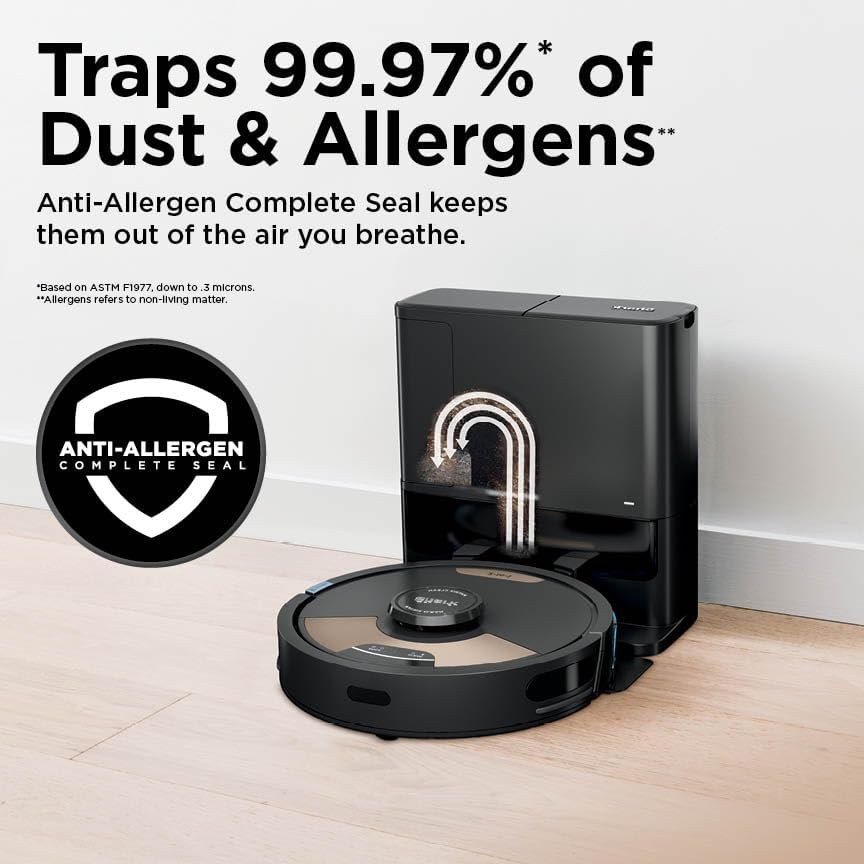
- Budget: the Shark Matrix Plus UR2650WS — a 2-in-1 vacuum and sonic mop with a bagless self-empty base, sealed HEPA filtration, and a self-cleaning brushroll.
- Sweet spot for most homes: the Dreame L40 Ultra Gen 2 — advertised 25,000Pa suction, an extendable side brush and mop, obstacle avoidance, and a mop-washing dock.
- Flagship: the Roborock Saros 20 — manufacturer-rated 36,000Pa suction, dual spinning mops, a slim body, AdaptiLift chassis, and RockDock.
- Mop-care middle: the ECOVACS DEEBOT T50 MAX PRO OMNI (OMNI dock, advertised 18,500Pa, ZeroTangle brush, TruEdge edge cleaning, mop lift) and the roborock Qrevo S Pro (dual spinning mops, carpet detection, hot-water mop-washing dock).
- The clearest pattern in the comparison is not suction: it is how much of the weekly routine each dock takes off your hands, since self-emptying now appears at every level.
- The best robotic vacuum for your home is the one whose dock matches your routine — self-emptying alone is now common, so mop care, edges, and floor layout decide it.
- No single model is the top robot vacuum for every home — the five here split by budget, mop care, edge reach, and flagship features.
Note: The video above uses AI-generated visualizations based on manufacturer listings — it is not hands-on test footage.
At a Glance
| Product | Best for | Key spec(s) | Link |
|---|---|---|---|
| Shark Matrix Plus UR2650WS | Best budget pick | 2-in-1 vacuum and sonic mop, bagless self-empty base, sealed HEPA filtration, self-cleaning brushroll | View on Amazon |
| ECOVACS DEEBOT T50 MAX PRO OMNI | Best automated mop care | Advertised 18,500Pa suction, ZeroTangle brush, TruEdge edge cleaning, mop lift, OMNI dock | View on Amazon |
| roborock Qrevo S Pro | Best all-rounder for hard floors | Advertised 18,500Pa suction, dual spinning mops, carpet detection, hot-water mop-washing dock | View on Amazon |
| Dreame L40 Ultra Gen 2 | Best mid-range sweet spot | Advertised 25,000Pa suction, extendable side brush and mop, obstacle avoidance, mop-washing dock | View on Amazon |
| Roborock Saros 20 | Best flagship | Manufacturer-rated 36,000Pa suction, dual spinning mops, slim body, AdaptiLift chassis, RockDock | View on Amazon |
When we lined these five up for our Smart Tech & Gadget Finds video, the clearest pattern was not suction. It was how much of the weekly routine each dock takes off your hands. In our comparison, self-emptying now appears at every level, so the real decision is mop care, edges, and floor layout. That is why comparing the best robot vacuums side by side matters more than ranking them by one number. A best rated robot vacuum on paper still has to fit your rooms, your rugs, and your tolerance for dock upkeep.
Top 3 Picks
Dreame L40 Ultra Gen 2 — Best for Most Homes. The sweet spot and the balance point the article would shortlist first for a typical family home: advertised 25,000Pa suction, an extendable side brush and mop, obstacle avoidance, and a mop-washing dock.
Shark Matrix Plus UR2650WS — Best Budget. The honest budget answer: a 2-in-1 vacuum and sonic mop with a bagless self-empty base, sealed HEPA filtration, and a self-cleaning brushroll.
Roborock Saros 20 — Best Flagship. The flagship for larger, mixed-floor homes: manufacturer-rated 36,000Pa suction, dual spinning mops, a slim body, AdaptiLift chassis, and RockDock.
ECOVACS DEEBOT T50 MAX PRO OMNI (automated mop care) and roborock Qrevo S Pro (mop-washing dock option) remain in the full comparison below. Each of these three earns its place as a top rated robot vacuum pick for a different home — budget, balance, or flagship — rather than one winner for everyone. Shortlisting a best robot vac starts with the same question for every tier: how much of the weekly routine do you want the dock to take off your hands?
Shark Matrix Plus UR2650WS — The Budget Pick
The Shark Matrix Plus UR2650WS anchors the budget end of this comparison at roughly the $200 class. It is positioned as a 2-in-1 vacuum and mop combo with a self-empty base, which is notable at this price tier — self-emptying used to be a premium-only feature. If you want automated cleaning with minimal day-to-day involvement and a modest budget, this is the natural starting point in the lineup. For a first robot on a modest budget, the Shark makes a strong case as the best cleaning robot in this lineup for buyers who want vacuuming and light mopping in one machine.
The kit research behind our video adds useful detail: Matrix Clean navigation makes multiple passes over problem areas, the brushroll is self-cleaning and designed to manage hair, and sonic mopping with CleanEdge technology gives light scrubbing on hard floors and help along walls. The bagless base, positioned at up to 30 days between emptying with sealed HEPA filtration, is the headline. Treat the 30-day figure as a manufacturer claim.
Pros
- Self-empty base at the budget end of this lineup.
- Bagless base, so no replacement dust bags to buy.
- Matrix Clean navigation makes multiple passes over problem areas.
- Sonic mopping plus CleanEdge help on hard floors and along walls.
Cons
- Mopping is light scrubbing, not a deep-clean replacement.
- The base and brushroll still need occasional checks.
- Dock automation is simpler than the mop-washing stations below.
ECOVACS DEEBOT T50 MAX PRO OMNI — The Dock-Based Mid-Ranger
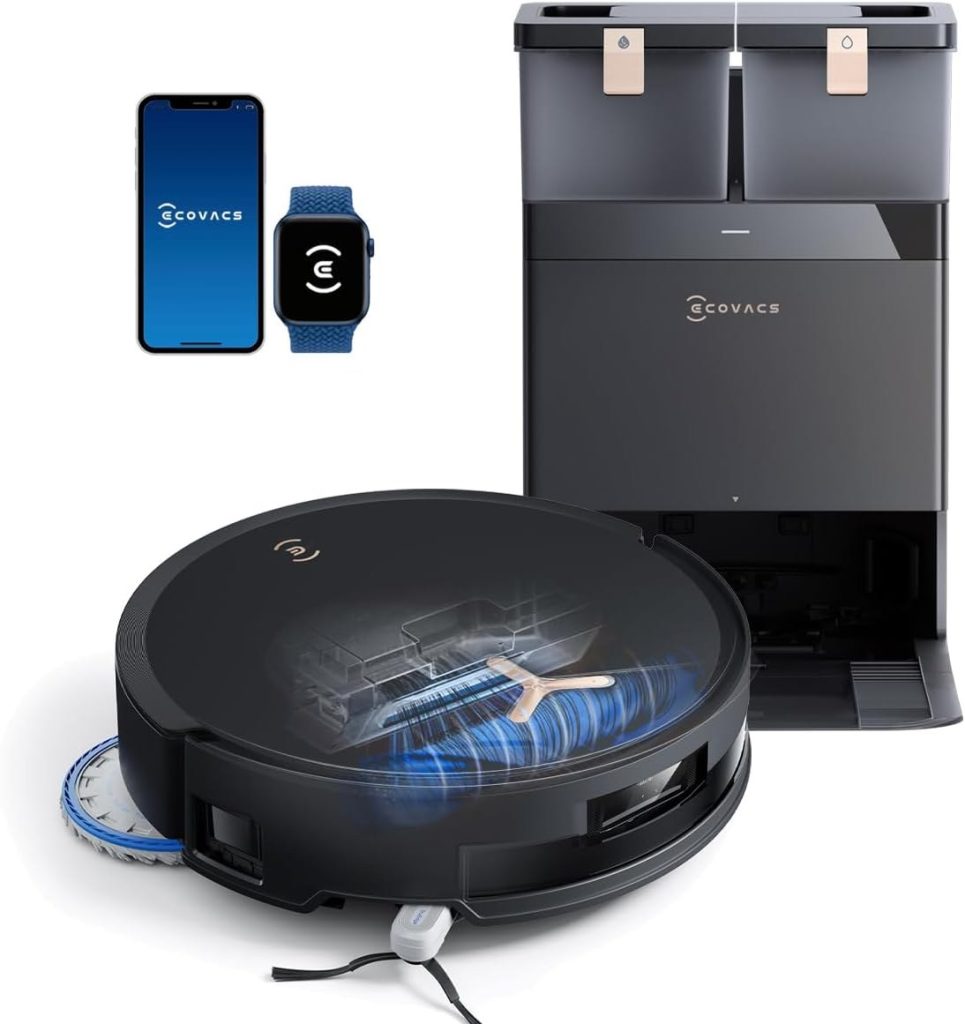
The ECOVACS DEEBOT T50 MAX PRO OMNI sits in the roughly $450 class. Its defining positioning is the OMNI dock station: the dock is the hub the robot returns to for emptying and servicing, which suits households that want a hands-off routine without stepping up to flagship pricing. It is a sensible middle step between the budget tier and the premium docks below.
ECOVACS leans into mop automation and pet hair: an advertised 18,500Pa, a BLAST airflow system, and a ZeroTangle brush designed for pet hair with less time spent cutting tangles. TruEdge reaches toward wall edges, the mop lifts 18 millimetres over carpets, and the OMNI station automates emptying, mop washing, drying, and refilling. Fewer routine jobs landing back on you is the real reason to pick it.
Pros
- Advertised 18,500Pa suction with a brush designed around pet hair.
- TruEdge side brush reaches toward wall edges.
- Mop lift keeps wet pads off carpets.
- OMNI dock automates emptying, mop washing, drying, and refilling.
Cons
- Full-size dock needs floor space and ongoing water care.
- Suction figures are manufacturer claims, not a cleaning score.
- Only worth it if you will use the mop automation.

roborock Qrevo S Pro — The Mop-Washing Dock Option
The roborock Qrevo S Pro lands around the $550 class. The Qrevo line is positioned around dock-based mop washing, making it a fit for homes with a lot of hard flooring where mopping matters as much as vacuuming. If your floors are mostly tile, wood, or laminate and you want the dock to handle mop upkeep, this is the model in the group aimed at you.
The Qrevo S Pro matches the ECOVACS on advertised suction, but its pitch is balance: dual spinning mops with adjustable water flow, carpet detection that lifts the mops by 10 millimetres and adjusts settings on mixed floors, and a dock that handles dust collection, hot-water mop washing (advertised at 167°F), warm-air drying, and refilling.
Pros
- Dual spinning mops with adjustable water flow.
- Carpet detection lifts the mops on mixed floors.
- Dock washes mops with hot water, dries them, and refills.
- Advertised 18,500Pa suction.
Cons
- Dock needs floor space, water changes, and cleaning of its own.
- Hot-water and suction figures are advertised specifications.
- Mostly-carpet homes will rarely use the mop-washing dock.
Dreame L40 Ultra Gen 2 — The Sweet Spot
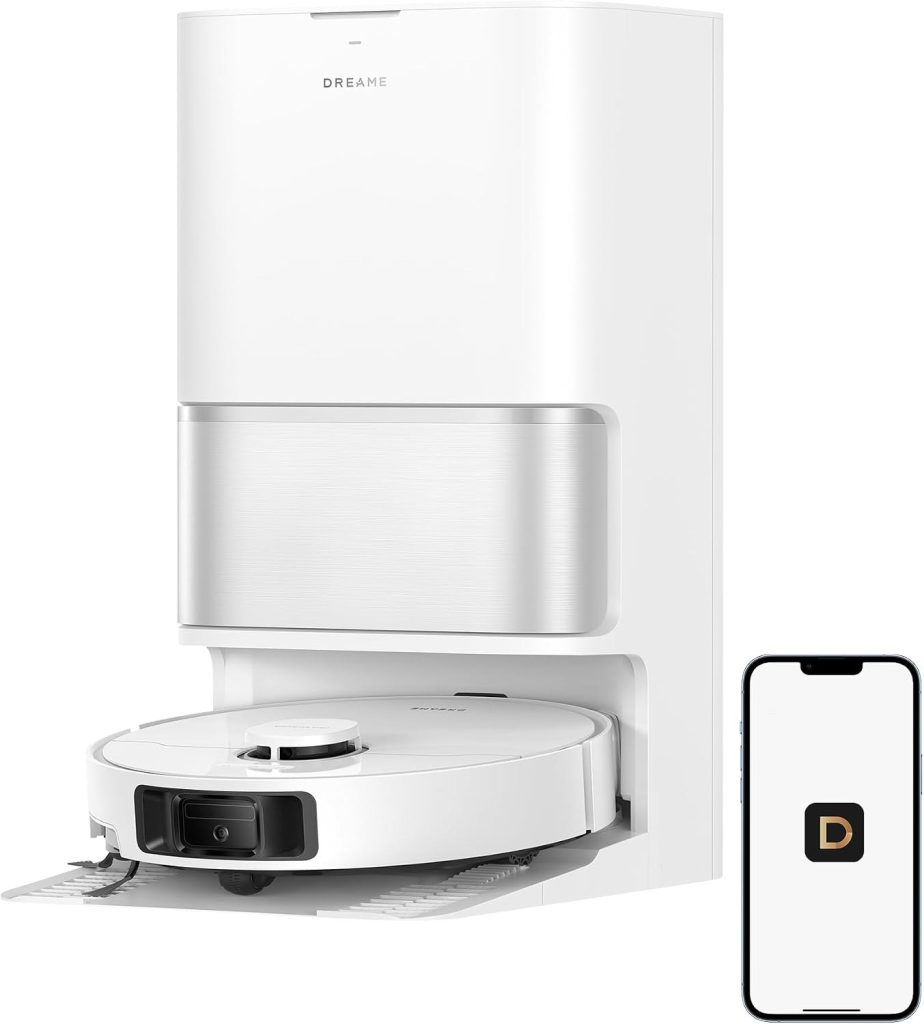
The Dreame L40 Ultra Gen 2 sits in the roughly $500 class and carries “Ultra” flagship-style positioning at about half the price of the Saros 20. For most buyers comparing this group, it represents the balance point: premium-tier feature positioning without the flagship-tier bill. If you are unsure where to land in this lineup, start your shortlist here.
Dreame steps the vacuum claim up to an advertised 25,000Pa, but the detail that stood out in our comparison was reach: an extendable side brush and mop that move toward corners and baseboards fixed brushes struggle to cover. Smart Pathfinder obstacle avoidance routes it around chair legs and shoes, and the all-in-one dock washes and dries the mops.
Pros
- Advertised 25,000Pa suction, the strongest mid-range claim here.
- Extendable side brush and mop reach corners fixed brushes miss.
- Obstacle avoidance plans around everyday objects.
- All-in-one dock washes and dries the mops.
Cons
- Dock needs a permanent spot; budget for consumables.
- No robot reaches every corner of a cluttered room.
- Suction is an advertised figure, not a pickup score.
Roborock Saros 20 — The Premium Flagship
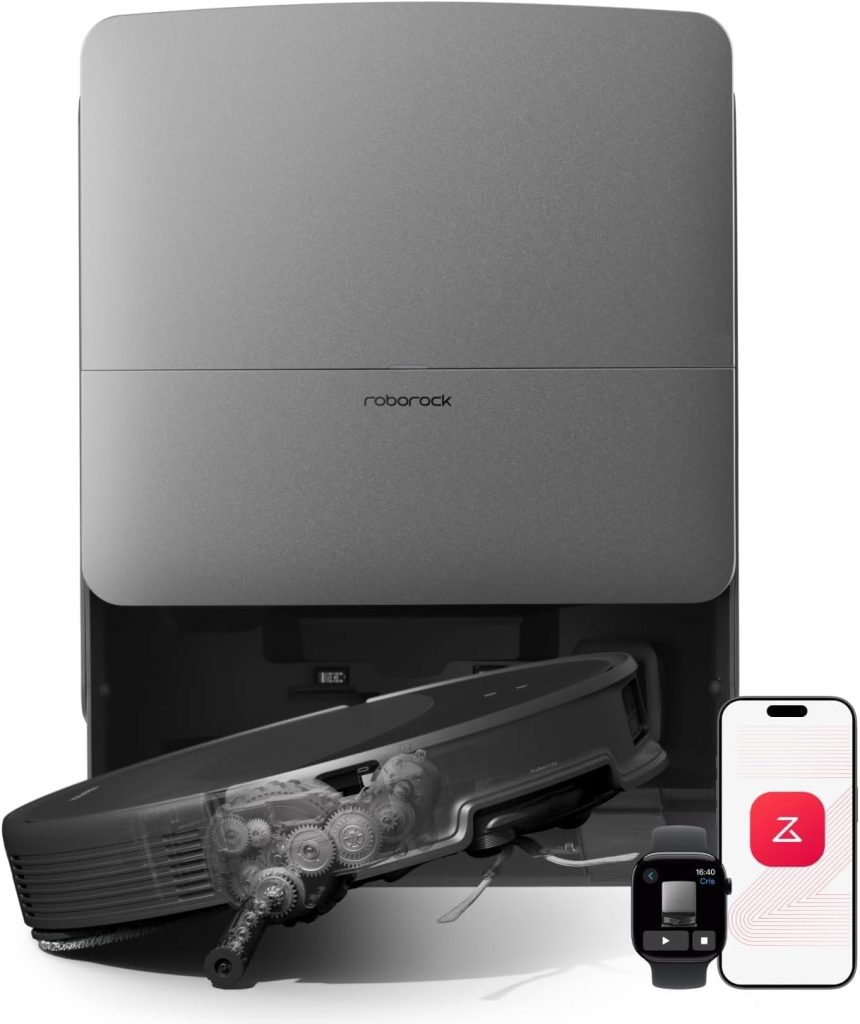
The Roborock Saros 20 tops the comparison in the $1,600 class. It is Roborock’s flagship positioning, and the standard Saros 20 uses dual spinning mops. One caution: the Saros 20 Sonic is a different model with a vibrating mopping system — make sure you are looking at the right one. The Saros 20 suits buyers who want the top of the range and are comfortable paying flagship money for it.
The Saros 20 carries Roborock’s most advanced positioning: a manufacturer-rated 36,000Pa claim, a slim body just over three inches tall, and an AdaptiLift chassis rated for double-layer thresholds up to 3.46 inches in specified conditions. Its RockDock adds high-temperature mop washing (advertised at 212°F), drying, and up to 65 days of dust collection as a manufacturer figure. It is the buy for homes whose layout actually uses those abilities.
Pros
- Manufacturer-rated 36,000Pa suction, the highest claim here.
- Slim body reaches under furniture that stops taller robots.
- AdaptiLift chassis rated for difficult thresholds.
- RockDock automates mop washing, drying, and dust collection.
Cons
- Flagship pricing, several times the budget pick.
- Threshold and clearance figures are conditional ratings.
- Large dock needs a permanent spot and consumables.
What to Know Before You Buy
- Price tiers in this comparison run from roughly $200 to $1,600 — features like self-empty docks appear at every level, so compare positioning, not just price.
- Dock-based models need floor space for the station and ongoing consumables, so factor that into the real cost.
- Mopping systems differ: the standard Saros 20 uses dual spinning mops, while the separate Saros 20 Sonic uses a vibrating pad.
- Prices on Amazon change frequently — check the current listing before deciding.
- Suction is only part of what makes the best robot vacuum cleaner for a home — brush design, navigation, and how often you will actually run it matter just as much.
- The best automatic vacuum is the one you can set and forget — check scheduling, recharge-and-resume, and whether it finds its dock on its own before you judge it on suction alone.
- When you compare the best robot vacuum cleaners, weigh brush design, navigation, and dock features next to suction — the suction FAQ below makes the same point about advertised numbers.
Carpet vs Hardwood: What Changes by Floor Type
Hard floors reward mopping. If most of your home is tile, wood, or laminate, mop washing, mop lift, and water control matter more than raw carpet agitation. Carpeted homes need the opposite emphasis: a brushroll that digs into pile, and a robot that can tell carpet from hard floor so it does not drag a wet mop across a rug. Mixed-floor homes should put mop lift and carpet detection near the top of the list, because that is what keeps one machine useful across both surfaces.
- Mostly hard floors: weight mop care and edge cleaning first.
- Mostly carpet: weight brushroll design and suction behaviour on pile first.
- Mixed floors: look for mop lift and carpet detection before anything else.
Navigation and Obstacle Avoidance, Explained
Older or cheaper robots often clean in a bump-and-turn pattern, covering rooms by chance over a long run. Mapping robots learn your floor plan instead, cleaning in orderly lines and remembering rooms for next time. Camera-based avoidance adds a second layer: it helps the robot steer around cables, shoes, and pet messes rather than pushing through them. No system is perfect in a cluttered room, so a quick tidy before a run still helps any robot, mapped or not.
Suction Power (Pa): What the Number Does and Does Not Tell You
Suction is measured in pascals (Pa), and brands quote it as a headline figure. A higher number does not always mean visibly cleaner floors, because pickup also depends on the brushroll, airflow, how the robot moves, and whether it makes repeated passes. Brands also do not measure under one shared standard, which is why the suction FAQ in this guide warns against comparing figures directly. Treat Pa as rough positioning, not a cleaning score.
Pet Hair: What Actually Helps
Pet hair tests three things: pickup, wrapping, and avoidance. A brushroll built to resist tangles saves you the job of cutting hair off the roller by hand — the Shark’s self-cleaning brushroll and the ECOVACS ZeroTangle brush are both pitched at exactly this problem, and both are covered in their reviews above. Long hair and heavy shedding still call for regular brush checks on any model. If your pet has accidents indoors, camera-based obstacle avoidance is worth weighing, since it can help the robot steer around messes instead of spreading them.
Anti-Tangle Brushrolls: How They Work
A standard brushroll wraps hair around itself, and sooner or later someone has to cut it free. Anti-tangle designs fight that in a few ways: combs that strip hair as the roller turns, bristle layouts that guide hair toward the dust inlet, and self-cleaning rollers that clear themselves during a run. None of them ends maintenance completely — hair, string, and rug tassels still need an occasional check — but they cut down how often you have to do it, which matters most in homes with pets or long hair.
Self-Emptying and Docks: Bagged, Bagless, and Compacting
Self-emptying docks come in three broad kinds, and the difference is running cost and dust handling. Bagged docks seal dirt into a bag you throw away, which suits allergy homes but adds replacement bags to the budget. Bagless docks skip the bags — the Shark’s base in this comparison is bagless, so there are no dust bags to buy — but emptying the bin yourself means more contact with dust. Compacting docks press dirt down so the dock holds more between empties. Whichever kind you pick, check what it costs to keep running, not just what the robot costs to buy.
Battery Life, Runtime, and Recharge-and-Resume
Runtime matters most in larger homes, where a small battery can leave rooms unfinished. Recharge-and-resume fixes much of that: the robot returns to charge partway through, then picks up where it left off instead of starting over. Runtime also shifts with suction mode and floor type, so a headline runtime figure is best read as a rough guide rather than a promise. For a big floor plan, recharge-and-resume matters more than a few extra minutes on paper.
Smart Home and App Features
The app is where a robot vacuum becomes a household tool rather than a novelty. Saved maps let you clean one room at a time, no-go zones keep the robot out of pet bowls and play areas, and multi-floor maps help in homes with more than one level. Voice control through Alexa or Google Assistant, spot cleaning for a spill, zone cleaning for a hallway, and scheduling for daily runs all come from the same place. That remote control is also why some buyers search for the best remote vacuum — the ability to start, stop, and direct cleaning from your phone matters most in homes where schedules change often.
Noise Levels: What to Expect
Robot vacuums are not silent, and suction mode changes how loud a run feels. Higher suction settings are louder, while quiet or eco modes trade some pickup for a calmer run. Many owners schedule cleaning while they are out, which makes noise a non-issue, but if you work from home or have light sleepers, check whether the model you are considering offers a quiet mode for daytime runs. No decibel figure is quoted here, since brands measure noise differently and room acoustics change how loud a robot sounds in practice.
Robot Maintenance: How to Clean Your Robot Vacuum
A robot vacuum cleans your floors, but it still needs its own upkeep. Empty the bin or dock on schedule, pull hair and string off the brushroll, and wipe the sensors and cameras so navigation stays reliable. Mop pads need washing and drying, or they will smell, and filters and brushes wear out and need replacing on the manufacturer’s schedule. Ten minutes of care every couple of weeks keeps pickup strong and avoids most of the problems owners blame on the robot.
- Empty the dustbin or dock before it overfills.
- Check the brushroll for wrapped hair and string.
- Wipe sensors and cameras so the robot keeps navigating well.
- Wash and dry mop pads; replace filters and brushes when worn.
Budget Tier: What You Get Under Around $250, and What Gets Cut
The budget tier buys daily vacuuming and, increasingly, self-emptying — self-emptying now appears even at the budget end of this comparison. What usually gets cut is dock automation: no mop washing, simpler navigation, smaller dust capacity, and fewer app features like multi-floor maps. That trade is fine for smaller homes and first-time buyers, because a budget robot run daily keeps floors cleaner than a flagship run once a week. Spend more only when you know which cut feature you actually miss.
Robot Height and Under-Furniture Fit
A robot can only clean where it fits. Measure the clearance under your sofas, beds, and low cabinets before you buy, and compare it with the robot’s height — a slim body reaches dust under furniture that stops a taller machine. Watch out for low-hanging table skirts and recliner mechanisms too, since a robot that squeezes under a sofa can still get stuck on what hangs below it. Height is a small spec that decides a large share of real-world coverage.
Thresholds, Rugs, and Multi-Level Floors
Raised thresholds between rooms, thick rug edges, and tassels are where robots get stuck. A robot that climbs thresholds well moves freely between rooms instead of cleaning one room and calling it done. For multi-level homes, check whether the app saves a map per floor, since carrying the robot upstairs without a saved map means it relearns the floor each time. Cliff sensors handle stairs, but they cannot help a robot that cannot climb the lip into the next room.
Warranty: What to Check Before You Buy
Read the warranty terms before you order, not after something breaks. Check how long coverage lasts, whether the dock is covered on the same terms as the robot, and what counts as a consumable that is never covered. Keep your receipt and the exact model name, since similar-sounding models can carry different terms. No brand’s warranty length is promised here — terms change, and the listing at purchase time is the one that counts.
Who It’s For
Budget buyers and first-time owners: the Shark. Pet homes that mop hard floors often: the ECOVACS or the Qrevo S Pro. Most family homes: the Dreame. Larger homes with low furniture, raised thresholds, and a flagship budget: the Saros 20. If none of those fit, buy the simpler tier and run it daily; frequency beats flagship features on real floors. A good robot vacuum does not need flagship specs — it needs to match your floors, run on a schedule you will keep, and empty itself often enough that you forget about it.
FAQ
Which of these five is the best value?
For most homes, the Dreame L40 Ultra Gen 2. It pairs the strongest mid-range suction claim with extendable edge tools and a mop-washing dock, at about half the price class of the flagship. If budget comes first, the Shark is the value pick instead. That is also why there is no single answer to the best robot vacuum cleaner for every home — the value pick changes with your floors and your budget.
Do I need a mop-washing dock?
Only if you mop often. Homes with mostly hard flooring benefit from the ECOVACS, Qrevo, Dreame, and Saros docks because the pads get washed and dried for you. Mostly-carpet homes can save money with a self-empty base like the Shark’s.
Are the suction numbers directly comparable?
Not cleanly. Each figure here is a manufacturer-advertised maximum, and brands do not measure under one shared standard. Use the numbers for rough positioning inside a brand’s range, and weigh brush design, navigation, and dock features alongside them.
What is the difference between the Saros 20 and the Saros 20 Sonic?
They are different models. The standard Saros 20 in this comparison uses dual spinning mops. The Saros 20 Sonic uses a vibrating mopping system instead. Check the exact model name on the listing before you order.
What is the best robot vacuum?
It depends on your home. For most family homes in this comparison, the Dreame L40 Ultra Gen 2 is the balance point. On a budget, the Shark Matrix Plus is the honest answer. For larger, mixed-floor homes with a flagship budget, the Roborock Saros 20 sits at the top. Match the tier to your floors, your pets, and how much dock work you want done for you, and you will land on the right one.
Are robot vacuums worth it?
For maintenance cleaning, yes. A robot run daily keeps dust and pet hair from building up, which is the job most homes actually need. It is not a full replacement for a deep clean — stairs, upholstery, and heavy ground-in dirt still need a regular vacuum — but as a daily cleaner that runs while you do something else, it earns its place in most homes.
How long do robot vacuums last?
With regular maintenance, many owners get several years of use out of a robot vacuum. Batteries and brushes are wear parts and will need replacing over time, and how long a machine lasts depends on how often it runs and how well it is looked after. Keeping the brushroll clear, the sensors clean, and the filters fresh is what stretches a robot’s life.
How These Picks Were Chosen
These picks come from our own Smart Tech & Gadget Finds video comparison of the five models above, weighed against published manufacturer specifications. No lab test scores, test hours, or units-tested figures are claimed here, because none were run for this guide. Suction figures and dock claims quoted in the reviews are manufacturer-advertised numbers, and the guide says so wherever they appear.
Final Verdict
Start at the tier your home actually needs. The Shark is the honest budget answer, the ECOVACS and Qrevo S Pro are the mop-care picks, the Dreame is the balance point we would shortlist first for a typical family home, and the Saros 20 is the flagship for larger, mixed-floor homes. In our comparison, money spent on the dock you will actually use beat money spent on the biggest suction number every time. Whatever you choose, the best vacuum robot is the one that runs often enough to keep your floors clean — daily runs on a simpler machine beat a flagship that only runs on weekends. If you take one line from this guide, let it be this: the best robot vacuum is the one matched to your home, not the one with the loudest spec sheet.
Affiliate Disclosure: This article contains Amazon affiliate links. As an Amazon Associate, Smart Tech & Gadget Finds earns from qualifying purchases at no extra cost to you. #ad
