
Dreame L40 Ultra Gen 2 Review: The $500 Sweet Spot
This dreame l40 ultra gen 2 review covers the sweet spot of our five-model comparison: flagship-style Ultra positioning with an all-in-one dock that washes and dries the mops, extendable side brush and mop for corners, and Smart Pathfinder obstacle avoidance. Its suction figure is an advertised claim. This dreame l40 ultra gen 2 robot vacuum and mop sits in the middle of our comparison on purpose: dock-based mopping and flagship-style positioning, without the flagship tier’s price class.
In our channel’s robot vacuum comparisons, one model keeps landing in the “just buy this one” position: the Dreame L40 Ultra Gen 2. It sits in the roughly $500 class — well below the flagship Roborock Saros 20 — yet carries “Ultra” flagship-style positioning. This review explains why the middle of the range is so often the smartest place to buy, and where the L40 Ultra Gen 2 fits.
Key Takeaways
- The “just buy this one” position in our channel’s robot vacuum comparisons, and the sweet spot of our five-model comparison.
- “Ultra” line positioning: Dreame’s flagship-style feature set at a mid-range price.
- Advertised 25,000Pa suction — a Dreame manufacturer claim, the strongest mid-range suction claim in our comparison, not a pickup score.
- Extendable side brush and mop that move toward corners and baseboards that fixed brushes struggle to cover.
- Smart Pathfinder obstacle avoidance, per Dreame, and an all-in-one dock that washes and dries the mops.
Note: The video above uses AI-generated visualizations based on manufacturer listings — it is not hands-on test footage.
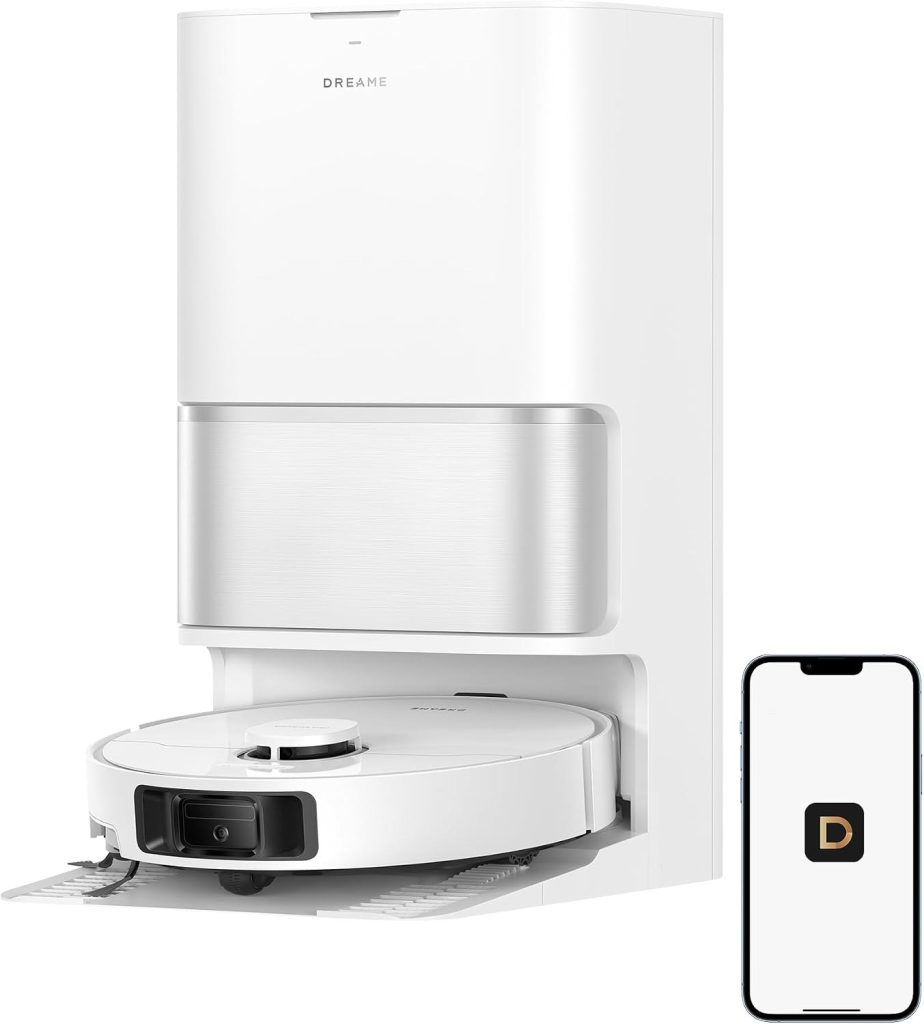
Key Specs at a Glance
When we lined these models up for our channel comparison, the Dreame was where the specification sheet stopped looking mid-range. Its suction figure is an advertised manufacturer claim, as every figure in this table is — brands do not measure under one shared standard, so read the numbers as positioning within the range, not as a pickup score. Read this dreame l40 ultra robot vacuum by tier, not by headline figure alone: the specs table positions it as a mid-range machine with flagship-style dock features, and that tier positioning is the whole argument for it. For readers checking dreame l40 ultra specs, the table below is the article’s own summary — every figure in it is a manufacturer-advertised claim, and the listing for your exact model is the document that counts where a figure matters to you.
| Spec | Detail |
|---|---|
| Price class | Roughly the $500 class — about half the price class of the flagship Roborock Saros 20 |
| Suction | Advertised 25,000Pa (Dreame manufacturer claim) |
| Edge reach | Extendable side brush and mop that move toward corners and baseboards |
| Obstacle avoidance | Smart Pathfinder obstacle avoidance, per Dreame |
| Dock | All-in-one dock that washes and dries the mops |
| Positioning | “Ultra” line — Dreame’s flagship-style feature set at a mid-range price |
Key Features
- Mid-premium positioning in the ~$500 class of our five-model comparison
- “Ultra” line positioning: Dreame’s flagship-style feature set at a mid-range price
- Dock-based system positioning, consistent with the premium tier of the comparison
- Roughly half the price class of the flagship Roborock Saros 20
- Advertised 25,000Pa suction: Dreame’s manufacturer claim, the strongest mid-range suction claim in our comparison
- Extendable side brush and mop: the edge tools move out toward corners and baseboards that fixed brushes struggle to cover
- Smart Pathfinder obstacle avoidance: routes around everyday objects such as chair legs and shoes, per Dreame
- All-in-one dock: washes and dries the mops as part of the routine
- As a dreame l40 ultra robot vacuum and mop, its daily job is two routines in one machine: vacuuming with edge reach, plus mopping with a dock that washes and dries the pads.
In our comparison, the detail that stood out was reach. Hair, dust and crumbs collect along baseboards and in corners, and those are exactly the spots a fixed side brush leaves behind. Dreame’s answer is to extend the brush and the mop toward the wall, then back that up with obstacle avoidance so the robot spends its time cleaning rather than nudging furniture. Paired with a dock that washes and dries the pads, it is a package aimed at homes that will run the robot daily.
Pros and Cons
In our comparison, the Dreame earned its “sweet spot” label on balance: the strongest mid-range suction claim, edge tools that address a real gap, and a mop-washing dock. Its limits are the normal dock-model limits — space, consumables, and the fact that no robot covers every corner of a cluttered room.
Pros
- Advertised 25,000Pa suction, the strongest mid-range claim in our comparison
- Extendable side brush and mop reach corners and baseboards that fixed brushes miss
- Obstacle avoidance plans around everyday objects, so runs finish with less rescuing
- All-in-one dock washes and dries the mops, keeping a daily routine realistic
Cons
- The dock needs a permanent spot, and consumables are an ongoing cost over the life of the machine
- Suction is an advertised figure, not a pickup score — brush design and floor type still decide results
- No robot reaches every corner of a cluttered room, extendable tools or not
What to Know Before You Buy
The buying logic here is about tiers. The budget tier (around $200) covers the basics, including self-emptying on models like the Shark Matrix Plus. The flagship tier (around $1,600) buys the top of the range. The L40 Ultra Gen 2’s argument is that the middle tier captures most of what makes the flagship experience appealing — advanced dock-based positioning and an “Ultra” feature set — at a price most households can justify.
That does not make it the right choice for everyone. If your home is small or your budget is firm, the budget tier exists for a reason. And if you specifically want the flagship — the Saros 20 and its dual spinning mops — no mid-range model is a substitute for that positioning. Be honest about which buyer you are.
As with any dock-based robot, allow space for the dock and budget for consumables over the life of the machine. Dreame’s model names can also be confusing across generations, so confirm you are looking at the L40 Ultra Gen 2 listing specifically. Amazon prices change frequently, so verify the current price on the listing. For readers checking the dreame l40 ultra price, this review frames it only in price-class terms — the listing carries the current figure, and it is the only place that can confirm it. If you are watching for a dreame l40 ultra sale, treat any sale claim as listing-only information — this review does not claim a sale exists, and only the listing can confirm one.
Gen 1 vs Gen 2: What to Check Before You Order
Dreame’s model names can be confusing across generations — this review already says so in the buying section — and the “Gen 2” label is the part to verify on the listing. Generation labels signal the newer iteration of a line, but the exact differences between generations vary by listing and region, and a review of the original model does not automatically describe the Gen 2. Before you order, confirm the listing itself says Gen 2, and check that the dock functions and edge tools on that listing match the ones described here. If a listing does not name the generation clearly, treat it as a different model until proven otherwise.
Pet Hair and Allergens: Care Guidance, Not a Score
Pet hair is a maintenance question before it is a performance question. A robot that runs daily keeps hair from building up in the brushroll and the base, and that routine matters more than any single pickup claim. Check the brushroll after heavy shedding periods and whenever you notice hair wrapping, and clean the filters whenever airflow seems reduced or dust builds up visibly. On filtration, this review makes no HEPA claim for this model — check the listing for your exact model’s filtration claims rather than assuming them from the brand name. No pickup percentages or test scores are quoted here, and no pet-hair performance result is claimed for this model.
Noise: What to Expect
Robot vacuums are not silent, and suction mode changes how loud a run feels. Higher suction settings are louder, while quiet or eco modes trade some pickup for a calmer run. Many owners schedule cleaning while they are out, which makes noise a non-issue, but if you work from home or have light sleepers, check whether the model you are considering offers a quiet mode for daytime runs. No decibel figure is quoted here, since brands measure noise differently and room acoustics change how loud a robot sounds in practice.
Battery, Runtime, and Coverage: What Matters in a Larger Home
Runtime matters most in larger homes, where a small battery can leave rooms unfinished. Coverage per run, recharge-and-resume behaviour, and whether one map covers all your rooms are the questions that decide whether a larger floor plan gets cleaned in one session or two. Runtime also shifts with suction mode and floor type, so a headline runtime figure is best read as a rough guide rather than a promise. Check the listing for your exact model’s battery and resume behaviour — competitor sources disagree on the battery figure for this line, so no figure is stated here, and the listing for your exact model is the document that counts.
Suction and Vacuum Performance: What the Number Does and Does Not Tell You
Suction is usually quoted in pascals, and this review deliberately treats it the way the specs section does: suction figures in this category are brand claims, not a shared cleaning score. A higher number does not always mean visibly cleaner floors, because pickup also depends on the brushroll, airflow, how the robot moves, and whether it makes repeated passes. Brands do not measure under one shared standard, so treat any suction figure as rough positioning between tiers, not a cleaning score. At the mid-range tier, dock work, edge reach, and run frequency matter at least as much as any single suction figure.
Mopping in Detail: Stains, Water, and Edges
Light maintenance mopping handles everyday marks: paw prints, kitchen splashes, and dust film on hard floors. Heavier stains — dried coffee, red wine, mud, or food spills — are a different job, and a mid-range mop should be judged on whether it lightens them over repeated passes, not on whether it erases them in one go. Residual water is part of the same question: a pad that stays too wet leaves streaks on hard floors, while a pad that runs dry stops cleaning, so pad dampness and rinse routine decide the result as much as the mop itself. On edges, this review’s own case is the extendable side brush and mop reaching toward corners — Dreame’s own feature names for the edge tools vary by model and listing, so confirm which edge tools your exact listing includes rather than assuming a name from another model. No stain-removal percentages or test scores are quoted here.
Mop Lift and Thick Carpet: the Check That Matters
Mop lift decides whether damp pads drag across your rugs. On low-pile rugs and hard floors, a small lift is usually enough; on thick or high-pile carpet, a mop that cannot lift clear will wet carpet it should have avoided, and carpet detection that backs the robot off rugs is only a partial answer. Before you buy, check the listing for your exact model’s mop-lift figure and for how it behaves on carpet — this review states no lift figure, and the figure varies by listing, so the listing is the document that counts. If your home is mostly thick carpet with a mop-washing wish list, that is the point at which the flagship tier, or a vacuum-only routine, deserves a second look.
Obstacle Avoidance: Smart Pathfinder and Its Limits
Per Dreame, this model uses Smart Pathfinder obstacle avoidance, and this review’s own case is that it routes around everyday objects such as chair legs and shoes so runs finish with less rescuing. That is the manufacturer positioning, and it should be read as such: no avoidance system is perfect in a cluttered room, and a quick tidy before a run still helps any robot. One balanced note from independent coverage: reviewers reporting on this model described its obstacle avoidance as weaker than the original L40 Ultra’s, with no scores or figures attached to that comparison here. Check how it behaves around your own clutter during the return window instead of treating any avoidance claim as a guarantee.
Navigation, Mapping, and the App: What to Check
Mapping is mostly first-run work: the robot learns your floor plan on its early runs, and the app then lets you use that map instead of running the whole home every time. Give the first mapping run a clear floor — cables, shoes, and loose rugs slow it down and teach it the wrong layout. In the app, the features that matter daily are saved maps, room-by-room cleaning, no-go zones that keep the robot out of pet bowls and play areas, and scheduling that keeps daily runs automatic. Check which of these your exact model and app version actually include before you buy, since scheduling and zone limits are the usual mid-range trade-offs. Voice control and smart-home support, including Matter, also vary by model and region — check the listing for your exact model rather than assuming support from the brand name alone.
The Dock: What It Does and What Stays on Your List
Per Dreame’s positioning for this model, the dock washes and dries the mops as part of the cleaning routine, alongside its role as the robot’s home base. That removes the least pleasant job of owning a mopping robot — dealing with dirty pads after every run. What stays on your list is dock upkeep: emptying dirty water, wiping the dock tray, and keeping the dock area clear so the robot finds its home reliably. Two dock questions to confirm on the listing for your exact model: whether the dock refills water on its own, and whether mop drying uses warm air — competitor sources describe the wash differently on these points, so no claim is made here, and the listing for your exact model is the document that counts.
Cost of Ownership: Consumables and No Subscription for the Core Routine
The robot’s price is only the first cost of ownership. Over its life you will replace mop pads, clean the brushroll and filters, and wipe the dock tray — and this review already flags consumables as an ongoing cost for any dock-based model. No prices or service intervals are quoted here, since those change; the manual and the listing for your exact model are the documents that count. One cost that does not apply to the core routine: unlike some smart-home categories, a robot vacuum’s core cleaning — mapping, scheduling, and room cleaning — is not a subscription feature on this class of machine. If a listing mentions an optional paid app tier, treat it as optional, not required.
Setup and What’s in the Box
Setup is mostly mapping work: the robot learns your floor plan on its first runs, and the app then lets you use that map instead of running the whole home every time. Give the first mapping run a clear floor — cables, shoes, and loose rugs slow it down and teach it the wrong layout. Check what comes in the box at purchase time, since box contents can vary by retailer and region — including which brush variant your exact model ships with, since competitor listings disagree on whether the TriCut brush is included or sold separately. No dimensions, weights, or bin and tank capacities are quoted here, since those vary by listing; the listing and the manual for your exact model are the documents that count.
Dimensions, Height, and Dock Space
Two measurements decide whether this robot fits your home: the robot’s own height, which decides what furniture it can clean under, and the dock’s footprint, which needs a permanent spot with clearance around it. This review already flags dock space as a buying consideration, and it applies twice over here — a dock that washes and dries mops is not a small accessory. If you are checking dreame l40 ultra dimensions, the listing for your exact model carries the figures; this review states none, since they vary by listing. Color options also vary by retailer and region, so confirm the color on the listing itself rather than from another model’s photos.
Who Should Skip It — and What to Compare Instead
Skip this model if your budget is firmly at the entry tier — the Shark Matrix Plus in our comparison covers the basics at the budget tier, including self-emptying — or if only the flagship will do, which is the Roborock Saros 20’s ground with its dual spinning mops. Skip it too if your home is mostly thick carpet and you want a mop-washing routine above all else; that combination is where the mop-lift check in this guide matters most. Neither alternative is reviewed here beyond its role in our comparison, and neither changes the case for the Dreame itself — they are simply the two comparisons worth making before you pay. For a typical family home that wants a premium, dock-based routine without flagship pricing, this model’s case in this review is the one to weigh.
Who It’s For
The Dreame L40 Ultra Gen 2 is for typical family homes that want a premium, dock-based robot vacuum experience without flagship pricing — the balanced choice in our lineup. It is also a strong pick for buyers upgrading from a basic robot who want to feel a real step up. See the Dreame L40 Ultra Gen 2 listing for complete manufacturer specifications. If you arrived here after reading dreame vacuum reviews that rank by suction alone, weigh this one by tier instead — the mid-range dock routine and edge tools matter more day to day than a headline number.
FAQ
What does the advertised 25,000Pa suction figure actually mean?
It is Dreame’s advertised maximum for this model, not an independent cleaning score. Brands do not measure suction under one shared standard, so the figure is best used for rough positioning: it tells you Dreame places this model at the strong end of the mid-range. Brush design, navigation and how often you run it matter just as much on real floors. That is the context for any dreame l40 ultra suction power search: the figure is a manufacturer claim for tier positioning, not a measured pickup result, and brush design and run frequency matter just as much on real floors.
Why does the extendable side brush and mop matter?
Because dirt collects where fixed brushes cannot reach — along baseboards, in corners, and around furniture feet. In our comparison, the Dreame’s extending edge tools were its clearest practical difference from the fixed-brush models around it. They do not solve cluttered corners behind heavy furniture, but they close a gap most robots simply leave.
What does the all-in-one dock do?
Per Dreame’s positioning for this model, the dock washes and dries the mops as part of the cleaning routine, alongside the usual dock role as the robot’s home base. That removes the least pleasant job of owning a mopping robot — dealing with dirty pads after every run. Confirm the full dock function list on the listing before you order.
How does the L40 Ultra Gen 2 compare with the Roborock Saros 20?
They sit in different classes. The Saros 20 is the flagship at roughly three times this model’s price class, and the standard Saros 20 uses dual spinning mops — a different model from the Saros 20 Sonic, which uses a vibrating mopping system. The Dreame’s argument is that it captures the dock-based, premium-style experience most homes want at about half the flagship’s price class.
Who should buy a cheaper or pricier model instead?
If your home is small or your budget is firm, the roughly $200-class Shark Matrix Plus in our comparison covers the basics, including self-emptying. If you specifically want the flagship tier and its top-of-range positioning, that is the Saros 20’s ground. Most family homes land between those two, which is where this model sits.
What is the difference between the Dreame L40 Ultra Gen 1 and Gen 2?
Gen 2 is the newer generation of the L40 Ultra line, and that generation label is the part to verify on the listing. The exact differences between generations vary by listing and region, and this review states no generation-change figure or feature list, since those vary by source. If you are comparing a Gen 1 review with this Gen 2 review, do not assume the older review describes the newer model — confirm the generation on the listing itself, and check that the dock functions and edge tools on that listing match the ones described here.
How does the L40 Ultra Gen 2 handle carpet?
On low-pile carpet and rugs, the combination this review describes — the advertised suction claim, the brushroll, and repeated passes — is the working answer, and run frequency matters as much as any single figure. On thick or high-pile carpet, the question changes: mop lift and carpet behaviour decide whether the mopping routine helps or gets in the way, and this review states no lift figure, so check the listing for your exact model. No carpet pickup percentages or test scores are quoted here, and no carpet performance result is claimed for this model — floor performance varies with pile depth, debris type, and how often the robot runs.
Is Dreame a good brand?
Put modestly: Dreame is an established robot-vacuum brand in the mid-range of this comparison, and this review judges the model, not the brand. A brand name alone does not guarantee the right model for your home — the tier, the dock routine, and the edge tools in this review are the parts that decide that. For brand-level questions such as warranty terms and support in your region, the listing and Dreame’s own support pages for your exact model are the documents that count; this review makes no market-share, sales, or reliability claim about the brand.
How These Picks Were Chosen
These picks come from our own Smart Tech & Gadget Finds video comparison of the five models in this series, weighed against published manufacturer specifications. No lab test scores, test hours, or units-tested figures are claimed here, because none were run for this guide. Suction figures and dock claims quoted in the review are manufacturer-advertised numbers, and the review says so wherever they appear.
Final Verdict
For most homes in our comparison, the Dreame L40 Ultra Gen 2 is the model we would shortlist first. It pairs the strongest mid-range suction claim with extendable edge tools, obstacle avoidance and a dock that washes and dries the mops, at roughly half the flagship’s price class. Skip it if your budget is firmly at the entry tier, or if only the flagship will do. For a typical family home that wants a premium, dock-based routine without flagship pricing, this is the balanced pick of the lineup. For readers comparing each dreame l40 ultra review they find, the question to carry in is the same: does the mid-range dock and edge-tool package fit your home?
Affiliate Disclosure: This article contains Amazon affiliate links. As an Amazon Associate, Smart Tech & Gadget Finds earns from qualifying purchases at no extra cost to you. #ad

