Best Air Purifiers for Pet Hair & Odors 2026: 6 Compared Honestly
Best Air Purifiers for Pet Hair & Odors 2026: 6 Compared Honestly
For most pet homes, start with the Levoit Vital 200S-P: verified cleaning power plus a pet-specific design — a wide inlet shaped to catch floating hair, a washable pre-filter, and an app mode tuned for pet hair and dander. If odor is the real complaint, pick the Winix 5520 instead, for its deep bed of pelleted activated carbon.
Key Takeaways
- Start with the Levoit Vital 200S-P for most pet homes: AHAM-verified CADR, a U-shaped pet-hair inlet, a washable pre-filter, and VeSync app control with Pet Mode.
- Size by honest numbers, not headlines. Headline coverage is rated at one air change per hour, while sizing that actually keeps dander down works at around five changes per hour. Every room size in this comparison is the honest one.
- Odor pick: the Winix 5520, with a pelleted AOC activated-carbon filter backed by True HEPA.
- Two models cannot be sized honestly: Shark and Dyson publish no CADR, so this comparison quotes no room size for them — and neither should anyone else.
- Purifiers work on what is airborne. Settled hair in carpets and on sofas still needs a vacuum, and no purifier replaces one.
- Quick verdict: Levoit for most homes; Winix for odor; Coway for a quiet bedroom; Blueair for a big open space; Shark if you hate filter changes; Dyson if you want a fan and purifier in one machine.
Top 3 Picks
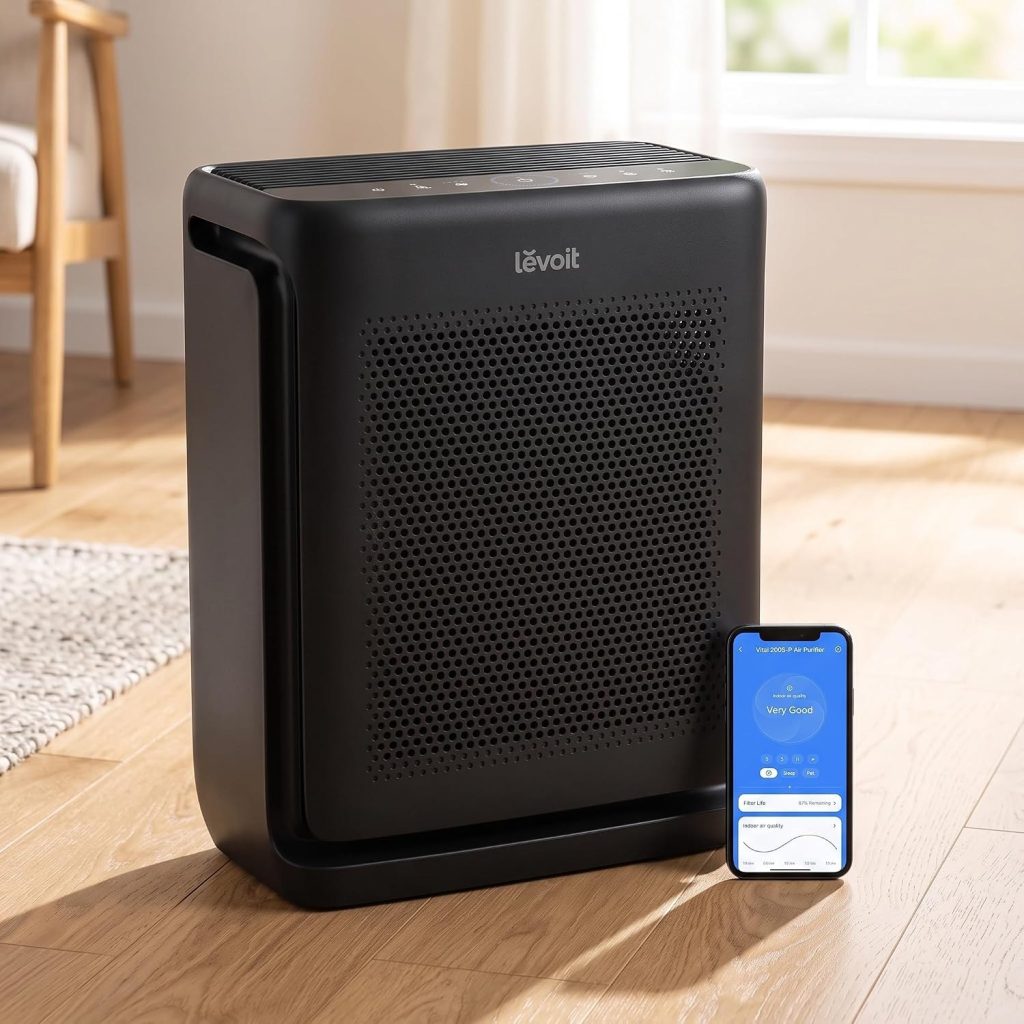
- Levoit Vital 200S-P — Best smart pet pick. AHAM-verified CADR (Smoke 250 / Dust 254 / Pollen 289 CFM), an honest size of roughly 390 sq ft, a U-shaped pet-hair inlet, and a washable pre-filter.
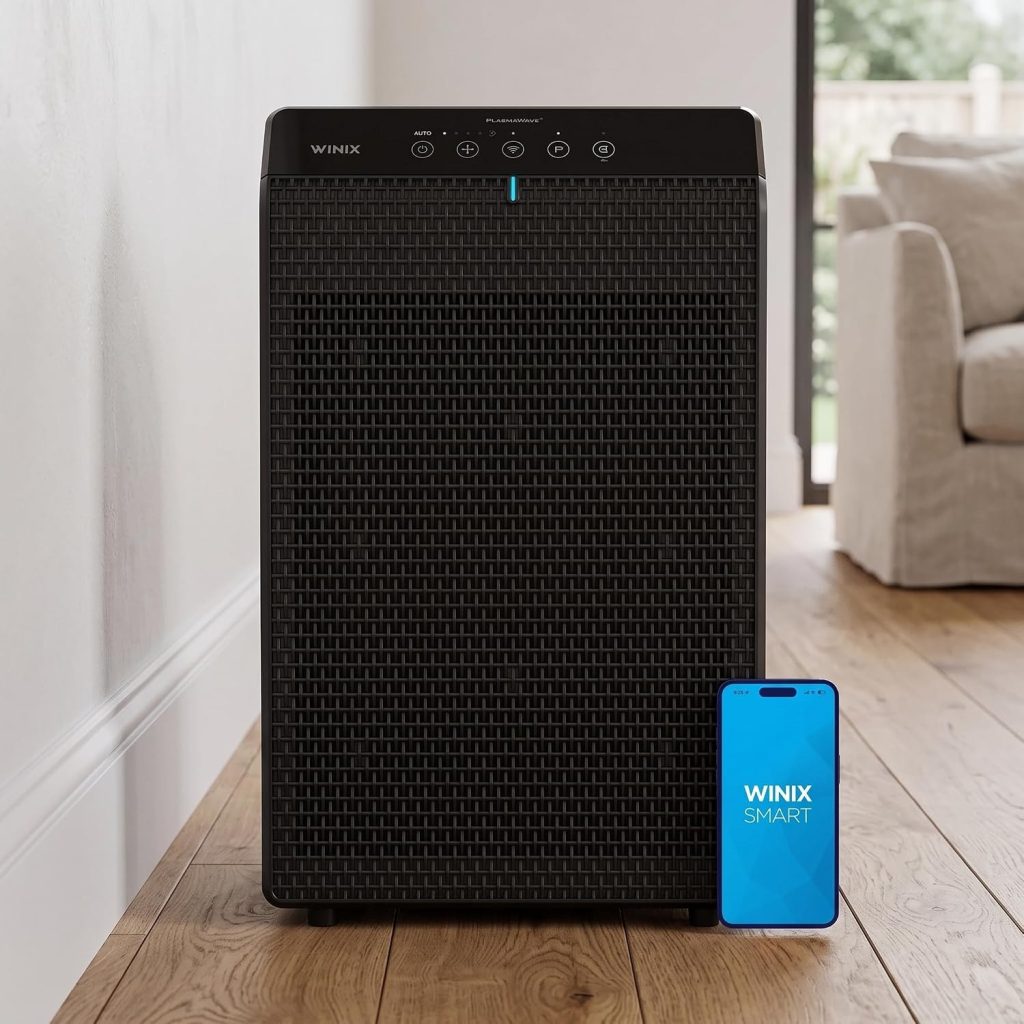
- Winix 5520 — Best for odors. A pelleted AOC activated-carbon filter backed by True HEPA and a washable pre-filter, with an AHAM PM2.5 CADR of 252 CFM (dust) and an honest size of roughly 390 sq ft.
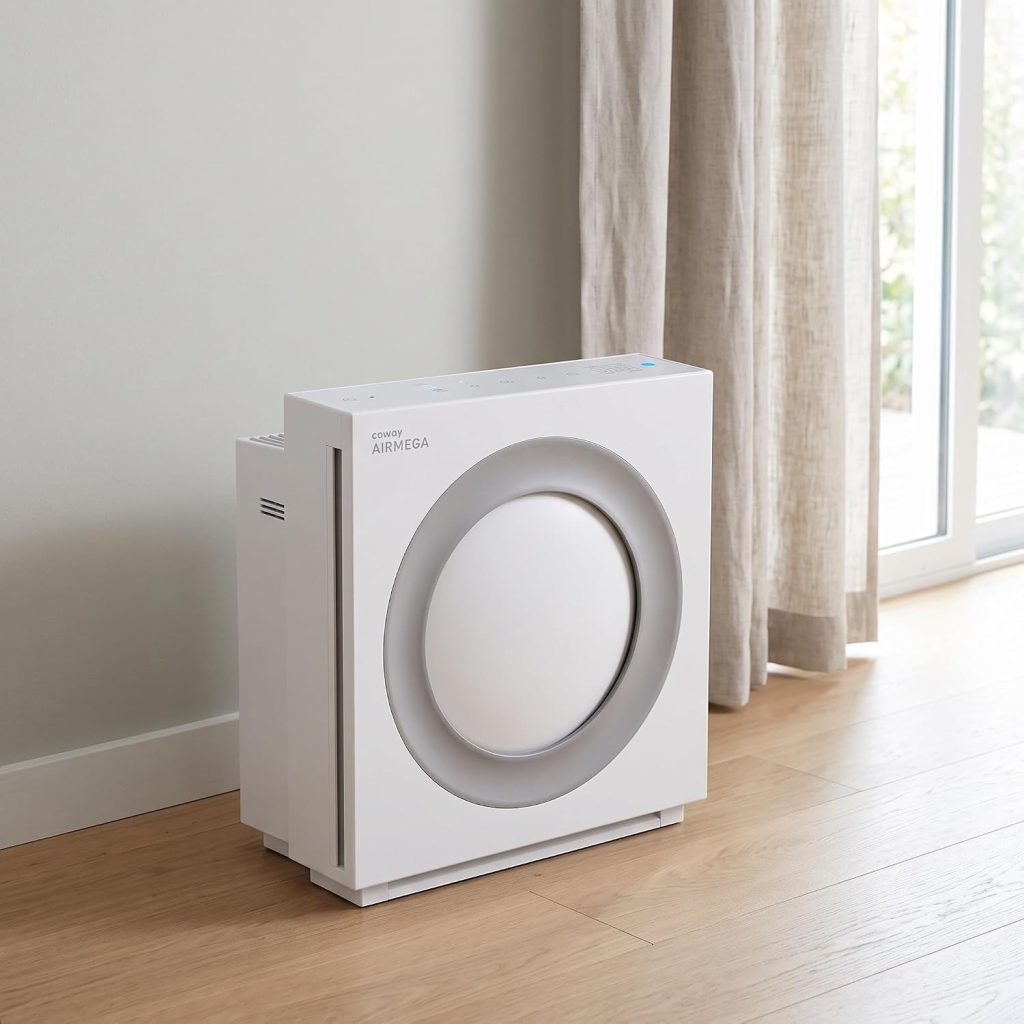
- Coway Airmega Mighty 2 — Best for the bedroom (quietest). Sleep mode rated at 19 dB by Coway, CADR of Smoke 240 / Dust 242 / Pollen 249 CFM, an honest size of roughly 370 sq ft, and a washable slide-out pre-filter.
Blueair Blue Pure 211i Max (large rooms), Shark NeverChange HP301 (lowest maintenance), and Dyson Purifier Cool Gen1 TP10 (premium pick) round out the full comparison below. If your search begins with the best air purifier for pets in general rather than one pet problem, this comparison is built for that: six different answers to hair, odor, quiet, room size, maintenance, and premium build.
At a Glance
| Product | Best for | Key spec(s) | Link |
|---|---|---|---|
| Levoit Vital 200S-P | Best smart pet pick | AHAM-verified CADR (Smoke 250 / Dust 254 / Pollen 289 CFM); honest size roughly 390 sq ft; U-shaped pet-hair inlet, washable pre-filter, VeSync app with Pet Mode | View on Amazon |
| Winix 5520 | Best for odors | AHAM PM2.5 CADR 252 CFM (dust); honest size roughly 390 sq ft; pelleted AOC carbon, True HEPA, washable pre-filter, PlasmaWave can be switched off | View on Amazon |
| Coway Airmega Mighty 2 | Best for the bedroom | CADR Smoke 240 / Dust 242 / Pollen 249 CFM; honest size roughly 370 sq ft; sleep mode 19 dB (Coway rating); MegaScan laser sensor, Max2 filter, washable slide-out pre-filter, no app | View on Amazon |
| Blueair Blue Pure 211i Max | Best for large rooms | DOE-based CADR 450 / 452 / 435 CFM; honest size roughly 675 sq ft; HEPASilent dual filtration; 23 dB on low; washable fabric pre-filters, app and voice control | View on Amazon |
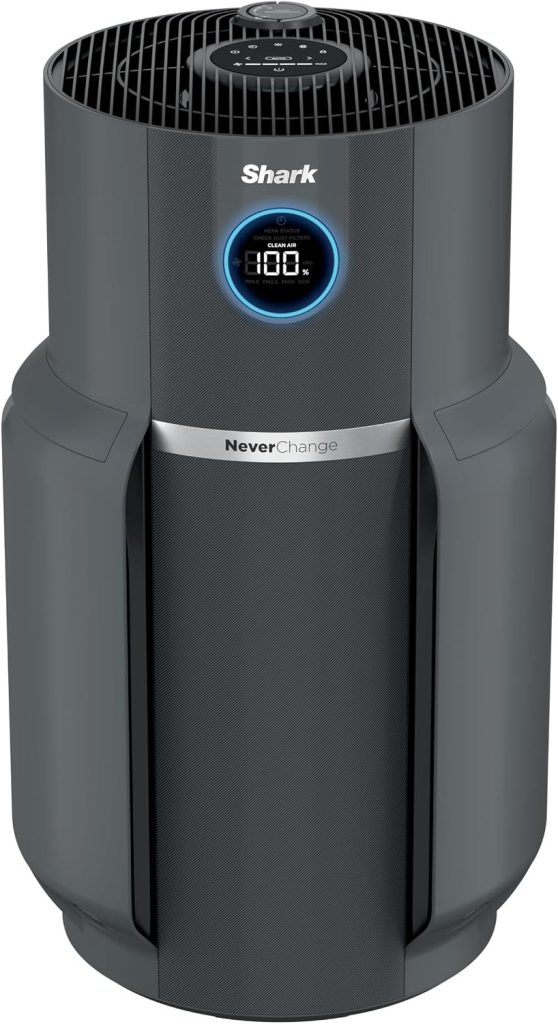
| Shark NeverChange HP301 | Lowest maintenance | Long-life HEPA, washable DebrisDefense pre-filters, Clean Sense IQ display, Odor Neutralizer cartridge; no AHAM CADR published, so no honest room size | View on Amazon |
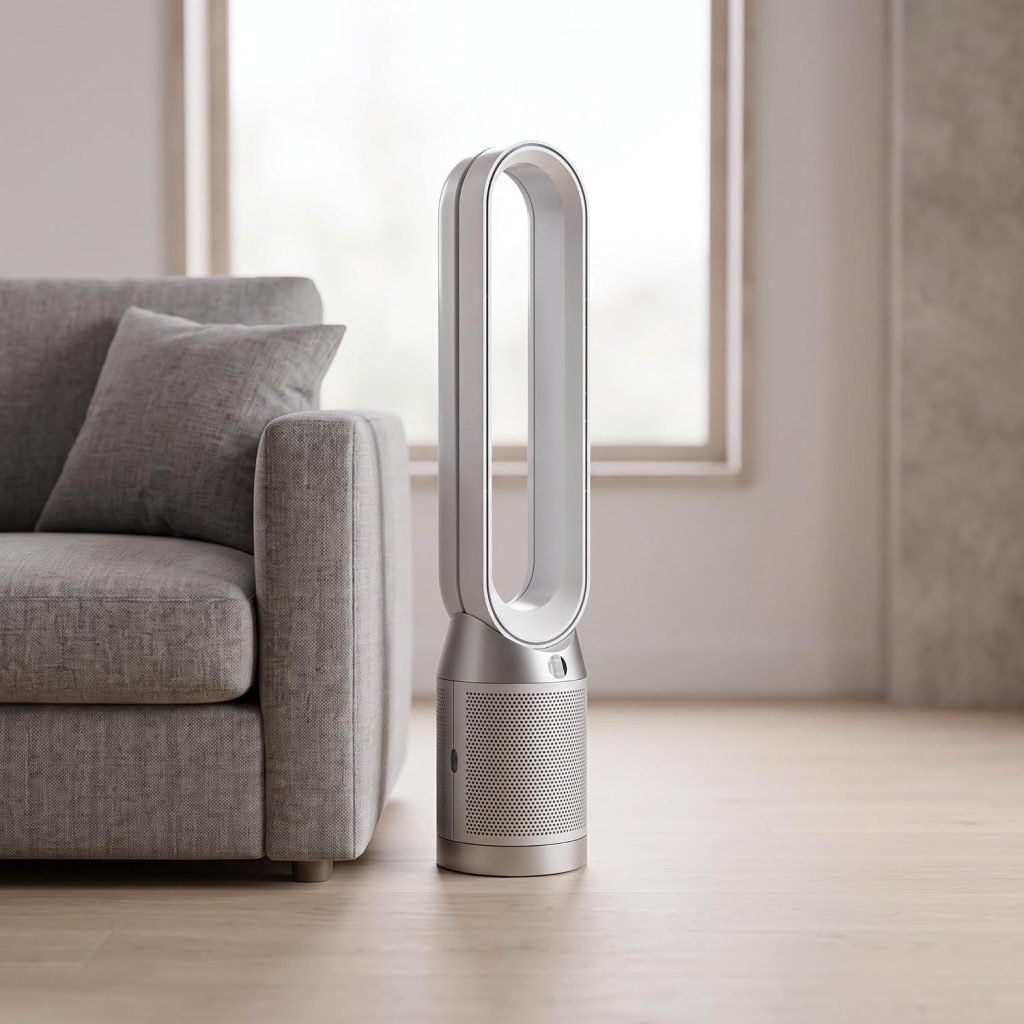
| Dyson Purifier Cool Gen1 TP10 | Premium pick | Sealed HEPA H13 plus carbon, 350° oscillation, Air Multiplier design, night mode, magnetized remote; no app; no CADR published, so no honest room size | View on Amazon |
| Image | Product | Features | Price |
|---|---|---|---|
 | Check Price | ||
 | Check Price | ||
 | Check Price | ||
 | Check Price | ||
 | Check Price | ||
 | Check Price |
Levoit Vital 200S-P
Levoit Vital 200S-P — best smart pet pick. The Levoit starts from verified numbers: AHAM-verified CADR of Smoke 250 / Dust 254 / Pollen 289 CFM, which at honest sizing suits roughly 390 sq ft, whatever the headline figure says. A U-shaped pet-hair inlet, a washable pre-filter, and the VeSync app with Pet Mode make it the most pet-specific design here. For anyone whose search starts with the best air purifier for pet hair, the pet-specific touches are the point: the inlet shape, the thicker carbon layer, and the washable pre-filter that keeps hair out of the main filter.
Pros: AHAM-verified CADR figures to size against; pet-specific inlet and Pet Mode; washable pre-filter keeps hair out of the main filter; app control and scheduling.
Cons: Not the strongest odor machine here — that title belongs to the Winix; the honest room size, while generous, will not cover a large open-plan space.
Winix 5520
Winix 5520 — best for odors. The Winix is the odor exception in this roundup. Most purifiers carry a thin sheet of carbon; the 5520 uses a pelleted AOC activated-carbon filter — a deep bed of pellets — backed by True HEPA and a washable pre-filter. Its AHAM PM2.5 CADR is 252 CFM (dust), for the same honest size as the Levoit: roughly 390 sq ft. PlasmaWave can be switched off, and the filter setup is built for homes where smell is the daily problem.
Pros: Deep pelleted carbon for genuine odor control, including litter-box and wet-dog smells; True HEPA for dander; washable pre-filter; verified CADR. That combination is what to look for in a hepa air purifier for pets: a True HEPA stage for dander, a washable pre-filter in front of it, and a verified CADR figure behind the room-size claim.
Cons: Carbon still saturates over time and must be replaced — pellets last longer than sheets, not forever; less app-led than the Levoit.
Coway Airmega Mighty 2
Coway Airmega Mighty 2 — best for the bedroom. The Coway earns its spot on quiet: sleep mode rated at 19 dB by Coway, the lowest figure here. CADR of Smoke 240 / Dust 242 / Pollen 249 CFM gives an honest size of roughly 370 sq ft. A MegaScan laser sensor reads PM1.0, PM2.5 and PM10, filtration is by a Max2 filter, and the pre-filter slides out and washes. There is no app — control is on the machine itself.
Pros: Quietest sleep mode in this comparison; strong verified CADR for a bedroom or living room; laser particle sensing; washable pre-filter.
Cons: No app or voice control; not the pick for very large rooms; carbon layer is not the deep pellet bed the Winix offers.
Blueair Blue Pure 211i Max
Blueair Blue Pure 211i Max — best for large rooms. The Blueair is the capacity pick. Blueair rates it as cleaning 674 sq ft every 12.5 minutes, and its DOE-based CADR figures (450 / 452 / 435 CFM) give an honest size of roughly 675 sq ft — the largest honest number here. It uses HEPASilent dual filtration, is rated at 23 dB on low, and has washable fabric pre-filters, app and voice control.
Pros: Largest honest room size in this comparison by a wide margin; quiet on low; washable fabric pre-filters; app and voice control.
Cons: Its carbon layer is thinner than the Winix pellet bed, so it is less of a dedicated odor machine; a large unit that needs floor space.
Shark NeverChange HP301
Shark NeverChange HP301 — lowest maintenance. The Shark sells one idea: stop replacing filters. It pairs a long-life HEPA filter with washable DebrisDefense pre-filters, a Clean Sense IQ display, and an Odor Neutralizer cartridge. Two honesty notes belong beside that pitch. Shark publishes no AHAM CADR, so we state no honest room size — the headline up to 1,400 sq ft is a 1-air-change figure. And per Shark’s own footnote, the long-life claim is tested to a 50% CADR decline in a 300 sq ft room at 12 hrs/day.
Pros: Built for low maintenance: long-life filter, washable pre-filters; Clean Sense IQ display shows air quality in real time; Odor Neutralizer cartridge adds a dedicated odor stage.
Cons: No AHAM CADR published, so it cannot be sized honestly against the verified models; the long-life claim rests on a specific test footnote — read it first; the Odor Neutralizer cartridge is a separate consumable.
Dyson Purifier Cool Gen1 TP10
Dyson Purifier Cool Gen1 TP10 — premium pick. The Dyson is half purifier, half fan: sealed HEPA H13 plus carbon, 350° oscillation, and Dyson’s Air Multiplier design, with night mode and a magnetized remote. The honesty note mirrors the Shark’s: Dyson publishes no CADR, so we quote no room size for it. Anyone who gives you one is guessing.
Pros: Fan and purifier in one, with 350° oscillation; sealed HEPA H13 filtration with a carbon layer; night mode, and a magnetized remote that stores on the machine.
Cons: No CADR published, so no honest room size exists for it; no app on the Gen1 model; the premium route in this roundup.
What to Know Before You Buy
Pets put three different things in the air — and each needs a different filter
A pet home is not one problem, it is three. Dander — tiny flakes of skin and dried saliva — floats for hours and drives most pet allergies. Hair and fur float briefly, then settle into corners, carpets, and sofas. Odor — litter boxes, wet dogs, pet beds — is gas, not particles at all. The filter stages map to those three jobs: a pre-filter catches hair before it clogs anything else, True HEPA catches dander, and activated carbon absorbs odor molecules. A machine that is strong on one job can be weak on another, which is why this comparison judges each model on all three.
True HEPA is a standard — “HEPA-type” is not
True HEPA means a filter that captures 99.97% of particles at 0.3 microns, the hardest particle size to catch. Labels that read “HEPA-type” or “HEPA-like” are not held to that standard; they are marketing words with no testing requirement behind them, and in practice they can perform far worse on fine particles. If a listing does not say True HEPA (or, for the Dyson, sealed HEPA H13), treat the filtration claim as unverified. In our comparison, the Levoit, Winix, and Coway carry True HEPA filtration, the Blueair uses HEPASilent dual filtration, and the Shark and Dyson are judged on their stated filter designs rather than a CADR figure they do not publish.
Carbon payload: pellets beat sheets, and carbon fills up
HEPA catches particles; it does nothing for smell. Odor control comes from activated carbon, and the amount and form of that carbon decide how well it works. A thin carbon-dusted sheet saturates quickly and then stops absorbing odor even though the machine’s air-quality light still shows green, because the HEPA layer is still working. A deep bed of carbon pellets has far more surface area and keeps absorbing for much longer. That is the Winix 5520’s real advantage, and it is the question to ask of any model: is the carbon a pellet bed or a sheet? Whichever model you choose, remember carbon is a consumable — it fills up and must be replaced, and a home with a litter box will fill it faster than a home without one.
Room sizes are marketing — size it yourself
The big numbers on the boxes — 1,400 to 1,882 sq ft — are rated at ONE air change per hour. AHAM-style sizing (around five changes per hour, which is what actually keeps dander down) gives much smaller honest rooms. When we quote a size, it’s the honest one. You can size any room yourself with a simple rule: multiply the purifier’s smoke CADR by about 1.5 to get the room size it can handle at roughly five air changes per hour with standard 8-foot ceilings. A smoke CADR of 250 therefore suits roughly 375–390 sq ft, and a CADR of 150 suits roughly 225 sq ft. If your ceilings are higher than 8 feet, or the room opens into another space, size up — an undersized unit running in too large a room delivers almost no benefit, and that is the most common reason people conclude purifiers “don’t work.”
Auto-mode sensors are not all equal
Most of these machines offer an auto mode that raises fan speed when the air worsens, but sensor quality varies a great deal. A good sensor reacts to fine particles — the dander cloud when a dog shakes, the dust when a cat digs in the litter box — and ramps up quickly. A weak sensor only notices large, visible particles and misses exactly the fine events that drive allergy symptoms. That is why sensor type is worth checking alongside CADR: the Coway’s laser sensor reads down to PM1.0, and the Shark’s Clean Sense IQ display shows air quality in real time. A sensor that cannot see fine particles cannot respond to them.
Where to put it matters as much as which one you buy
Put the purifier in the room you spend the most time in — usually the bedroom, ideally with the pet kept out of that room, since you spend a third of your life there. Leave clearance around it and keep it out of corners and from behind furniture, where airflow is choked and the same machine cleans far less effectively. For a litter box, place the unit in the same room, a few feet from the box: close enough to catch ammonia and silica dust as they rise, but not so close that its exhaust blows into the litter and scatters dust across the floor. Keep the intake unblocked and, where the machine allows it, raised slightly off the floor.
Safe for pets — with two warnings
HEPA and carbon purifiers are safe for cats and dogs. Two things deserve caution. First, avoid ozone generators, sometimes sold as “air purifiers”: ozone is a lung irritant for people and animals alike, and deliberately producing it is not air cleaning. Second, if you keep birds, whose respiratory systems are far more sensitive than ours, stick to plain HEPA and carbon filtration and switch off any ionizer feature — the Winix’s PlasmaWave, for example, can be switched off, and for a bird home it should be. Keep cords out of reach of chewers, and choose a stable unit a curious dog or cat cannot easily knock over.
What a purifier cannot do
A portable purifier captures airborne particles that pass through it. That is the complete scope of what it does, and knowing the limits prevents the most common disappointment. It does not clean surfaces: settled dust, dander in carpet, and pollen on furniture are a HEPA vacuum’s job, not a purifier’s. It does not eliminate mold: airborne spores get captured, but active mold on a surface needs moisture control and remediation. And an undersized unit provides almost no benefit — a weak machine in a large room delivers under one air change per hour, which is too slow to matter.
A purifier is one part of an allergy plan, not the whole plan
Purifiers remove allergens from the air, but by themselves they do not resolve pet allergies: much of the allergen has already settled into carpets, sofas, and bedding, where no purifier reaches it. The companion steps matter as much as the machine — keep pets out of the bedroom, vacuum often with a sealed HEPA vacuum, wash pet beds, throws, and your bedding weekly in hot water, bathe and brush pets regularly (ideally outdoors, or by someone without allergies), and choose hard floors and washable covers where you can, since carpet holds dander. If symptoms persist, talk to an allergist rather than buying a bigger machine. That advice is the honest core of shopping for an air purifier for pet allergies: the machine is one part of a plan, not a cure, and persistent symptoms deserve a professional opinion before a bigger purchase.
Pre-filter care: the ten-minute habit that protects everything else
In a pet home, the pre-filter is the hardest-working part of the machine — it is what stops hair from clogging the HEPA layer. Clean it every week or two: vacuum it, or rinse it if it is washable, and let it dry completely before reinstalling it. Five of the six models here have washable pre-filters, and that routine is what extends the main filter’s life. A clogged pre-filter makes the machine work harder, moves less air, and wears the motor faster.
Filter replacement in a pet home runs faster than the box says
Expect to replace the main filter sooner than the headline interval in a shedding home — often roughly every 6 to 9 months rather than 12 — and sooner still with multiple heavy shedders. Read Shark’s fine print: the NeverChange long-life filter claim is tested to a 50% CADR decline in a 300 sq ft room at 12 hrs/day, per Shark’s own footnote. It’s still a low-maintenance machine — just go in informed. Its Odor Neutralizer cartridge is also a separate consumable you’ll replace over time. Dyson doesn’t play the CADR game: Dyson publishes no CADR for the TP10, so we quote no room size for it — and Shark is in the same position with the HP301. The other four models here can be sized on published figures; these two cannot. Filters are the running cost. Carbon saturates and HEPA loads over time. Washable pre-filters — five of these six have them — slow that down, but none here is buy-once, pay-never. When comparing models, think in terms of total ownership over a couple of years — machine plus replacement filters — not just the machine alone, and if a unit will run all day, check its power draw too, since an always-on machine’s electricity use adds up.
Noise: check every speed, not just sleep mode
Sleep-mode figures flatter every machine. The number that matters for daily life is noise at the speeds the machine actually runs — including auto mode ramping up when a pet walks past. In our comparison, the Coway’s 19 dB sleep rating and the Blueair’s 23 dB low rating are the quietest published figures, but both are low-speed numbers; on high, any purifier moving serious air is audible. If the unit will sit in a bedroom, weight the low-speed figure most; if it will sit in a living room, check that the mid and high speeds are tolerable too, because auto mode will visit them.
Who It’s For
Pet owners who are tired of headline numbers. The Levoit is the balanced pick for most homes; every other model here earned its spot for one reason — odors, quiet, room size, maintenance, or premium build. Big open-plan space? Blueair. A bedroom? Coway. A home with several heavy shedders or multiple pets? Size up and lean on the washable pre-filter models, and expect faster filter changes. A litter-box room? Winix, placed a few feet from the box. Watch the video for the full head-to-head. Homes where dander is the daily problem should weigh that line carefully, because an air purifier for pet dander earns its keep only if the pre-filter routine actually happens.
One Room or Every Room: How Many Purifiers Do You Need?
A purifier cleans the air in the room it sits in, so the honest question is how many rooms actually need one. A single unit in the room where pets spend most of their time covers the worst of the hair and odor, and it is the sensible starting point if you are buying your first purifier. The bedroom and the main living space are the two rooms that usually matter most, and they pull in different directions: the bedroom wants quiet, the living space wants coverage.
If two rooms both need help, two smaller fits usually beat one big unit dragged between rooms. The bedroom pick here is chosen for quiet, the big-room pick for coverage, and neither strength travels well to the other room. Moving one machine back and forth also means the room it left goes uncovered, and the intake and placement routine has to be redone each time. Start with the room that bothers you most, live with it for a few weeks, and only then decide whether a second room earns a second machine.
Variant Caution: Check the Exact Model Before Ordering
Model names in this class are close enough to confuse, and listings under the same brand name describe different units. This guide covers the Levoit Vital 200S-P, not the base Vital 200S; the Shark NeverChange HP301, not the larger HP302 or MAX version; and the Winix 5520, not the 5510 or 5530. Figures quoted for those other versions do not transfer to the models here, even when the brand name and the shape look the same.
That is why this guide keeps pointing back to the linked listing. Before ordering, check that the model name on the listing matches the model name in the section you just read, and ignore any specification quoted for a unit that is not this one. If the listing shows a different suffix or a different size class, it is a different machine, no matter how similar the page looks.
Running Costs Are Filters Plus Power
The price of the machine is only the first cost. In a pet home, the ongoing cost is filters plus power: replacement filters roughly every 6 to 9 months rather than 12, because pet hair and dander fill them faster, and the electricity of a machine that runs for long stretches each day. Five of the six models here have washable pre-filters, and that washable layer is what protects the main filter — keeping it clean is the cheapest way to stretch the time between replacements.
Think about that cadence before you buy, not after. A model with a washable pre-filter you will actually clean every week or two costs less to live with than a model whose main filter takes the full load of a pet home. And if the machine will run all day, check its power draw too, since an always-on machine’s electricity use adds up over months.
When the Air Still Smells: A Short Troubleshooting List
If the smell does not improve after a few days, work through the simple causes before blaming the machine. First, check the pre-filter: a clogged layer moves less air and the whole machine underperforms. Second, check the placement: the intake needs to stay unblocked, and an odor source like a litter box needs the machine a few feet away, not across the house. Third, check the carbon: a filled carbon layer stops taking up odor even while the particle filter still works, and a pet home fills carbon faster than a home without pets.
Fourth, check the source itself. No purifier keeps up with a dirty litter box, and settled odor in soft furnishings will not clear from the air alone. If the pre-filter is clean, the placement is right, the carbon is fresh, and the source is handled, then the machine is likely undersized for the room — and that is a sizing problem, not a brand problem.
FAQ
What room size should I actually believe for a pet home?
The honest one. Headline coverage is rated at one air change per hour — too weak to keep dander down. AHAM-style sizing works at around five changes per hour: room size is roughly the smoke CADR times 1.5. That gives roughly 390 sq ft for the Levoit and Winix, 370 for the Coway, and 675 for the Blueair. The Shark and Dyson publish no CADR, so no honest size exists for them.
Which purifier here is best for pet odor?
The Winix 5520. Its pelleted AOC carbon bed is built for odor in a way thin carbon sheets are not, and it handles litter-box ammonia and wet-dog smell better than anything else in this comparison. Keep the litter box scooped daily, though — no purifier keeps up with a dirty box.
Why is there no CADR or room size for the Shark and the Dyson?
Because neither manufacturer publishes one. Shark and Dyson both decline to publish AHAM CADR figures for these models, so any room size quoted for them by a reviewer is a guess. We would rather state the gap than fill it with a number we cannot verify.
Will a purifier pick up pet hair from the floor and sofa?
No — and this is the expectation to reset before buying. A purifier catches hair that is floating in the air, on its pre-filter, which helps with drifting fur. It cannot pull embedded hair out of carpets or off sofa cushions; that is a vacuum’s job. Used together — purifier for the air, vacuum for surfaces — they cover both halves of the problem.
Where should I put an air purifier for pets?
In the room you spend the most time in, usually the bedroom with the pet kept out, with clearance around it and away from corners and behind furniture. For a litter box, the same room a few feet from the box, with the exhaust not blowing into the litter. Keep the intake unblocked.
Are air purifiers safe for cats, dogs, and birds?
HEPA and carbon purifiers are safe for cats and dogs. Avoid ozone generators entirely. If you keep birds, stick to plain HEPA and carbon models and switch off any ionizer feature, since birds are especially sensitive to airborne irritants.
How often will I be replacing filters?
Clean the pre-filter every week or two. Replace the main filter roughly every 6 to 9 months in a shedding home rather than the full 12 months the box may suggest, and sooner with multiple heavy shedders. The Shark is the exception to the routine — its long-life filter is built to go much longer, subject to the test footnote described above — and its Odor Neutralizer cartridge remains a separate consumable.
Do air purifiers actually help with pet allergies?
They help with the airborne half: a True HEPA filter catches floating dander, and cat allergen in particular stays airborne for hours, which is why a purifier can catch it. But settled allergen in carpets, sofas, and bedding is untouched, so a purifier alone rarely resolves symptoms. Treat it as one part of a plan alongside vacuuming, washing bedding, and keeping pets out of the bedroom.
How do I check the listing shows the exact model in this guide?
Match the model name on the listing against the section heading in this guide, character for character: Vital 200S-P, not the base Vital 200S; NeverChange HP301, not the HP302 or MAX; Winix 5520, not the 5510 or 5530. If the listing shows a different suffix or size class, it is a different machine, and its specifications do not apply to the model reviewed here. When in doubt, the linked listing is the only version that counts.
Can I move one purifier between rooms?
You can, but it is a compromise. The room the machine leaves goes uncovered, and each move means redoing the placement routine: intake unblocked, exhaust clear, and the unit raised slightly off the floor where the machine allows it. Large units that need floor space are also awkward to shift daily. If two rooms both need help most of the day, a second machine usually makes more sense than a daily move.
Do I need a purifier with an app?
Not necessarily. The Levoit runs through the VeSync app with a Pet Mode, and the Blueair offers app and voice control, but the Coway is controlled on the machine itself with no app, and the Dyson Gen1 model has no app either. An app is convenient for scheduling and checking air quality from another room, but it changes nothing about how the filter itself performs. If you prefer physical controls, the lack of an app is not a reason to rule a model out.
Should the purifier run all day?
This guide does not prescribe a schedule, so decide it by your home. A machine that runs all day will need its pre-filter cleaned on the regular routine, and its power draw adds up over months, so check that figure before committing to always-on use. What matters more than the schedule is consistency: a purifier that runs when pets are active and the house is lived in does more good than one that only runs for an hour in the evening.
What should I check on the listing before ordering?
Five things: the exact model name and suffix; whether the room-size claim rests on a verified CADR figure or a headline number; the filter setup, including whether the carbon is a pelleted bed or a thin sheet; whether the pre-filter is washable; and whether the unit matches the version in this guide rather than a close variant. Listings in this class describe different machines under similar names, so run through that short list on the linked listing before you place the order.
Final Verdict
Start with the Levoit Vital 200S-P: verified CADR, an honest size that fits a living room, pet-hair design where it counts, and app control with Pet Mode. Move to the Winix the moment odor is the real complaint — its pelleted carbon is built for that job. Coway for a bedroom, Blueair for a big open space, Shark if filter changes are what you hate (footnote read), and Dyson if you want fan and purifier in one. Size honestly, clean the pre-filter every week or two, and let the purifier handle the air while the vacuum handles the floors.
As an Amazon Associate, we earn from qualifying purchases. This article contains affiliate links — if you buy through them, we may earn a commission at no extra cost to you. #ad
How this guide was put together: this comparison judges six purifiers on the claims that matter in a pet home — honest room sizing, filter design, carbon form, and pre-filter care — using the stated figures where they exist and saying so plainly where they do not, so you can check the exact version on the linked listing before ordering.


