Best Batteries for Blink Cameras 2026
The best batteries for Blink cameras are 1.5V AA lithium cells — the only chemistry Blink designs its cameras around. In our comparison of five AA options, the right pick depends on whether you want disposable lithium cells or rechargeable 1.5V lithium cells, and getting the voltage wrong is the one mistake to avoid.
As an Amazon Associate I earn from qualifying purchases. #ad

Key Takeaways
- Blink cameras take 1.5V AA lithium batteries — never 3.7V 14500 rechargeable cells.
- 3.7V cells are the wrong voltage and can damage the camera; do not use them even if they fit.
- Disposable lithium AAs last longest per set; rechargeable 1.5V lithium AAs save money over time.
- Rechargeable cells must be explicitly 1.5V regulated lithium, not standard 1.2V NiMH or 3.7V Li-ion.
- Extreme cold shortens battery life — lithium handles cold better than alkaline.
Top 3 Picks
- Best disposable lithium: Energizer Ultimate Lithium AA — the longest-lasting, cold-resistant disposable here.
- Best rechargeable 1.5V lithium: EBL 1.5V Lithium AA Rechargeable — regulated 1.5V output with USB charging convenience.
- Best value disposable: Voniko Premium Lithium AA — strong lithium performance at a lower cost per cell.
1. Energizer Ultimate Lithium AA
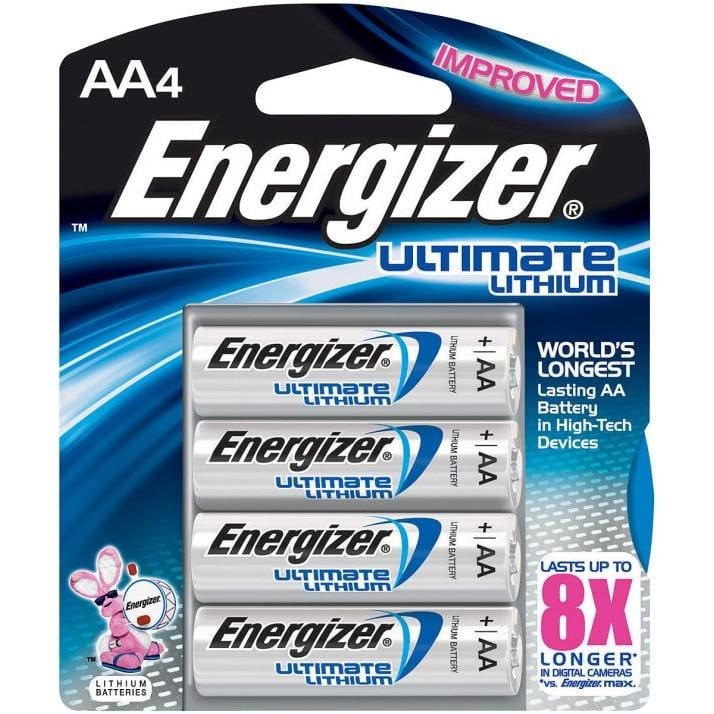
Energizer Ultimate Lithium AA
In our comparison, the Energizer Ultimate Lithium AA is the battery Blink owners should start with. These are true 1.5V lithium cells, so they match Blink's design exactly, and…
In our comparison, the Energizer Ultimate Lithium AA is the battery Blink owners should start with. These are true 1.5V lithium cells, so they match Blink’s design exactly, and they last far longer than alkaline cells in cameras that wake, record, and transmit. Cold-weather performance is a real advantage for outdoor cameras in winter.
They are disposable, so long-term cost adds up across several cameras, and they cost more per cell than alkaline. For reliability and the longest interval between changes, though, they remain the benchmark.
Pros:
- True 1.5V lithium — correct for Blink
- Longest life per set here
- Excellent cold-weather performance
- Long shelf life in storage
- Leak-resistant design
Cons:
- Disposable — cost adds up
- Higher cost per cell than alkaline
- No recharge option
- Bulk packs vary by retailer
- Overkill for indoor low-traffic cameras
2. Voniko Premium Lithium AA
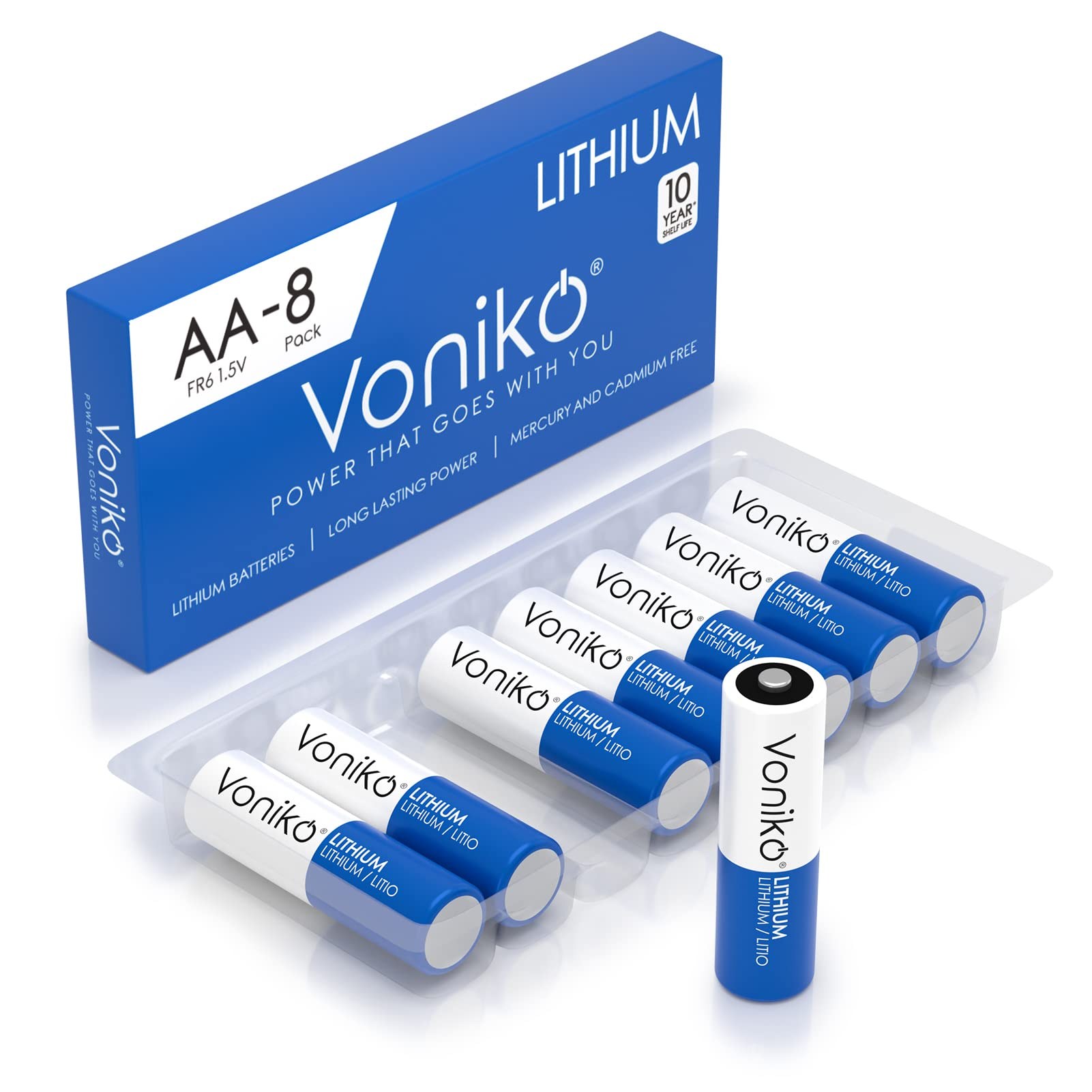
In our comparison, the Voniko Premium Lithium AA is the value lithium option. These are 1.5V lithium cells with the same voltage Blink cameras need, offering long life and good cold performance at a lower cost per cell than the big brands. For owners running several cameras, the savings across a year are noticeable.
Brand recognition and retail availability are smaller than Energizer’s, and performance in extreme cold is good rather than best-in-class. For most Blink setups, though, the value is hard to argue with.
Pros:
- True 1.5V lithium — correct for Blink
- Lower cost per cell than big brands
- Long life in cameras
- Good cold performance
- Good for multi-camera homes
Cons:
- Smaller brand — availability varies
- Cold performance trails Energizer
- Disposable — cost adds up
- Pack sizes vary by retailer
- No recharge option
3. EBL 1.5V Lithium AA Rechargeable

In our comparison, the EBL 1.5V Lithium AA Rechargeable is the rechargeable pick for Blink owners who change batteries often. Crucially, these are regulated 1.5V lithium cells — not 3.7V Li-ion cells — so the voltage matches what Blink cameras expect. They recharge via USB and can be reused many times, cutting waste and long-term cost.
Per-charge life is shorter than a fresh disposable lithium set, so very high-traffic cameras may still favour disposables. For moderate-traffic cameras, the recharge cycle pays off quickly, and keeping a charged spare set removes downtime.
Pros:
- Regulated 1.5V output — correct for Blink
- Rechargeable — saves money over time
- USB charging convenience
- Less waste than disposables
- Good for moderate-traffic cameras
Cons:
- Shorter life per charge than disposables
- Needs a charged spare set for zero downtime
- Charging takes time
- Not a 3.7V cell — do not confuse the two
- Capacity varies by model
4. Paleblue AA USB Rechargeable

In our comparison, the Paleblue AA USB Rechargeable is the convenient rechargeable option. These are 1.5V regulated lithium cells with a built-in USB charging port, so each battery charges directly from a USB cable with no separate charger. That simplicity suits owners who want rechargeables without extra hardware.
As with other rechargeables, per-charge life trails disposable lithium, and charging several cells takes planning. The built-in USB design is genuinely handy, though, and the 1.5V regulation keeps them safe for Blink cameras.
Pros:
- Regulated 1.5V output — correct for Blink
- Built-in USB charging — no separate charger
- Rechargeable — saves money over time
- Less waste than disposables
- Simple to top up
Cons:
- Shorter life per charge than disposables
- Charging multiple cells takes time
- USB port adds a small cap to manage
- Not a 3.7V cell — do not confuse the two
- Availability varies by retailer
5. Tenavolts 1.5V AA Lithium Rechargeable

In our comparison, the Tenavolts 1.5V AA Lithium Rechargeable is the second rechargeable option for Blink owners. These are regulated 1.5V lithium cells with an internal converter, so voltage stays at 1.5V from full to empty — the output Blink cameras expect — and they recharge in about 1.8 hours with the included charger. For high-use cameras where disposables get expensive, they offer a rechargeable route that keeps cameras online.
Per-charge life trails disposable lithium, and the cells need the dedicated Tenavolts charger — standard NiMH chargers will not charge them. For owners with several cameras and a charging routine, they are a sound long-term choice.
Pros:
- Regulated 1.5V output — correct for Blink
- Rechargeable — saves money over time
- Constant 1.5V until empty
- Fast 1.8-hour charging
- Less waste than disposables
Cons:
- Shorter life per charge than disposables
- Needs the dedicated Tenavolts charger
- Charging takes time
- Not a 3.7V cell — do not confuse the two
- Capacity varies by model
Comparison Table
| Product | Type | Voltage | Rechargeable | Best for |
|---|---|---|---|---|
| Energizer Ultimate Lithium AA | Disposable lithium | 1.5V | No | Longest life, cold weather |
| Voniko Premium Lithium AA | Disposable lithium | 1.5V | No | Value multi-camera homes |
| EBL 1.5V Lithium AA Rechargeable | Regulated lithium | 1.5V | Yes | Frequent battery changes |
| Paleblue AA USB Rechargeable | Regulated lithium | 1.5V | Yes | Charger-free recharging |
| Tenavolts 1.5V AA Lithium Rechargeable | Regulated lithium | 1.5V | Yes | High-use cameras |
How to Choose
Check voltage first, always. Blink cameras need 1.5V AA lithium. If a cell says 3.7V or 14500, it is the wrong battery — do not use it, even if it physically fits.
Choose disposable or rechargeable by traffic. High-traffic cameras burn through disposables fast, so rechargeables save money; low-traffic cameras may never repay the charger cost.
Keep a spare set charged. Battery swaps at night or in bad weather are miserable, and a ready set keeps cameras online without a gap.
Store spares cool and dry, and never mix old and new cells in one camera — mismatched cells drain unevenly and shorten camera uptime.
FAQs
What batteries do Blink cameras take?
Blink cameras take 1.5V AA lithium batteries. Use disposable lithium cells or explicitly regulated 1.5V rechargeable lithium cells — nothing else.
Can I use 14500 rechargeable batteries in a Blink camera?
No. 14500 cells are 3.7V lithium-ion, which is the wrong voltage for Blink cameras and can damage them. Only use cells rated 1.5V.
Are rechargeable batteries safe for Blink cameras?
Only regulated 1.5V lithium rechargeables are suitable. Standard 1.2V NiMH cells underperform, and 3.7V Li-ion cells are the wrong voltage — check the rating on the cell itself.
Why do my Blink batteries drain fast?
High motion traffic, cold weather, weak Wi-Fi signal, and long clips all drain batteries faster. Lithium cells handle cold better than alkaline, and reducing motion sensitivity helps.
Do lithium batteries really last longer than alkaline?
Yes, in Blink cameras. Lithium cells hold voltage better under the short, high bursts cameras use, and they perform far better in cold weather.
Conclusion
Pick the Energizer Ultimate Lithium AA for the longest, most reliable life, the Voniko lithium for value across several cameras, and the EBL, Paleblue, or Tenavolts 1.5V rechargeables if you change batteries often. The rule never changes: 1.5V only, never 3.7V 14500 cells. Get the voltage right, keep a spare set ready, and your Blink cameras will stay online with the fewest surprises.


