
Dogtra GPS Fence Review: What It Is — and What It Isn’t
This dogtra gps fence review covers a wireless GPS containment system — not a live GPS tracker. It keeps your dog inside a boundary you define by GPS, with no buried wire, but it only fits properties of ¾ acre or more and dogs of 15 lb and up, and training flags are not included. That containment job, not lost-dog tracking, is the honest starting point for a wireless dog fence search.
The Dogtra GPS Fence gets misunderstood in a way that really matters, so let us be clear from the first paragraph: this is a wireless GPS containment system. It is designed to keep your dog inside a boundary you define. It is not a live GPS tracker — it will not show you a dot on a map following your dog around the neighborhood. If you understand that distinction, it is a genuinely useful product. If you buy it expecting tracking, you will be disappointed no matter how well it works. A gps dog fence search should start with the same distinction this review draws: containment inside a boundary you define, not a live tracker showing a lost dog on a map.
Key Takeaways
- Containment, not tracking: it corrects the dog as it approaches the boundary and keeps it in the yard. It will not show you a dot on a map following your dog.
- The boundary is set by GPS, with no buried wire — designed for properties where digging a wire loop is impractical.
- Hard requirements: property of ¾ acre or more, and dogs of 15 lb and up. There is no honest way around the property limit on a small lot.
- Training flags are not included — budget for them separately, and budget your own time for boundary training.
- No containment system works without patient, consistent boundary training, because training is the product here.
The video above is an AI-generated visualization based on the manufacturer’s listing, not hands-on test footage. This article sticks to the product’s defined requirements and purpose.
Key Specs at a Glance
When we lined the Dogtra up against true GPS trackers for our channel comparison, the requirements below were what separated it from that category. Here they are in one place.
| Spec | Detail |
|---|---|
| Product type | Wireless GPS containment system — not a live GPS tracker |
| Minimum property | ¾ acre or more |
| Dog size | 15 lb and up |
| Boundary | Set by GPS, with no buried wire |
| Training flags | Not included |
| Core job | Corrects the dog as it approaches the boundary and keeps it in the yard |
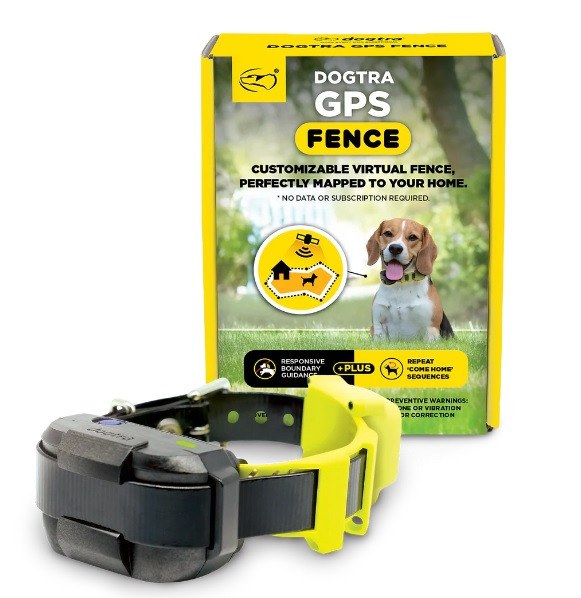
Key Features
- GPS-defined boundary: Instead of a buried wire, the fence boundary is set by GPS — designed for properties where digging a wire loop is impractical.
- Containment, not tracking: The system’s job is to correct the dog as it approaches the boundary and keep it in the yard. That is the entire purpose; location tracking for a lost dog is a different product category.
- No buried wire: Nothing to dig, and the boundary is not tied to a physical loop around your land.
- Built for larger properties: The system is made for land of ¾ acre and up, and for dogs of 15 lb and up; those two limits shape everything else about it.
Pros and Cons
In our comparison, the strengths and the limits came from the same design choice: a GPS boundary instead of a wire. What that gives you, and what it rules out, is below. A best wireless dog fence search should start with fit first: whether your land and your dog match the minimums this review already states, before any feature list matters.
Pros
- Fence-free containment without burying wire, which suits properties where digging a wire loop is impractical
- The boundary is set by GPS, so it is not tied to a physical loop around your land
- Designed for larger properties, where fencing costs or buried wire are real obstacles
- Clear, single purpose: keep the dog inside a boundary you define
Cons
- It is not a live GPS tracker, so it is the wrong product if you want to find a lost dog on a map
- Property size is a hard requirement: ¾ acre or more, with no honest way around it on a small lot
- Made for dogs 15 lb and up, so smaller dogs should not use it
- Training flags are not included, and the training time itself is on you
What to Know Before You Buy
Property size is a hard requirement. The system needs a property of ¾ acre or larger. GPS boundaries are not precise enough for small yards, and this is not a product to “try anyway” on a small lot. Dog size matters too: it is made for dogs 15 lb and up, and smaller dogs should not use it.
Training flags are NOT included. Boundary training usually uses visual flags while the dog learns the line, so budget for them separately, and budget your own time as well. No containment system works without patient, consistent boundary training, because training is the product here: the collar only reinforces what you teach. Plan on a proper training period where the dog learns where the boundary is before relying on the system.
Boundary Shapes and Saved Boundaries: Generic Topics
Competitor reviews raise boundary shapes and saved boundaries as topics, and the generic version is a set of listing questions only, because this review states no boundary-shape or saved-boundary detail for this fence. The questions to ask on the listing are generic: what shapes the listing says a boundary can take, whether the listing says boundaries can be saved for later use, and how a saved boundary is recalled. Those are questions, not claims — no shape, no saved-boundary count, and no saved-boundary claim is made here for this fence. Nothing here changes the article’s own framing either: a boundary still means containment inside a line you define, not live tracking of a lost dog. Check the listing for your exact model before you buy, and do not assume a shape or saving feature that listing does not name.
Staged Boundary Zones: An Attributed Description Only
One review describes staged boundary zones as an idea, where a dog first meets an early warning stage before stronger stages as it approaches the line, and that description is attributed, not verified by this review. It is not stated here as this fence’s confirmed behavior, because this review states no staged-zone behavior for this fence at all. The generic instruction is a listing check: ask the listing for your exact model whether it uses any staged approach, and if it does, what each stage is meant to do. Do not assume staged zones exist on this fence, and do not judge this fence against a staged-zone description that its own listing does not confirm. Check the listing before you buy.
Correction Modes: Listing Checks Only
Competitor reviews name correction modes as a topic, and the generic version is a set of option categories to ask about — tone, vibration, and stimulation as categories — not a claim about what this fence offers. The questions to ask on the listing are generic: which categories the listing names for your exact model, whether levels within a category are adjustable, and whether a tone-and-vibration-only mode is offered for training. Those are listing checks, not claims — no correction-mode claim is made here for this fence, because this review states none beyond correcting the dog as it approaches the boundary. Correction here still means keeping the dog inside a boundary you define, not tracking a lost dog. Check the listing for your exact model before you buy.
Multi-Dog Use: A Listing Check
Competitor reviews raise multi-dog use as a topic, and the generic version is a listing question only, because this review states nothing about multi-dog use for this fence. The questions to ask on the listing are generic: whether the listing says the system supports more than one dog, what extra gear the listing says that needs, and whether each dog’s boundary and training are handled separately. Those are questions, not claims — no multi-dog claim and no collar count is made here for this fence. Do not assume a second dog is covered because one dog is, and do not assume separate handling that the listing does not describe. Check the listing for your exact model before you buy.
Water Resistance: A Listing Check
Competitor reviews raise water resistance as a topic, and the generic version is a listing check, not a claim: what water exposure the listing says the collar tolerates, and what it says to avoid. Those questions matter because a collar worn outdoors will meet rain, mud, and water bowls, and a collar that cannot handle ordinary wet days is a poor everyday collar. That point is not verified by this review, and no water-resistance claim and no water-protection rating are made here for this fence, because this review states none. Check the listing and manual for your exact model for its water guidance before you buy.
Phone and App Requirements: Listing Checks Only
Competitor reviews raise phone and app requirements as topics, and the generic version is a set of listing questions only, because this review states no phone or app requirement for this fence. The questions to ask on the listing are generic: whether setup uses a phone at all, what the listing says about phone compatibility, and what the listing says the phone is used for during setup and daily use. Those are questions, not claims — no phone requirement, no app requirement, and no version figure is stated here for this fence. An app question is not a tracking claim either: nothing here claims live tracking, and this review’s not-a-tracker framing stands. Check the listing for your exact model before you buy.
Package Contents: A Listing Check
Competitor reviews treat box contents as a check, and the generic version is a listing question only: what does the listing for your exact model say the box includes, and what does it leave out. That question is not verified by this review, and no box-contents claim is made here for this fence, because this review states no full contents list. Anything the listing leaves out needs a separate budget, and anything the listing does not name should not be assumed to be inside the box. Check the listing for your exact model before you buy.
Neck Size: Measure First
Competitor reviews raise neck size as a topic, and the generic rule is measure first, because a collar that does not fit cannot do its job well. Measure your dog’s neck before ordering, check the listing’s size guidance for your exact model, and judge fit with your own dog during the first supervised days. A collar that sits loosely may correct inconsistently, and a collar that sits too tightly is uncomfortable for daily wear, so fit deserves attention before any feature comparison. That point is not verified by this review as a claim about this fence, and no neck figure and no size figure are stated here. Check the listing for your exact model for its fit guidance before you order.
GPS Accuracy: A Generic Topic
Competitor reviews raise GPS accuracy as a topic, and the generic version is a topic to understand before you buy, not a claim: how precise a GPS boundary can honestly be, and what can make it less precise on a real property. Structures, trees, and the shape of the land itself can all affect reception, which is why this review already warns that GPS boundaries are not precise enough for small yards. That warning is the article’s own stance, extended here only as a general caution, and no accuracy figure is stated here for this fence. Nothing here softens the not-a-tracker framing either: accuracy here means how faithfully a containment line holds, not how well a lost dog can be found. Check the listing for your exact model for what it says about accuracy before you buy.
Battery and Charging: Listing Checks Only
Competitor reviews raise battery and charging as topics, and the generic version is a set of listing questions only, because this review states no battery or charging detail for this fence. The questions to ask on the listing are generic: how often charging is needed, how charging fits a daily routine, what happens to containment while the collar is off the dog charging, and whether the listing names a low-battery warning. Those are questions, not claims — no battery figure, no runtime figure, and no recharge figure are stated here for this fence. A collar that spends too long off the dog leaves the boundary unguarded, so judge the charging routine against your own routine before you rely on it. Check the listing and manual for your exact model before you buy.
Setup and Training Steps: Generic Guidance
Competitor reviews raise setup and training steps as topics, and the generic guidance extends this review’s own training stance rather than replacing it. Walk the boundary line with your dog on a lead, use visual flags while the dog learns the line, keep early sessions short and calm, and only trust the system once the dog shows it understands where the line is. That guidance is generic, not a claim about this fence — no setup-step claim is made here for this fence beyond it, because this review states no setup steps of its own. It echoes the article’s own stance that training is the product here: the collar only reinforces what you teach. Check the manual for your exact model for its setup guidance before you buy.
Suitability Checks Before You Buy
One general buying guide frames suitability as a set of checks, and the generic version is a checklist of questions, not claims about this fence. How much usable outdoor space does the property actually offer once buildings, driveways, and areas you want to exclude are taken out. How is GPS reception around structures and trees on that land. Does the collar fit the individual dog, and does the dog accept wearing a collar daily. Is a dog door in use, and what does the listing say about containment where a dog moves freely in and out. Those are suitability questions, not findings — this review states no suitability finding for any individual property or dog. Nothing here changes the not-a-tracker framing either: suitability here means suitability for containment, not for finding a lost dog. Work through the checks on your own land before you buy.
Recorded History Versus Live Tracking: A Generic Distinction
One general buying guide raises the distinction between recorded movement history and live tracking, and the generic version extends this review’s own not-a-tracker framing without adding a claim about this fence. Live tracking would show where a dog is right now; recorded history, where offered at all, would show where a dog has been. This review states that this fence does neither as a live-tracking product — it contains, it does not track a lost dog — and nothing here softens that. The generic instruction is a listing question only: ask the listing for your exact model whether it stores any history at all, and if it does, what that history shows and for how long it is kept. Do not assume history storage that the listing does not name, and do not mistake any history feature for live tracking. Check the listing before you buy.
Fees: A Listing Check Only
Competitor sources raise fees as a topic, and the generic version is a single listing check, because this review states no fee terms for this fence at all. Check the listing for whether any fee applies, what that fee covers, and how it renews. That instruction is a listing check, not a claim — no fee claim is made here for this fence in either direction, and no fee figure is stated here. Do not assume a fee exists because another product charges one, and do not assume none exists because this review does not mention one. Check the current listing for your exact model before you pay.
Buying Criteria From a General Guide: Generic Questions
One general buying guide names buying criteria for this category, and the generic version is a set of questions to carry into any listing, none of them stated here as facts about this fence. Whether boundary data is stored on the device itself rather than only elsewhere. Whether any account fee is mandatory. Whether the listing names a low-battery warning. Whether correction levels are adjustable. Whether a tone-and-vibration-only training mode is offered. How tight the boundary drift is described, in the listing’s own words rather than in figures. Those are buyer questions, not claims — this review states none of these criteria as facts about this fence, and none is claimed here. Use the questions to compare listings, and do not credit a listing with a criterion it does not name.
Safe Practices: Generic Topics
Competitor reviews raise safe practices as topics, and the generic version is a set of topics to weigh, not claims about this fence. Supervise early training rather than leaving a new system to teach the dog alone. Keep the collar fitted correctly and check the skin under it regularly. Never rely on any containment system as the only barrier where a busy road or another serious hazard sits just beyond the line. Ask your vet if you are unsure whether containment training suits your particular dog. Those topics are generic guidance, not verified claims about this fence, and no safety claim is made here for this fence, because this review states none. Check the manual for your exact model for its safety guidance before you buy.
Training Mistakes and Timeframe: Generic Guidance
Competitor reviews raise training mistakes and timeframe as topics, and the generic guidance extends this review’s own training stance rather than replacing it. Common mistakes are generic ones: rushing the dog to off-lead trust before it understands the line, skipping flag work because the boundary is invisible, and treating the collar as the teacher instead of the reinforcer. Timeframe guidance is generic too: plan on a proper training period, judge progress by the dog’s understanding rather than by the calendar, and do not trust the system on the strength of a single good day. That guidance is generic, not a claim about this fence, and no training-time figure is stated here. It echoes the article’s own stance that no containment system works without patient, consistent boundary training. Check the manual for your exact model for its training guidance before you buy.
Walk and Test the Boundary on Foot
One general buying guide raises walking the boundary as a practice, and the generic guidance fits this review well. Before trusting any containment system, walk the boundary line on foot yourself, with the dog on a lead, and confirm where the line actually falls on your land rather than where you imagined it. Note where reception feels weaker around structures and trees, where the line cuts awkwardly across usable space, and where a dog door or gateway complicates the picture. That practice is generic guidance, not a claim about this fence, and it echoes the article’s own training stance: the dog learns the line you teach, so teach a line you have actually walked. Check the manual for your exact model for its testing guidance before you rely on the system.
Owner Feedback: Check Recent, Not Launch-Day
Competitor reviews synthesize owner feedback as part of their method, and the generic lesson for buyers is about timing: launch-day impressions tell you about setup, while recent owner feedback tells you about months of use. Read recent feedback before you buy, run the first days with the collar fitted correctly so you see real behavior, and judge the fence during the return window rather than on launch-week impressions alone. That point is not verified by this review, and no owner quote is reproduced here, no review theme is stated as a fact about this fence, and no reliability claim is made here for this fence.
Who It’s For
The Dogtra GPS Fence is for owners of larger rural or semi-rural properties — ¾ acre and up — with dogs 15 lb or heavier, who want containment without fencing costs or buried wire. It is not for small yards, not for small dogs, and not for anyone shopping for a lost-dog tracker. Match it to the job it was designed for, and it makes sense; ask it to do a different job, and no fence system will satisfy you. If your property or your dog falls outside those limits, the honest next step is a different category: a physical fence for containment on a small lot, or a true live tracker if finding a lost dog is the job. A best gps dog fence search should start by matching the product to the job it was designed for — containment without buried wire — and not by expecting it to find a lost dog.
FAQ
Is the Dogtra GPS Fence a live GPS tracker?
No. It is a wireless GPS containment system. It keeps your dog inside a boundary you define and corrects the dog as it approaches that boundary. It does not show you live location tracking for a lost dog; that is a different product category.
How much land do I need for the Dogtra GPS Fence?
A property of ¾ acre or more. GPS boundaries are not precise enough for small yards, so a small lot is outside what this system is designed for.
What size dog can use it?
Dogs of 15 lb and up. Smaller dogs should not use it.
Are training flags included?
No. Training flags are not included in the box. Boundary training usually uses visual flags while the dog learns the line, so budget for them separately.
Does it work without training?
No. The collar only reinforces what you teach. Plan on a proper training period where the dog learns where the boundary is before you rely on the system.
What boundary shapes can I set?
That depends on the listing, so check the listing for your exact model for what shapes it says a boundary can take and whether it says boundaries can be saved for later use. Competitor reviews raise boundary shapes and saved boundaries as topics, and that point is not verified by this review — no shape, no saved-boundary count, and no saved-boundary claim is made here for this fence. Do not assume a shape or saving feature that the listing does not name. A boundary still means containment inside a line you define, not live tracking of a lost dog.
Does this fence use staged zones?
One review describes staged boundary zones as an idea, where a dog first meets an early warning stage before stronger stages, but that description is attributed, not verified by this review, and it is not stated here as this fence’s confirmed behavior. Check the listing for your exact model for whether it uses any staged approach at all, and if it does, what each stage is meant to do. Do not judge this fence against a staged-zone description that its own listing does not confirm.
What correction options should I ask about?
Which categories the listing names for your exact model — tone, vibration, and stimulation as option categories — whether levels within a category are adjustable, and whether a tone-and-vibration-only mode is offered for training. Those are listing questions, not claims — this review states no correction-mode detail for this fence beyond correcting the dog as it approaches the boundary, and none is claimed here. Correction here means keeping the dog inside a boundary you define, not tracking a lost dog. Check the listing before you buy.
Can more than one dog use it?
That depends on the listing, so check the listing for your exact model for whether it says the system supports more than one dog, what extra gear that needs, and whether each dog’s boundary and training are handled separately. Those are listing questions, not claims — this review states nothing about multi-dog use for this fence, and no multi-dog claim and no collar count are made here. Do not assume a second dog is covered because one dog is.
Is it water resistant?
That depends on the model, so check the listing and manual before you buy. The generic questions are: what water exposure the listing says the collar tolerates, and what it says to avoid. Those are listing checks, not claims — this review makes no water-resistance claim about this fence, and none is made here. A collar worn outdoors will meet rain, mud, and water bowls, so judge the listing’s water guidance against your dog’s real life before you rely on it.
Do I need a phone to set it up?
That depends on the listing, so check the listing for your exact model for whether setup uses a phone at all, what the listing says about phone compatibility, and what the listing says the phone is used for during setup and daily use. Those are listing questions, not claims — this review states no phone or app requirement for this fence, and no version figure is stated here. An app question is not a tracking claim: nothing here claims live tracking, and this review’s not-a-tracker framing stands.
What comes in the box?
Check the listing for your exact model for what it says the box includes and what it leaves out. Those are listing questions, not claims — this review states no full contents list for this fence, and no box-contents claim is made here. Anything the listing leaves out needs a separate budget, and anything the listing does not name should not be assumed to be inside the box.
How do I check neck fit?
Measure your dog’s neck before ordering, check the listing’s size guidance for your exact model, and judge fit with your own dog during the first supervised days. A collar that sits loosely may correct inconsistently, and a collar that sits too tightly is uncomfortable for daily wear. That point is not verified by this review as a claim about this fence, and no neck figure and no size figure are stated here. Check the listing for your exact model for its fit guidance before you order.
How accurate is a GPS boundary?
Less precise than a physical fence line, as a general caution — and that caution is the article’s own stance, extended here only in general terms. Structures, trees, and the shape of the land itself can all affect reception, which is why this review already warns that GPS boundaries are not precise enough for small yards. No accuracy figure is stated here for this fence, and nothing here softens the not-a-tracker framing: accuracy here means how faithfully a containment line holds, not how well a lost dog can be found. Check the listing for your exact model for what it says about accuracy before you buy.
What should I check about battery and charging?
How often charging is needed, how charging fits a daily routine, what happens to containment while the collar is off the dog charging, and whether the listing names a low-battery warning. Those are listing questions, not claims — this review states no battery or charging detail for this fence, and no battery figure, runtime figure, or recharge figure is stated here. A collar that spends too long off the dog leaves the boundary unguarded, so judge the charging routine against your own routine before you rely on it.
How long does boundary training take?
Longer than a single session, and that is the expectation to set before you buy. Plan on a proper training period, judge progress by the dog’s understanding rather than by the calendar, and do not trust the system on the strength of a single good day. That guidance is generic, not a claim about this fence, and no training-time figure is stated here. It echoes the article’s own stance that training is the product here: the collar only reinforces what you teach. Check the manual for your exact model for its training guidance before you buy.
Does it record where my dog has been?
That depends on the listing, so ask the listing for your exact model whether it stores any history at all, and if it does, what that history shows and for how long it is kept. That instruction is a listing question, not a claim — this review states no history storage for this fence, and none is claimed here. Do not mistake any history feature for live tracking: this fence contains, it does not track a lost dog, and this review’s not-a-tracker framing stands.
Should I check for fees?
Yes, as a listing check. Check the listing for whether any fee applies, what that fee covers, and how it renews. That instruction is a listing check, not a claim — this review states no fee terms for this fence, and no fee claim is made here in either direction, and no fee figure is stated here. Do not assume a fee exists because another product charges one, and do not assume none exists because this review does not mention one.
What should I look for in recent owner feedback?
Recent feedback over launch-day impressions. Launch-day impressions tell you about setup, while recent owner feedback tells you about months of use, so read recent feedback before you buy and judge the fence during the return window rather than on launch-week impressions alone. That point is not verified by this review, and no owner quote is reproduced here, no review theme is stated as a fact about this fence, and no reliability claim is made here for this fence.
How These Picks Were Chosen
This review separates containment from tracking by lining the fence up against true GPS trackers for the channel comparison, and the verdict follows from that separation: containment without buried wire, for properties and dogs that fit the minimums this review already states. No hands-on test results, no scores, and no measured figures are claimed here, because none were run for this review. Design descriptions in the review reflect the product’s defined purpose, so check the current listing for the exact model you would buy.
Final Verdict
Judge the Dogtra GPS Fence as what it is — a containment system — and it makes sense: fence-free containment without burying wire, for properties of ¾ acre or more and dogs of 15 lb and up. In our comparison, every disappointment with this kind of product started with expecting live tracking from it, and it does not do that. If your land and your dog fit the requirements, and you are willing to put in the boundary training with flags you budget for separately, it does the job it was designed for. If they do not fit, choose the category that matches your yard instead.
Affiliate Disclosure: This article contains Amazon affiliate links. As an Amazon Associate, Smart Tech & Gadget Finds earns from qualifying purchases at no extra cost to you. #ad


