Best Window Air Conditioners 2026
The best window air conditioners cool a single room efficiently without the floor space and hose of a portable unit. In our comparison of five popular window models, the differences come down to room size coverage, noise, energy use, and smart controls. This guide covers window units only, not portable air conditioners.
As an Amazon Associate I earn from qualifying purchases. #ad

Key Takeaways
- Match the unit to your room size: too small runs constantly, too large cycles oddly.
- Inverter models run quieter and use energy more steadily than fixed-speed units.
- Check your window type and size before ordering any window unit.
- Smart controls and timers help, but a remote covers most daily needs.
- Window units need a secure, well-sealed install to cool properly.
Top 3 Picks
- Best overall: LG Dual Inverter — quiet, efficient inverter cooling.
- Best design pick: GE Profile ClearView — a U-shape that keeps the window view.
- Best value: Windmill — a clean-looking unit with smart controls.
1. LG Dual Inverter Window Air Conditioner
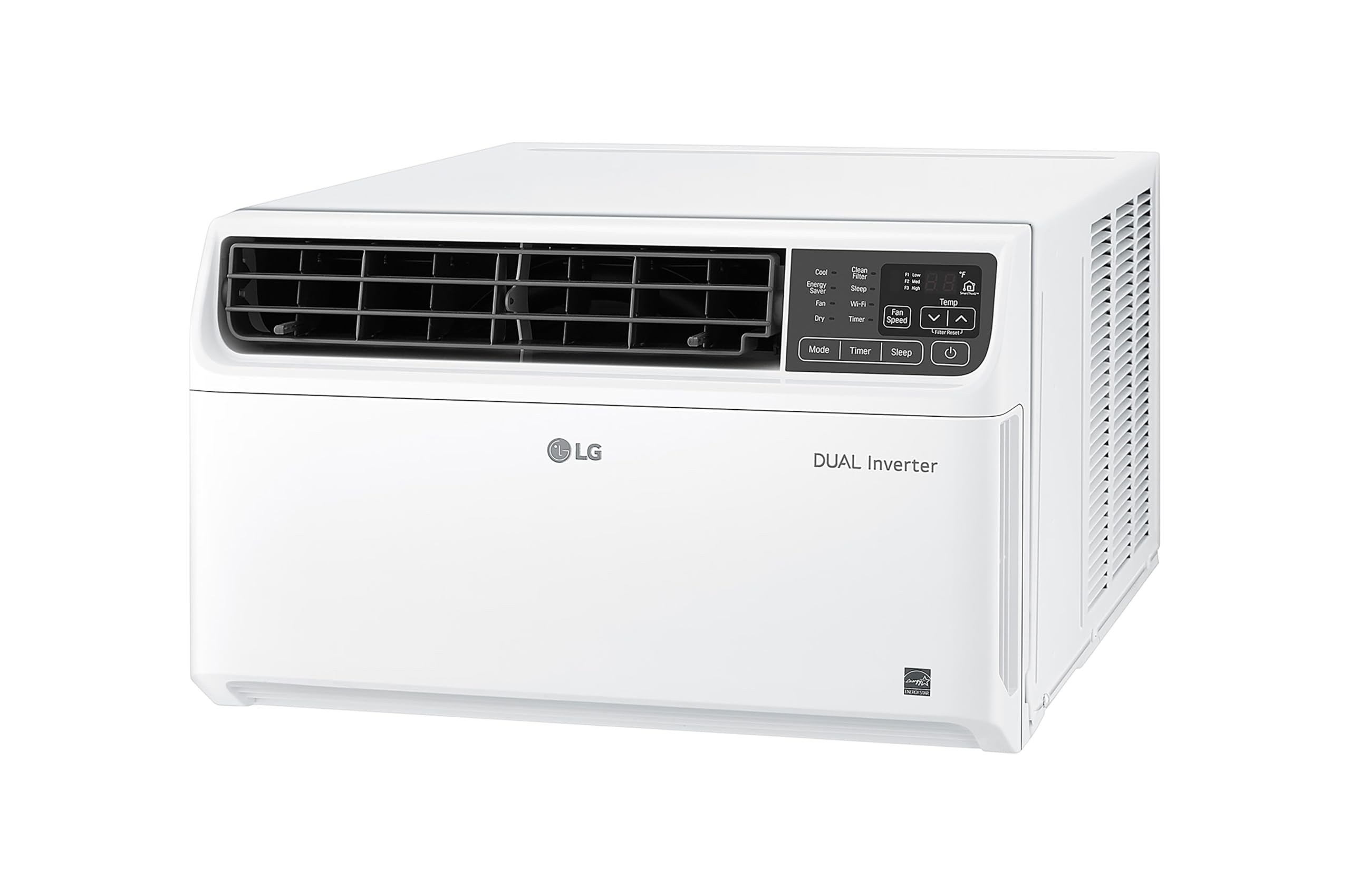
LG Dual Inverter Window Air Conditioner
In our comparison, the LG Dual Inverter is the quiet efficiency pick. Inverter compressors adjust speed rather than switching fully on and off, which keeps temperatures…
In our comparison, the LG Dual Inverter is the quiet efficiency pick. Inverter compressors adjust speed rather than switching fully on and off, which keeps temperatures steadier, cuts noise, and uses energy more smoothly than fixed-speed units. The range covers small to large rooms depending on the exact model, and the remote plus app controls suit daily use.
Capacity and features vary by exact model, so check the listing for the room size and functions on the unit you buy. Inverter units cost more upfront than basic window models. Buyers who run cooling daily and value quiet operation will find the extra cost worthwhile.
Pros:
- Inverter compressor for steadier cooling
- Quieter than fixed-speed units
- Smoother energy use
- Range covers varied room sizes
- Remote and app controls
Cons:
- Costs more than basic window units
- Capacity varies by exact model
- Heavier to install than small units
- App setup adds steps for some buyers
- Needs correct window size and fit
2. GE Profile ClearView Window Air Conditioner
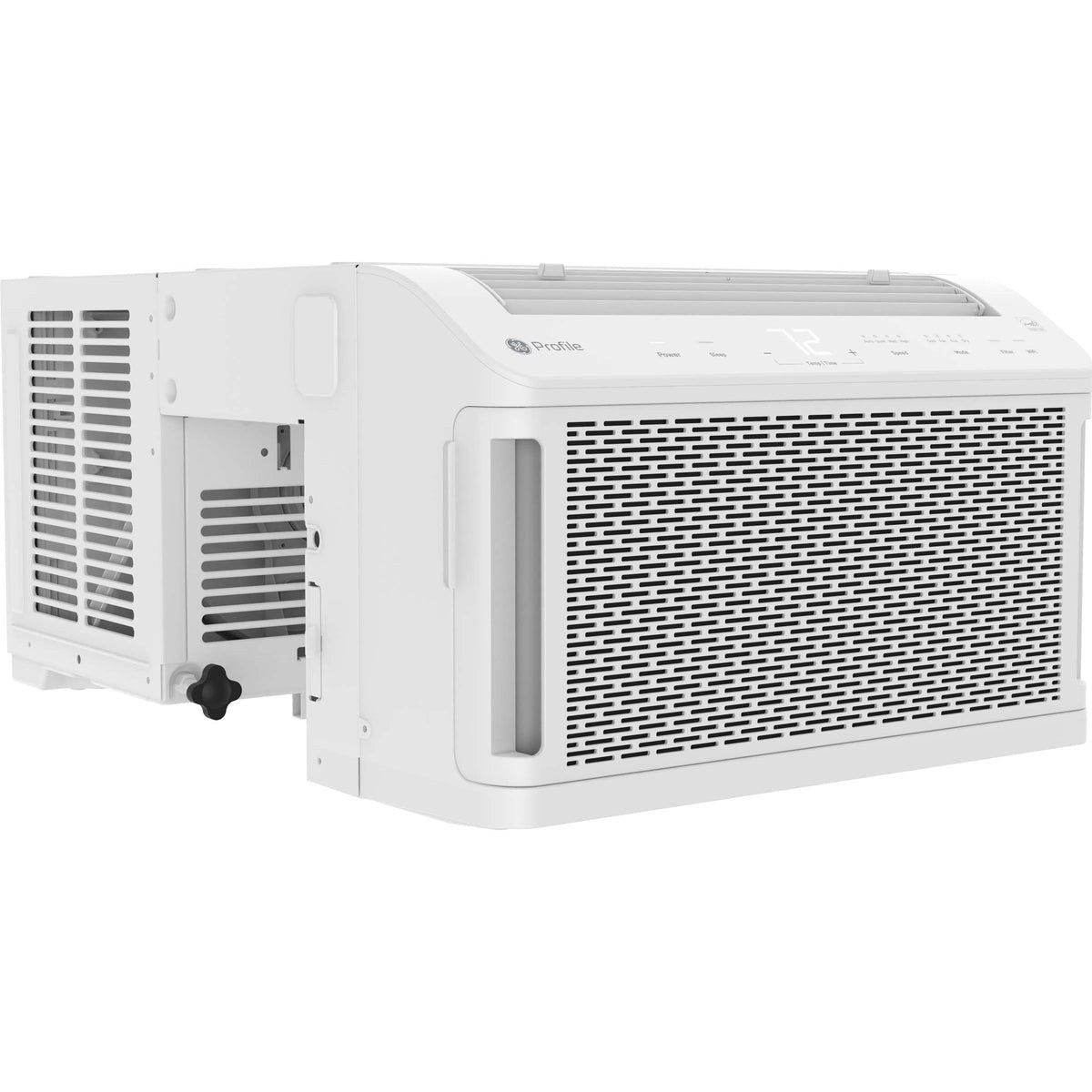
In our comparison, the GE Profile ClearView is the design pick. Its U-shape lets the window sash close between the indoor and outdoor sections, so you keep part of your view and the unit looks tidier from inside. Inverter cooling keeps noise down, and the smart controls include app and voice options on many versions.
The U-shape fits specific window types and sizes, so measure carefully before ordering. Capacity varies by model, and installation takes more care than a standard slide-in unit. Buyers who hate losing the whole window to an air conditioner will appreciate the compromise.
Pros:
- U-shape preserves part of the window view
- Tidy look from inside
- Inverter cooling for quiet operation
- Smart controls on many versions
- Good for rooms where view matters
Cons:
- Fits specific window types only
- Measure carefully before ordering
- Installation takes more care
- Capacity varies by model
- Costs more than basic units
3. Frigidaire Gallery Window Air Conditioner
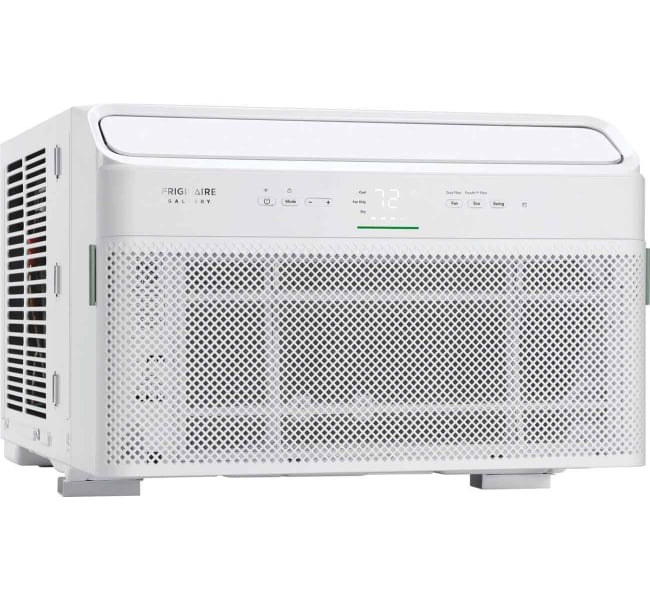
In our comparison, the Frigidaire Gallery is the dependable all-rounder. It offers straightforward window cooling with a clean design, remote control, and a range of capacities for bedrooms through living rooms. The controls are simple to learn, and the unit is widely available in sizes to match common rooms.
Noise and efficiency vary by exact model, and the Gallery line lacks the inverter refinement of the LG on comparable sizes. Smart features also vary by version. Buyers who want a reliable, easy-to-use window unit from a familiar brand will find it a safe choice.
Pros:
- Dependable, straightforward cooling
- Clean design for most rooms
- Remote control included
- Range of capacities available
- Simple controls to learn
Cons:
- Efficiency varies by exact model
- Less refined than inverter rivals
- Smart features vary by version
- Noise varies by model
- Heavier at larger capacities
4. Windmill Window Air Conditioner
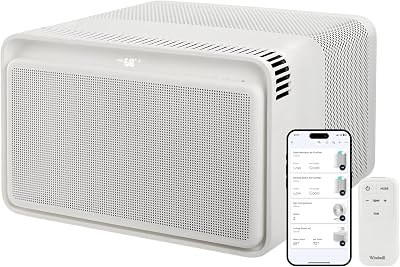
In our comparison, the Windmill is the modern value pick. It pairs a clean, minimalist look with smart controls, a quiet fan, and a straightforward install kit, aiming to fix the usual complaints about ugly, loud window units. The app and voice controls suit renters and smart-home users who want cooling without a bulky box dominating the window.
The range is narrower than LG or Frigidaire, so room-size options are fewer, and long-term service coverage varies by region. The minimalist design also means fewer physical buttons. Buyers who want a good-looking, smart window unit for a standard room will like it.
Pros:
- Clean, minimalist design
- Smart app and voice controls
- Quiet fan operation
- Straightforward install kit
- Good value for a smart unit
Cons:
- Narrower capacity range than rivals
- Fewer physical buttons
- Service coverage varies by region
- Fewer size options
- Newer brand than LG or Frigidaire
5. Hisense Window Air Conditioner
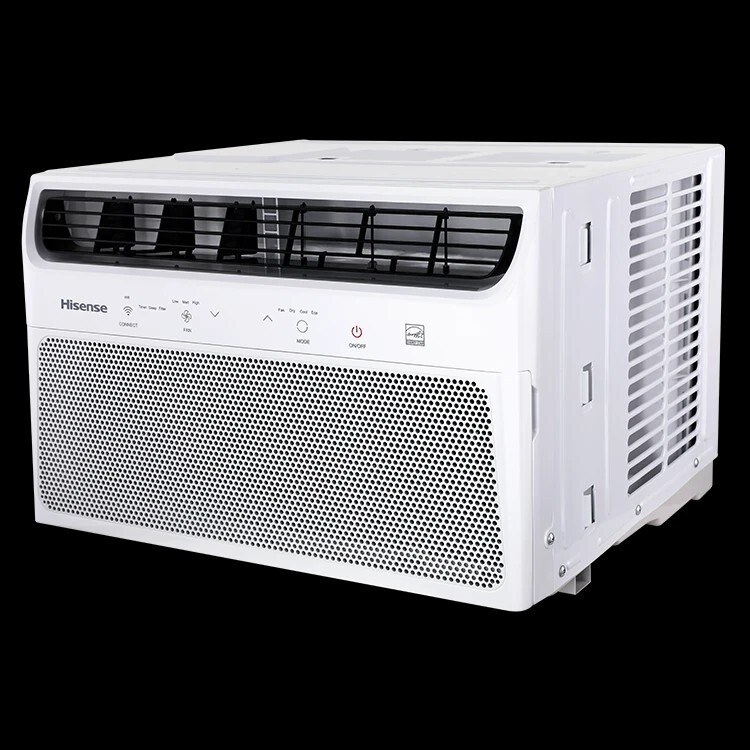
In our comparison, the Hisense window unit is the budget-friendly pick. It offers simple, effective cooling for bedrooms and small living rooms, with a remote, timer, and washable filter, at a price below the inverter and design-led rivals. The range covers common room sizes, and the controls are easy to use.
Noise is higher than inverter models, and efficiency and smart features vary by exact model, so check the listing carefully. The design is functional rather than stylish. Buyers who need reliable cooling for a single room at a sensible cost will find it a practical choice.
Pros:
- Budget-friendly single-room cooling
- Remote and timer included
- Washable filter for easy care
- Range covers common room sizes
- Simple, easy controls
Cons:
- Noisier than inverter rivals
- Efficiency varies by exact model
- Smart features vary by version
- Functional rather than stylish design
- Fewer premium features
Comparison Table
| Product | Cooling style | Noise character | Smart controls | Best for |
|---|---|---|---|---|
| LG Dual Inverter | Inverter | Quiet | Remote and app | Daily, quiet cooling |
| GE Profile ClearView | Inverter | Quiet | App and voice on many | Keeping the window view |
| Frigidaire Gallery | Varies by model | Varies by model | Varies by version | Dependable all-rounder |
| Windmill | Standard with quiet fan | Quiet fan | App and voice | Modern smart value |
| Hisense | Standard | Moderate | Varies by version | Budget single-room cooling |
How to Choose
Start with room size. Makers publish a recommended room area for each capacity, and matching it matters: an undersized unit runs constantly without cooling properly, while a very oversized unit cools fast but cycles oddly and dehumidifies poorly.
Next, check the window. Measure width, height, and sash type, and confirm the unit fits your window style. A secure, sealed install matters as much as the unit itself: gaps around the unit let warm air back in and waste energy.
Finally, weigh noise and controls. Inverter units run quieter and steadier, which matters for bedrooms, while smart controls and timers help if you cool on a schedule. Clean the filter regularly, since a dirty filter cuts cooling and raises noise.
FAQs
What size window air conditioner do I need?
Match the unit’s recommended room area to your room, not just the headline capacity. An undersized unit will struggle, while a very oversized unit cools unevenly and dehumidifies poorly.
Are window air conditioners better than portable ones?
For a single room, usually yes: window units cool more efficiently, are quieter indoors, and take no floor space. Portable units suit rooms where a window install is not possible, but they need a hose and floor area.
Can I install a window air conditioner myself?
Many people do, with the included kit and a second person for larger units. The install must be secure, level, and well sealed, so follow the maker’s guidance and get help if the window or unit is heavy.
How noisy are window air conditioners?
Noise varies by model: inverter units are generally quietest, while basic fixed-speed units are louder, especially on high fan. Bedrooms benefit most from a quiet or inverter model.
Do window air conditioners need maintenance?
Yes, mainly filter cleaning: a washable filter should be cleaned regularly, and the unit should be checked for a good seal each season. Proper care keeps cooling strong and energy use lower.
Conclusion
Pick the LG Dual Inverter for quiet, efficient daily cooling, the GE Profile ClearView if keeping your window view matters, and the Windmill for a modern smart unit at a good value. Frigidaire Gallery suits dependable all-round use, while Hisense covers budget single-room cooling. Measure your window and room first, then choose inverter quiet or simple value.


