Best Nonstick Pans 2026
Best Nonstick Pans 2026
The best nonstick pan for most cooks is the All-Clad HA1 12-inch fry pan, a hard-anodized pan with even heat, induction compatibility, and oven safety to a high temperature, searing better than most nonstick pans. Value suits the T-fal Ultimate Hard Anodized pan, heavy daily use the Tramontina Professional, PTFE-free ceramic the GreenPan Valencia Pro, and smaller stylish cooking the Caraway 10.5-inch ceramic pan.
A nonstick pan should do one job without drama: release eggs and fish cleanly, heat evenly, and survive daily use. Coating type, base weight, handle comfort, and oven safety all change how long that lasts. In this comparison, we looked at coating, induction compatibility, oven limits, and how each pan handles everyday cooking from eggs to searing. The five below include hard-anodized, ceramic, and commercial-style pans, so you can pick for your stove and your cooking style.
Key Takeaways

- Start with the All-Clad HA1 12-inch fry pan: hard-anodized, with even heat, induction compatibility, and oven safety to a high temperature, searing better than most nonstick pans.
- Match the pan to your stove first, especially if you cook on induction, then to how hot you cook.
- Ceramic suits gentle, low-oil cooking and needs kinder care. Hard-anodized pans handle higher heat and daily use better.
- Induction-ready here are the All-Clad HA1 and the GreenPan Valencia Pro. The T-fal is not induction compatible, and the Tramontina is not induction compatible on most versions.
- Use low to medium heat, skip metal utensils unless the maker allows them, and let the pan cool before washing, because that care adds years to any coating.
- Size is about cooking surface, not just the headline number: a 12-inch pan suits family batches, while the 10.5-inch Caraway suits smaller households and single meals.
- Every nonstick coating wears eventually. Buy for the cooking you do now, care for the coating, and replace the pan when food starts sticking despite proper care.
This article contains Amazon affiliate links. As an Amazon Associate we earn from qualifying purchases — it never changes our picks. #ad
Top 3 Picks
GreenPan Valencia Pro 12-Inch Fry Pan (best ceramic pan) and Caraway 10.5-Inch Ceramic Fry Pan (best stylish ceramic pan) round out the full comparison below.
Comparison Table
| Product | Best For | Size | Coating | Induction | Key Details |
|---|---|---|---|---|---|
| All-Clad HA1 12-Inch Nonstick Fry Pan | Best overall | 12 inch | Hard-anodized | Yes | Even heat, good searing, high oven safety |
| T-fal Ultimate Hard Anodized 12-Inch Fry Pan | Best value | 12 inch | Hard-anodized | No | Heat indicator, light, everyday release |
| Tramontina Professional 12-Inch Fry Pan | Best commercial-style pan | 12 inch | Commercial nonstick | No on most versions | Reinforced coating, durable build |
| GreenPan Valencia Pro 12-Inch Fry Pan | Best ceramic pan | 12 inch | Ceramic, PTFE-free | Yes | Diamond-infused coating, high oven safety, little oil |
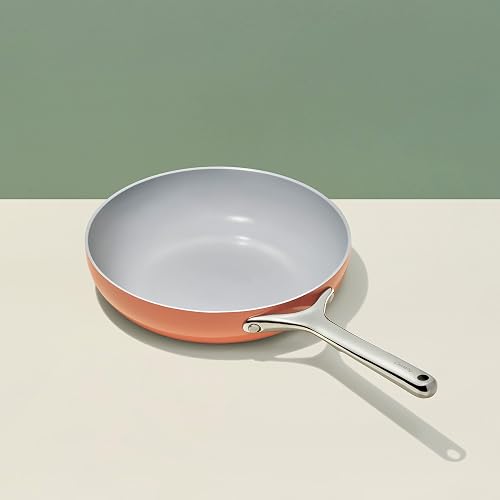
| Caraway 10.5-Inch Ceramic Fry Pan | Best stylish ceramic pan | 10.5 inch | Ceramic, PTFE-free | Not stated in this comparison | Slick release, attractive design, easy to clean |
| Image | Product | Features | Price |
|---|---|---|---|
 | Check Price | ||
 | Check Price | ||
 | Check Price | ||
 | Check Price | ||
 | Check Price |
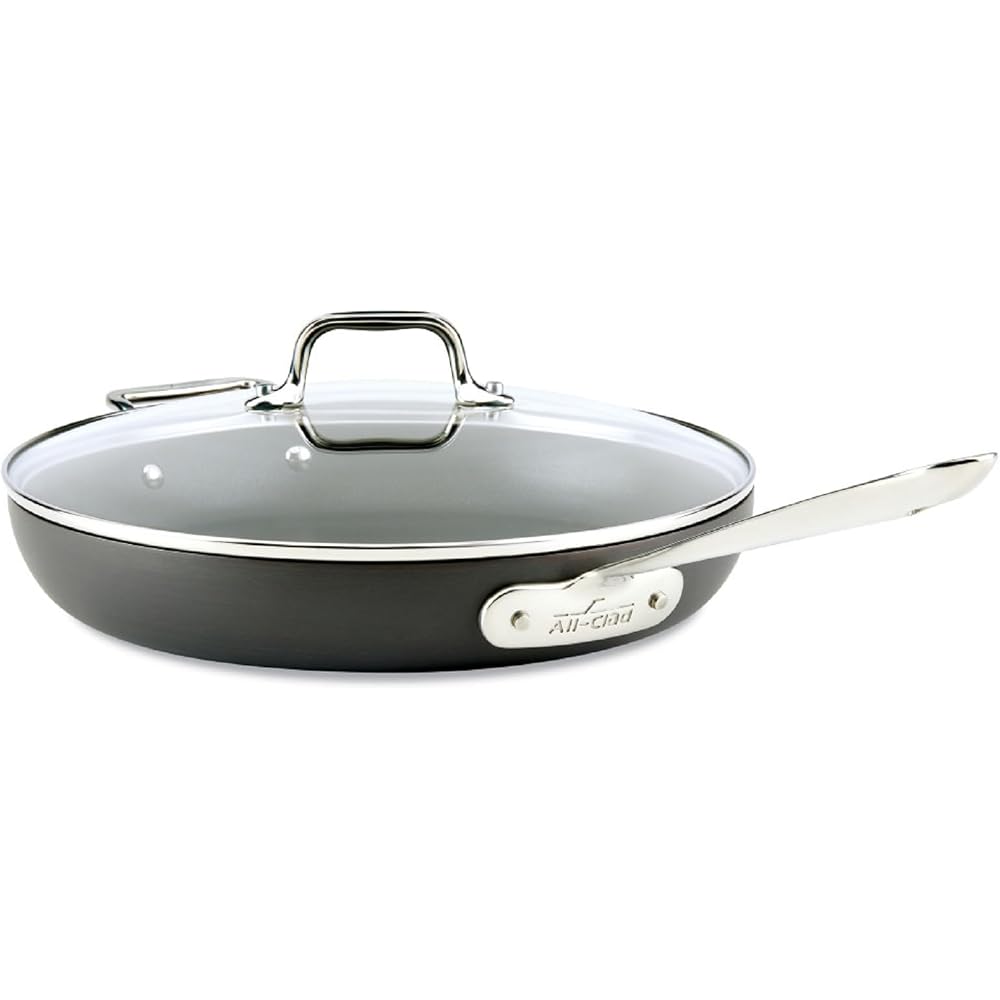
1. All-Clad HA1 12-Inch Nonstick Fry Pan — Best overall
All-Clad HA1 12-Inch Nonstick Fry Pan
A hard-anodized pan with even heat, induction compatibility, and oven safety to a high temperature, searing better than most nonstick pans.
Pros: Even heat and good searing; induction compatible; oven safe to a high temperature.
Cons: Heavier than a light everyday pan; needs care to protect the coating over time.
A hard-anodized pan with even heat, induction compatibility, and oven safety to a high temperature. It sears better than most nonstick pans and feels solid in the hand. In this comparison, it led on versatility, because it works on induction and handles higher-heat cooking than many rivals.
The versatility claim is worth unpacking, because it is what justifies putting this pan first. Induction compatibility alone rules out two of the other four pans in this lineup, so a household with an induction hob, or one planning to switch to induction, can stop here. Even heat matters just as much: a pan that heats unevenly browns food in patches and leaves cool spots where eggs set slowly, while an even-heating pan lets you cook at lower, steadier heat and still get a good result. And searing is where most nonstick pans disappoint — they release well but never build a proper crust — so a nonstick pan that sears better than most of its kind covers more of the weeknight menu, from fish to chicken to vegetables, without reaching for a second pan.
The trade-offs are honest ones. It feels solid in the hand, which is another way of saying it is heavier than a light everyday pan, so cooks who lift a pan one-handed to slide food onto a plate should expect some heft. And like every coated pan, it needs care to protect the coating over time: gentle heat, softer utensils unless the maker allows otherwise, and a cool-down before washing. Treat it that way and it is the pan to buy first.
Pros: Even heat and good searing; induction compatible; oven safe to a high temperature.
Cons: Heavier than a light everyday pan; needs care to protect the coating over time.
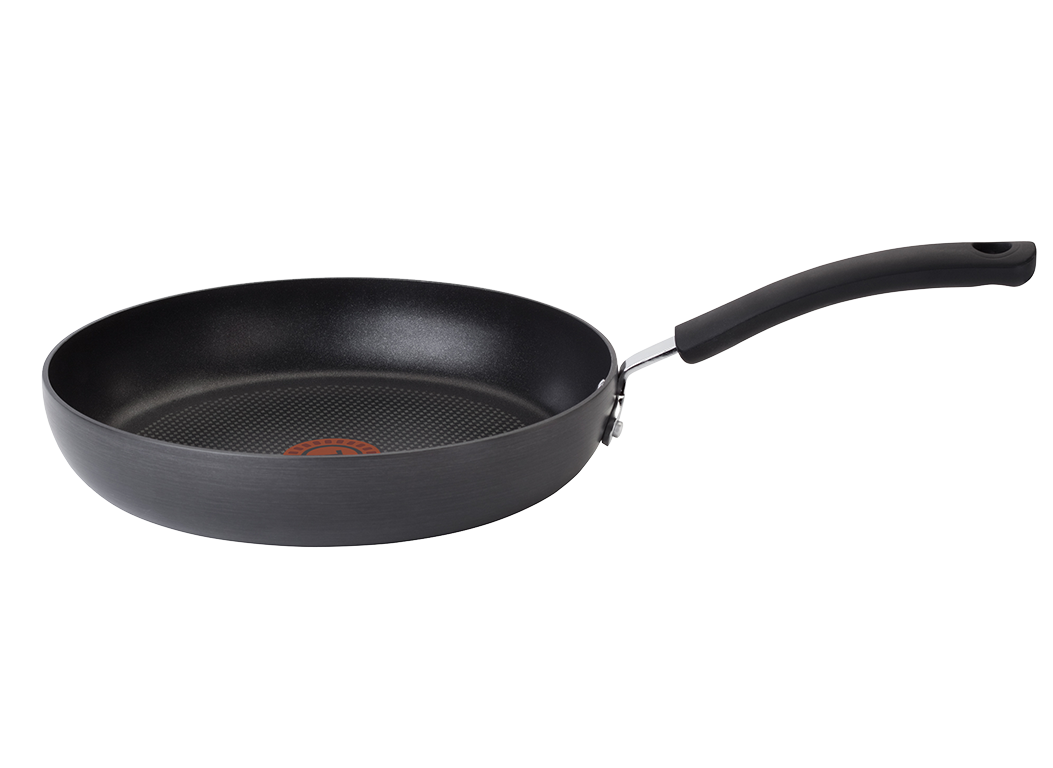
2. T-fal Ultimate Hard Anodized 12-Inch Fry Pan — Best value
A hard-anodized everyday pan with a heat indicator that shows when it is preheated. It is light, easy to handle, and well suited to eggs, pancakes, and weeknight cooking. In this comparison, it was the best value pick for a first good nonstick pan.
The heat indicator is a small feature that solves a real beginner problem: knowing when the pan is ready. Too cool, and eggs spread and stick; too hot, and a coating takes damage it never recovers from. A visible preheat signal takes the guesswork out of that moment, which is exactly what a first good pan should do. The light weight matters too. A pan you reach for every morning should not tire your wrist, and a lighter pan is easier to tilt, toss, and slide food from — the motions that make up most of everyday cooking.
The limits are clear and should be checked before ordering. It is not induction compatible, so induction households must rule it out regardless of its other strengths. Its oven limit is lower than premium pans, so check the maker’s guidance before finishing a dish in the oven. Neither limit matters much for stovetop eggs, pancakes, and weeknight cooking on gas or electric — which is precisely the job this pan is built for.
Pros: Light and easy to handle; heat indicator for preheating; good everyday release.
Cons: Not induction compatible; oven limit is lower than premium pans.
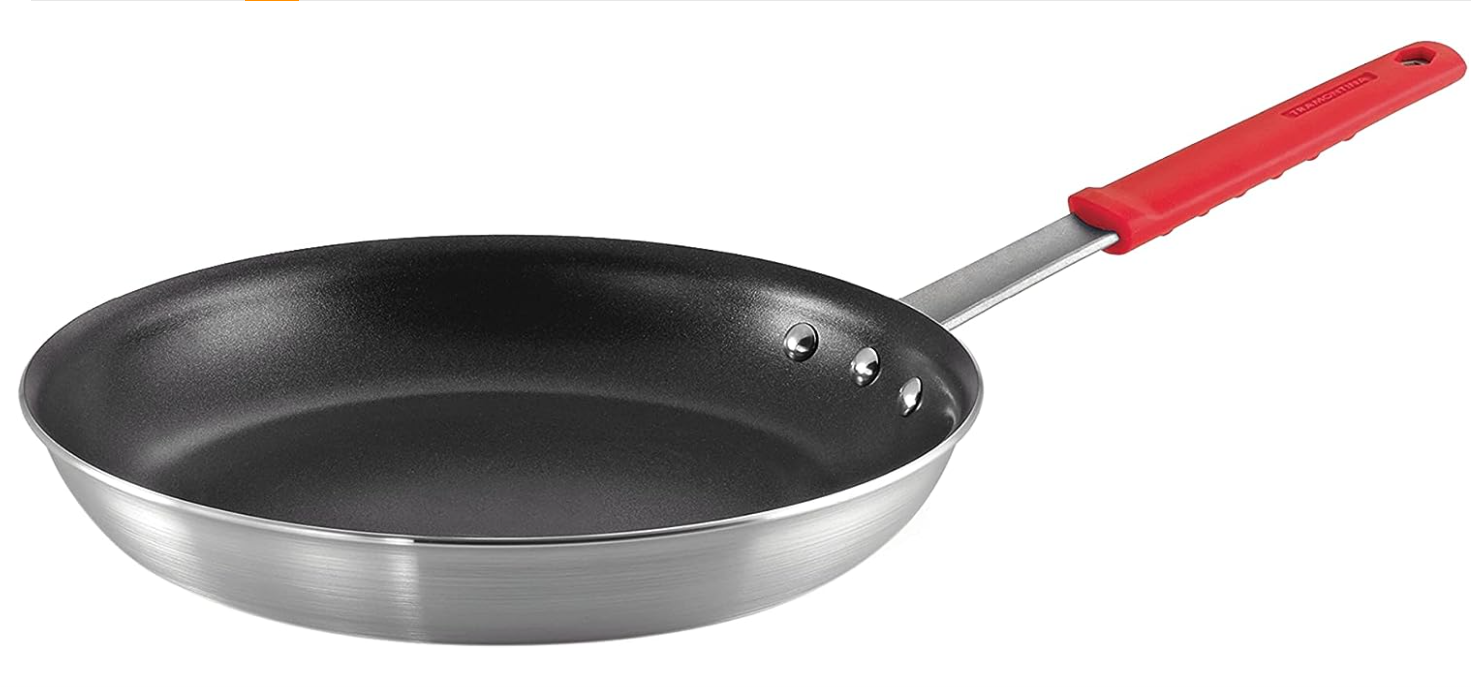
3. Tramontina Professional 12-Inch Fry Pan — Best commercial-style pan
A commercial-style pan with a reinforced coating and a sturdy, restaurant-style build. It is made for frequent use and holds up well to daily cooking. In this comparison, it stood out for durability and steady heat, especially for cooks who use one pan for most meals.
The commercial-style argument is about frequency. A pan used once a day, sometimes twice, needs a build that tolerates that rhythm: a reinforced coating that resists the wear of daily heating, cooling, and washing, and a sturdy body that does not warp or feel flimsy under a full load. Steady, even heat is the other half of the same argument, since a one-pan cook needs the same pan to handle eggs gently in the morning and a busier saute at night. This is the pan for the cook who does not want a shelf of specialists and would rather own one dependable workhorse.
The honest trade-offs: it is not induction compatible on most versions, so induction buyers should verify the exact version before ordering rather than assuming. And its look is plain compared with premium pans — a restaurant-style tool rather than a showpiece. If the pan lives on the stove, that plainness is easy to live with; if it needs to look good left out, the Caraway answers that brief better.
Pros: Durable commercial build; steady, even heat; good for frequent daily use.
Cons: Not induction compatible on most versions; plain look compared with premium pans.
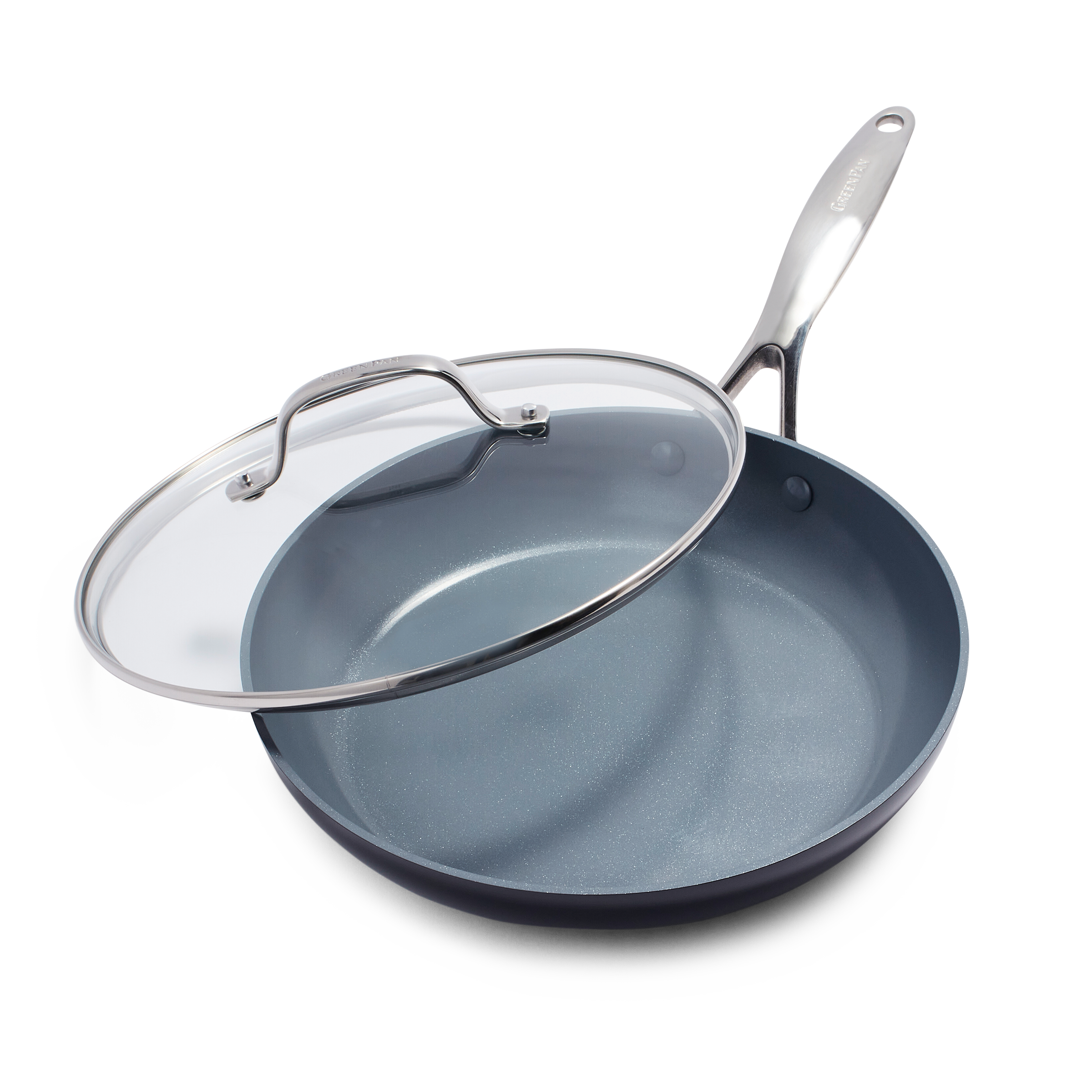
4. GreenPan Valencia Pro 12-Inch Fry Pan — Best ceramic pan
A ceramic nonstick pan that is free from PTFE and PFOA, with diamond-infused coating for extra toughness and induction compatibility. It needs little oil and cleans up easily. In this comparison, it was the best ceramic option for cooks who want a PTFE-free surface without giving up induction or oven use.
Ceramic is the coating for cooks who want a PTFE-free surface, and this pan removes the usual ceramic compromise: giving up induction. Because it works on induction and offers high oven safety, it covers the same stoves and the same oven-finishing jobs as the hard-anodized picks, while keeping the low-oil cooking and easy cleanup that make ceramic appealing. Little oil matters twice over — lighter cooking and less residue to scrub — and easy cleanup is what decides whether a pan gets used daily or left in the cupboard.
The care warning is part of the ceramic bargain and should not be skipped. Ceramic coatings can wear faster with high heat, and they need gentle heat and care for a long life. That means low to medium heat as the default, no blasting an empty pan on high, and utensils and washing habits that treat the surface kindly. A cook who respects that will get a long, pleasant life from this pan. A cook who habitually sears on maximum heat will be happier with a hard-anodized pan.
Pros: PTFE-free ceramic coating; induction compatible; high oven safety.
Cons: Ceramic coatings can wear faster with high heat; needs gentle heat and care.
5. Caraway 10.5-Inch Ceramic Fry Pan — Best stylish ceramic pan
A ceramic pan with a clean look, a slick PTFE-free surface, and a size that suits eggs, fish, and small meals. It is easy to wipe clean and looks good left on the stove. In this comparison, it suited smaller households and cooks who value design and easy cleanup.
Size is the story here. At 10.5 inches, this is the pan for one or two people: eggs in the morning, a fish fillet at night, a small saute, all without heating a large pan for a small job. The slick ceramic surface releases delicate food cleanly, and the easy wipe-clean finish means the pan is back in the cupboard in a minute. And the design is genuinely part of the value — a pan that looks good left on the stove is a pan that gets used, since the best pan in the house is the one you actually reach for.
The limits follow from the same choices. The smaller size struggles with family batches: a full load crowds the surface, food steams instead of browning, and a second batch becomes necessary. And ceramic needs low to medium heat for a long life, so the same gentle-heat discipline as the GreenPan applies here. For a smaller household that cooks gentle, low-oil meals and likes a good-looking pan, those are easy limits to accept.
Pros: Slick ceramic release; attractive design; easy to clean.
Cons: Smaller size for family batches; ceramic needs low to medium heat for a long life.
Buying Guide: How to Choose the Best Nonstick Pan
Start with your stove, not the coating
Induction is the great divider in this comparison. Only pans with a magnetic base work on induction, and in this lineup that means the All-Clad HA1 and the GreenPan Valencia Pro. The T-fal is not induction compatible, and the Tramontina is not induction compatible on most versions. If you cook on induction now, or might switch to it, that single check narrows five pans to two. If you are unsure about a pan not listed here, the classic check is a magnet: if a magnet sticks firmly to the underside, the pan has a chance on induction; if it does not, it will not work. Gas and electric hobs are more forgiving, and all five pans here suit those stoves.
Coating types: hard-anodized, ceramic, and commercial nonstick
Hard-anodized pans, like the All-Clad and the T-fal, use a hardened aluminium body with a nonstick coating. They handle higher heat and daily use better than ceramic, which is why they lead this comparison for all-round cooking. Ceramic pans, like the GreenPan and the Caraway, use a ceramic-based surface that is free from PTFE and PFOA. Ceramic suits gentle, low-oil cooking and appeals to cooks who want a PTFE-free surface, but it needs kinder care and wears faster under high heat. Commercial-style nonstick, like the Tramontina, pairs a reinforced coating with a sturdy restaurant-style build for frequent use. There is no universally best coating — only the coating that matches how hot you cook and how much care you will give the pan.
A note on coating safety and PTFE
Traditional nonstick coatings use PTFE, a chemical in the wider PFAS family, which is what gives them their slippery surface. Everyday use of a coated pan is widely regarded as safe, but a coating that is scratched, damaged, or overheated should be retired rather than kept in service. PTFE can release fumes when overheated, which is one more reason to cook on low to medium heat and never blast an empty nonstick pan on high. Ceramic coatings sidestep the PTFE question entirely, which is their main appeal beyond easy release. Whichever coating you choose, replace the pan when the surface shows real damage or food starts sticking despite proper care.
Size and cooking surface: the headline number is not the whole story
Pans are sold by their top diameter — 12 inches here for four of the five, 10.5 inches for the Caraway — but the cooking surface, the flat base your food actually sits on, is smaller than that number, and it varies between models. A 12-inch pan is the most versatile single size: spacious enough for family batches, for searing several pieces at once without crowding, and for sliding food out cleanly. A 10.5-inch pan suits one or two people and small tasks like a couple of eggs or a single fillet. If you regularly cook for a family, the 12-inch pans in this lineup are the sensible default; if you cook mostly for yourself or a partner, the Caraway’s smaller size heats faster, stores easier, and wastes less energy on an empty surface.
Weight, walls, and handles: what you feel every day
Weight is a daily comfort question, not a quality score. A lighter pan, like the T-fal, is easier to lift, tilt, and slide food from, and suits cooks with limited hand strength or anyone who tosses food in the pan. A heavier pan, like the solid-feeling All-Clad, holds heat more steadily but tires the wrist sooner. Wall shape matters too: gently sloped walls let you slide a spatula around the edge, toss food without spilling, and glide a finished dish onto a plate, while tall, straight walls contain food but make sliding harder. Handles deserve a look as well — a comfortable, well-balanced handle that stays cool enough to grip and lets the pan sit flat on the burner makes every meal easier. When choosing between two similar pans, the one that feels better in your hand is usually the one you will keep using.
Heat: how hot you cook decides the coating
Nonstick pans are not high-heat tools, and the gap between the two coating families shows up here. Hard-anodized pans handle higher-heat cooking better, which is part of why the All-Clad sears better than most nonstick pans. Ceramic pans need low to medium heat for a long life, and high heat shortens their coating’s life noticeably. Either way, preheat gently — the T-fal’s heat indicator is a handy guide to the right moment — and avoid heating an empty pan on high. Also skip aerosol cooking sprays on nonstick surfaces: the additives can bake into the coating and leave a sticky residue that is hard to remove. If you sear often at high heat, a hard-anodized pan is the safer pick; if you cook gently with little oil, ceramic will serve you well.
What nonstick is not for
Knowing a pan’s limits prevents disappointment. Nonstick surfaces are so slippery that they cannot build the stuck-on browned bits, called fond, that give pan sauces their depth — for sauces, a stainless or cast-iron pan does the job better. For the same reason, browning butter is harder in a dark nonstick pan, since the dark surface hides how far the butter has darkened. And a nonstick pan is not the tool for screaming-hot searing or broiling. Use nonstick for what it does best — eggs, pancakes, fish, delicate foods, and quick weeknight cooking — and keep another pan for sauces, high-heat searing, and browning.
Care that adds years to any coating
Care is where coating life is won or lost, and the rules are the same across this lineup. Use low to medium heat as the default. Skip metal utensils unless the maker allows them — wood, silicone, and nylon are safer for every coating here. Let the pan cool before washing, since plunging a hot pan into cold water stresses the coating and the base. Wash by hand where you can: even pans rated dishwasher-safe last longer with gentle hand washing, since harsh detergent and jostling against other dishes wear coatings down. Dry the pan before storing, and avoid stacking heavy items inside it. Follow those habits and any of these five pans will serve you far longer than a neglected one.
When to replace a nonstick pan
Every nonstick coating wears eventually, whatever the coating type or the care regime. Replace the pan when food starts sticking despite proper heat and care, when the surface shows deep scratches, flaking, or bare patches, or when the coating has visibly thinned. A pan that still releases well but looks worn is usually fine to keep; a pan that sticks, flakes, or smells off under heat is done. Budget for replacement as part of owning nonstick rather than treating it as a failure — the coating is a consumable, and even the best pans in this comparison will need replacing one day.
FAQ
Which pans work on induction?
The All-Clad HA1 and the GreenPan Valencia Pro are induction compatible. The T-fal is not induction compatible, and the Tramontina is not induction compatible on most versions.
Ceramic or hard-anodized?
Ceramic suits gentle, low-oil cooking and needs kinder care. Hard-anodized pans handle higher heat and daily use better. Choose ceramic if a PTFE-free surface and easy low-oil cooking matter most; choose hard-anodized if you cook hotter or use one pan for everything.
How do I make a nonstick coating last?
Use low to medium heat, skip metal utensils unless the maker allows them, and let the pan cool before washing. Wash by hand where you can, avoid aerosol cooking sprays, and store the pan without stacking heavy items inside it.
Which pan suits a smaller household?
The Caraway 10.5-inch ceramic pan, with a slick PTFE-free surface and a size suiting eggs, fish, and small meals. Note its smaller size for family batches.
What size nonstick pan should I buy?
If you are buying one pan, a 12-inch model is the most versatile, covering family batches and single meals alike. A 10.5-inch pan suits one or two people and smaller tasks. Remember that the cooking surface is smaller than the headline diameter, so a crowded pan steams food instead of browning it.
Are nonstick pans safe?
Everyday use of a coated pan is widely regarded as safe, but retire a pan whose coating is deeply scratched, flaking, or damaged, and never overheat an empty nonstick pan. Ceramic pans offer a PTFE-free alternative for cooks who prefer to avoid traditional coatings.
Can nonstick pans go in the dishwasher?
Some makers say their pans are dishwasher-safe, but you will extend the life of any nonstick cookware by washing it by hand. Harsh detergent and jostling against other dishes wear coatings down faster than gentle hand washing.
Why does food stick to my nonstick pan?
Usually heat or wear. Too little preheat lets food bond before the surface is ready, while too much heat damages the coating over time. If sticking persists at the right heat with proper care, the coating is likely worn and the pan is due for replacement.
Conclusion
Match the pan to your stove first, especially if you cook on induction, then to how hot you cook. Ceramic suits gentle, low-oil cooking and needs kinder care. Hard-anodized pans handle higher heat and daily use better. Whichever you pick, use low to medium heat, skip metal utensils unless the maker allows them, and let the pan cool before washing, because that care adds years to any coating.
#ad As an Amazon Associate, we earn from qualifying purchases made through links on this page, at no extra cost to you. Product details and availability may change, so check the Amazon listing before ordering.


